On this page
- Why the airway, not the airline policy, is the real limiting factor
- What actually happens in the cargo hold, and why it’s off the table
- A flight that went fine, and one owner conversation I still think about
- Building a cabin trip that respects the airway
- Where the rest of the picture fits
- Owner checklist before you book
Owners ask me, almost verbatim, “my Frenchie has an easy time at home, so why would flying be any different?” That’s the premise I want to test, because it’s the wrong comparison. A French Bulldog’s airway isn’t stressed by walking to the mailbox. It’s stressed by heat, confinement, and adrenaline stacked on top of each other, and a flight can deliver all three at once.
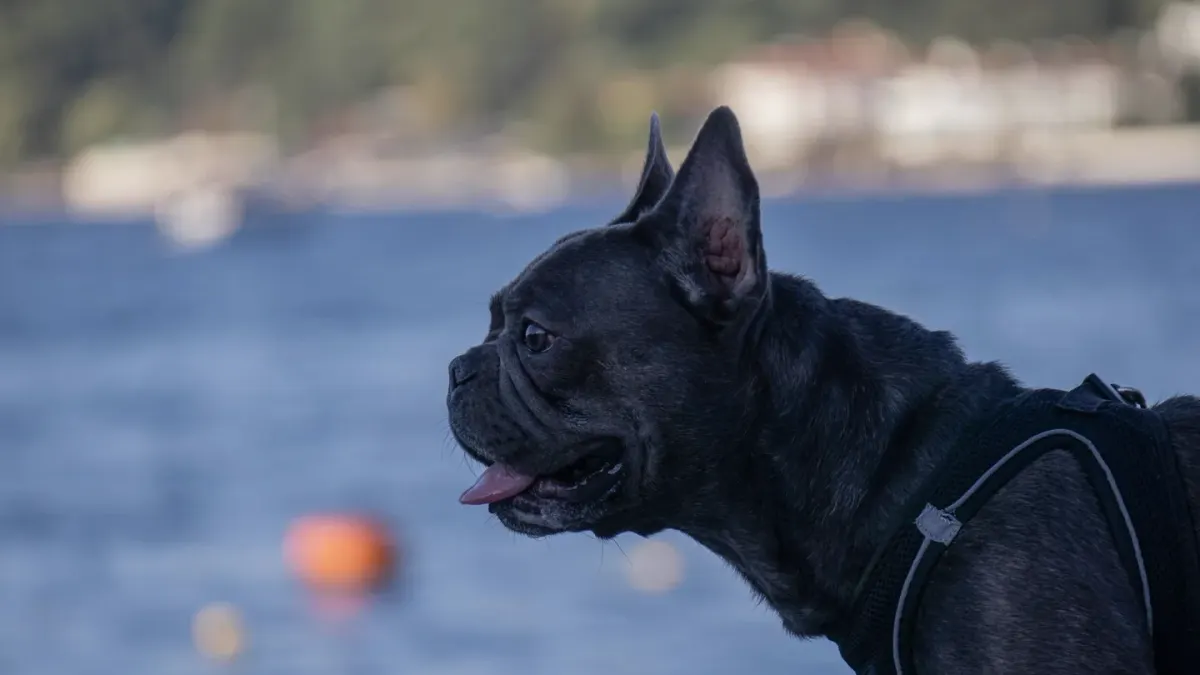
French Bulldogs can fly, but cargo is not a reasonable option for them. Most major US carriers have stopped accepting brachycephalic breeds in the cargo hold entirely, and airlines that once did have tightened rules after reviewing incident data. Cabin travel, where the dog rides in a carrier under the seat in front of you, is the realistic path — and even that requires real preparation, not just a health certificate and a hope.
Why the airway, not the airline policy, is the real limiting factor
A French Bulldog’s skull is wide and short relative to its length, and that conformation crowds the soft tissue in the throat: an elongated soft palate, narrowed nostrils, and often a smaller windpipe than a longer-nosed dog of the same size. Researchers studying Conformational risk factors of brachycephalic obstructive airway syndrome (BOAS) in pugs, French bulldogs, and bulldogs: conformational risk factors of brachycephalic obstructive airway syndrome (BOAS) in pugs, French Bulldogs, and bulldogs found that these breeds carry measurable airway obstruction even when owners don’t report symptoms at home. The dog isn’t broken. The margin is just smaller than it looks day to day.
That smaller margin matters most for heat. Dogs cool themselves mainly by panting, moving air across the tongue and airway lining to evaporate moisture. A flattened muzzle gives a French Bulldog less surface area to do that work, and a narrower airway means more effort to move the same volume of air. A pilot study on the The effect of the surgical treatment of brachycephalic obstructive airway syndrome on the thermoregulatory response to exercise in French bulldogs: a pilot study: thermoregulatory response to exercise in French Bulldogs, which measured rectal temperature and heart rate during treadmill exercise before and after airway surgery, found that dogs with unaddressed BOAS ran hotter for longer than dogs whose airways had been surgically corrected. A cargo hold isn’t a treadmill, but it stacks the same variables — exertion from stress, limited airflow, unpredictable temperature — without a person there to notice early warning signs.

What actually happens in the cargo hold, and why it’s off the table
Cargo holds on most flights are pressurized and heated, but ground handling is the weak link: a dog can sit on a tarmac in a hot or cold holding area before and after the flight, away from climate control, for stretches that a healthy retriever tolerates and a French Bulldog may not. Reviews of Department of Transportation animal incident data are part of why brachycephalic breeds now appear on most airline banned-breed lists for cargo, alongside pugs, Boston Terriers, Shih Tzus, and English Bulldogs. This isn’t a policy quirk. It reflects a real, breed-specific mortality pattern that airlines were forced to reckon with.
If a French Bulldog cannot travel in the cabin — because of size, an airline’s carrier limits, or a route that doesn’t allow it — I tell owners the honest answer is usually not to fly that dog at all. Ground transport, a pet relocation service that uses climate-controlled vehicles, or leaving the dog with a trusted sitter are all better options than gambling on cargo.
A flight that went fine, and one owner conversation I still think about
I had a client bring in a nine-year-old French Bulldog named Gus, about 26 pounds, three weeks before a planned move from Chicago to Denver. He’d never flown before. She’d already booked cabin space for him but was second-guessing herself after reading a forum post about a Frenchie who’d struggled on a flight the summer before. We went through his exam together: mild stridor at rest, nothing acute, stable weight, no history of collapse. What mattered more than the exam findings was the trip itself — a midday August departure with a layover, versus the early-morning direct flight she could rebook for a bit more money. She switched to the direct early flight. I don’t know how Gus’s flight went in the sense of proof of anything; I only know that the decision she made — trading a cheaper, hotter, longer itinerary for a shorter, cooler one — is the same tradeoff I walk almost every Frenchie owner through before a booking, and it’s the one lever they actually control.
Building a cabin trip that respects the airway
Cabin travel regulates temperature and pressure the way cargo can’t, which is why it’s the only option I recommend for a dog with any airway compromise. A few specifics make the difference between a manageable flight and a stressful one.
Book direct flights and avoid the hottest part of the day whenever the schedule allows it — an early morning or evening departure keeps the dog out of peak tarmac heat during boarding and taxi delays. Choose a well-ventilated, appropriately sized soft-sided carrier; airlines typically require it to fit fully under the seat, and a snug fit that still lets the dog turn around and lie flat is what you’re aiming for. Skip thick blankets or padding the dog could bury its nose in, since loose fabric near the airway raises rather than lowers risk; a thin liner is enough. Never sedate a brachycephalic dog for a flight without a veterinarian’s direct involvement — sedatives suppress the same respiratory drive that’s already working overtime, and it’s one of the more dangerous shortcuts an owner can take.
Weight matters more than owners expect. An overweight French Bulldog carries the same narrowed airway plus extra tissue pressing on it, so trimming even a pound or two ahead of a stressful trip is a legitimate pre-flight goal, not a cosmetic one. If you’re weighing whether a Frenchie is the right fit for a travel-heavy household in the first place, it’s worth comparing it against a related but less airway-compromised option — our guide on French Bulldog vs Boston Terrier mobility and airway differences walks through exactly where the two breeds diverge.

Where the rest of the picture fits
Flying is one stressor in a life that, for most French Bulldogs, is otherwise well within their limits at home. The same airway math that governs a flight also governs everyday choices: apartment living, exercise pacing, and even which breed a family chooses in the first place if mobility and breathing are a priority. If you’re comparing living situations, our piece on what actually predicts a good fit for apartment living covers some of the same heat-and-exertion logic. And if a French Bulldog’s exercise tolerance has you rethinking the breed compatibility question generally, our comparison of low-maintenance dog breeds for busy people is a reasonable next stop.
Owner checklist before you book
Confirm your airline’s current brachycephalic policy before purchasing a ticket — rules change, and some carriers still refuse the breed outright regardless of cabin or cargo. Book the earliest or latest direct flight the schedule offers. Get your dog examined in the weeks before travel, not the day before, so a vet has time to flag anything that changes the calculus. Skip sedation unless a veterinarian has specifically prescribed it for this trip. Choose a carrier that’s ventilated on multiple sides and sized to the airline’s cabin requirements. And if cargo is the only option available, treat that as a signal to change the plan, not the dog.
So is flying safe for a French Bulldog? In the cabin, prepared, on the right flight — usually. In cargo, on a hot afternoon, hoping for the best — that’s the version I’d talk any client out of. What would you decide if the only ticket left was the one you’d rather not take?
Frequently asked questions
Can French Bulldogs fly in the cargo hold of an airplane?
Most major airlines no longer accept French Bulldogs and other brachycephalic breeds in cargo because of documented heat and respiratory risk. Cabin travel, where size allows, is the safer route.
Is it safe to sedate a French Bulldog before a flight?
Not without direct veterinary guidance. Sedatives can suppress breathing further in a dog whose airway is already narrowed, so this decision should never be made without a vet who knows the dog.
What's the biggest risk factor during air travel for a French Bulldog?
Heat combined with stress and limited airflow. Booking cooler flight times and ensuring good carrier ventilation address the two variables owners can actually control.
Sources
- Conformational risk factors of brachycephalic obstructive airway syndrome (BOAS) in pugs, French bulldogs, and bulldogs — PMC / National Library of Medicine
- The effect of the surgical treatment of brachycephalic obstructive airway syndrome on the thermoregulatory response to exercise in French bulldogs: a pilot study — PMC / National Library of Medicine