On this page
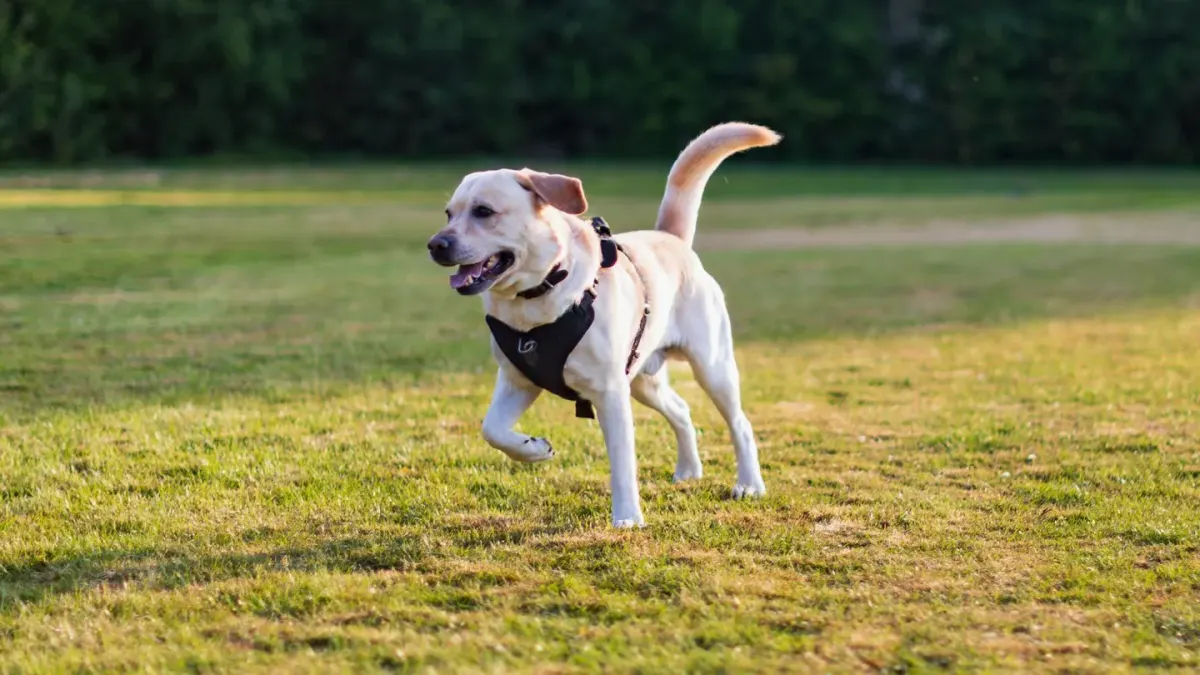
In a Labrador puppy’s first year, expect rapid growth, open growth plates, teething, and joint-friendly exercise routines to shape mobility. Owners tend to picture this year as one steady climb from small to full-sized. It is not. The skeleton, the immune system, and the joints each run on their own separate clock, and mismatching them is where most preventable problems start.
The growth curve problem: why Labradors change so fast
A Labrador puppy can put on more body weight in its first six months than most dog breeds gain in their entire lives. That pace is driven by rapid bone lengthening at the growth plates — soft cartilage zones near the ends of the long bones that convert to solid bone over time. Because Labradors are pulling off so much growth in so little time, their frame is structurally behind their muscle mass for much of the year. A puppy can look and act like an adult dog well before its bones are built like one.
This mismatch is the reason breed guidance treats large dogs differently from small ones. According to the AKC, larger breeds take longer to finish growing than small breeds, often not reaching full skeletal maturity until well past their first birthday. A Chihuahua might be structurally done at seven months. A Labrador usually isn’t.
Vaccinations and the immune-system timeline
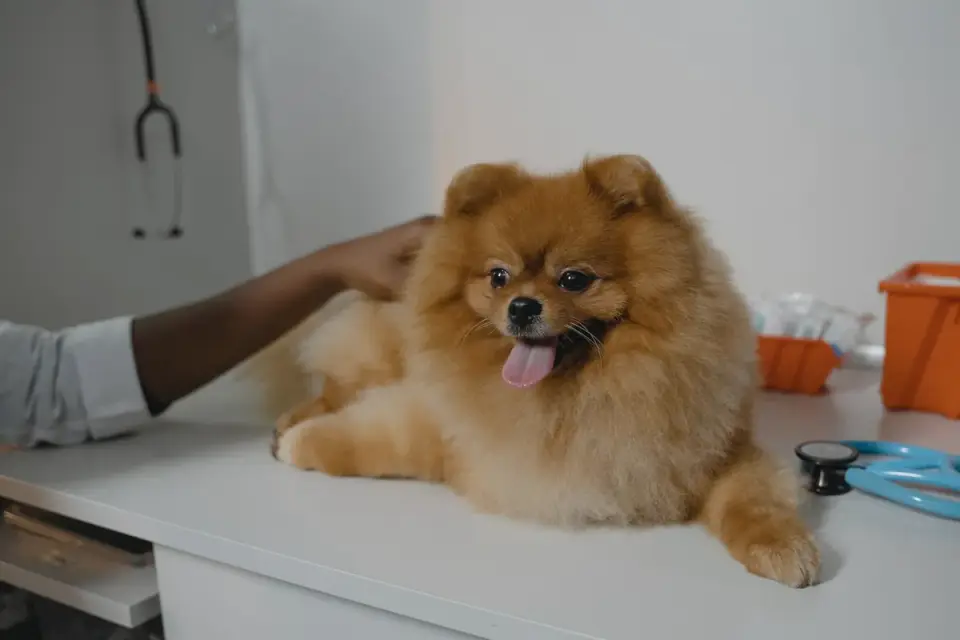
The immune system runs on its own separate schedule, largely disconnected from body size. Maternal antibodies from nursing protect a newborn puppy for the first several weeks, then fade unpredictably, which is why a single vaccine dose in early puppyhood isn’t reliable. The AAHA canine vaccination guidelines recommend a core vaccine series that starts around 6-8 weeks and repeats every three to four weeks until roughly 16 weeks of age, followed by a booster around the one-year mark. Rabies vaccination is added into that window as well, timed to state requirements. Skipping doses in that series, rather than skipping vaccination altogether, is the more common owner mistake — partial protection can still leave a gap.
Growth plates: the skeleton behind the growth spurt
Growth plates are cartilage, not bone, until they close. That makes them more vulnerable to injury from repetitive impact than the surrounding mature bone, particularly around the wrists, hips, and knees. A study following Labrador and Golden Retriever puppies through 4, 8, and 12 months of age measured how weight distribution and ground reaction forces shifted as the dogs grew, work published via NCBI that underscores how much a young Labrador’s gait and joint loading change well into the first year. Growth plates in large breeds commonly stay open into the 12-18 month range, and forcing hard, repetitive impact — long jogging, jumping from height, hard stops on stairs — before they close is the pattern most associated with later joint strain.
That single sentence carries the whole argument for pacing exercise deliberately.
A month-by-month framework for safe exercise
A widely used starting rule is roughly five minutes of structured, leashed exercise per month of age, run once or twice daily, layered with unstructured free play in a safe yard. Under that framework, a 3-month-old gets about 15 minutes a session, a 6-month-old about 30 minutes, and so on, building gradually rather than jumping straight to adult-length walks. Free play matters too, since puppies self-regulate impact better during loose play than during forced, repetitive movement like retrieving on hard pavement. Stairs, slick floors, and jumping on and off furniture are worth limiting for the same reason — it’s the repetition and impact, not gentle daily movement, that stresses an immature joint.
Teething, coat, and home setup
Teething typically runs from around 3 to 6 months as baby teeth are replaced by adult teeth, and chewing intensity often peaks in that window. Rotating a few appropriately sized chew items and puppy-proofing baseboards and furniture legs saves both the house and the puppy’s mouth. Coat texture also shifts around 4-6 months as the soft puppy coat starts giving way to adult fur, which is a normal, cosmetic change rather than a health flag.
Weight and body condition through the first year
Because Labradors are prone to carrying extra weight even as adults, tracking body condition — not just the number on the scale — during puppyhood sets a pattern that’s easier to maintain than to correct later. A puppy that’s visibly padded over the ribs at 6 months is more likely to be an overweight adult than one kept lean through growth, and excess weight compounds the load already going through immature joints. Regular weigh-ins at wellness visits, paired with a vet’s read on body condition score, give a more useful picture than guessing from appearance alone.
Taken together, a Labrador puppy’s first year is less a single milestone than four overlapping timelines — growth, immunity, skeletal maturity, and behavior — that owners are effectively managing in parallel. None of them need to be rushed.
Frequently asked questions
When do a Labrador puppy's growth plates close?
Most Labradors finish skeletal growth and see growth plate closure somewhere between 12 and 18 months, with the long bones of the leg typically among the last to fully calcify. Until then, repetitive high-impact activity carries more risk than it would for an adult dog.
How much exercise does a Labrador puppy need at 4 months?
A commonly used starting point is roughly five minutes of structured exercise per month of age, run once or twice a day, with free play in a safe yard added on top. A 4-month-old would land around 20 minutes of structured walking per session under that framework.
Is it normal for a Labrador puppy to look gangly or uneven at 6 months?
Yes. Large-breed puppies often grow in bursts, so legs, hips, and shoulders can mature at different rates and produce a temporarily lanky or uneven look. That typically evens out as the frame fills in through the second half of the first year.