
On this page
- The 2 a.m. Nudge Isn’t Always About Willpower
- What a Blood Panel Can Tell You That the Bowl Can’t
- When the Gut Itself Is Asking
- The Tradeoff Nobody Mentions When You Just Move Dinner Earlier
- Building a Routine That Actually Answers the Question
- The Edge Case That Changes the Advice
- An Owner’s Nighttime Checklist
The 2 a.m. Nudge Isn’t Always About Willpower
Owners tend to arrive at one of two conclusions when a dog starts pawing at the bed around midnight: either the dog is spoiled, or the dog is starving. I’d push back on both. Hunger signaling in dogs runs through the same hypothalamic circuitry that governs appetite in every mammal, and when that circuitry gets nudged — by cortisol, by blood glucose swings, by inflammation in the gut wall — the behavior that shows up at the bedroom door can look identical to plain old hunger even when the cause is nowhere near the food bowl. That’s the premise I want to test here, not assume: is the dog actually hungry, or is something else masquerading as hunger at 2 a.m.?
The honest answer is that both are common, and they don’t sound different from across the room. A dog nudging a hand, circling the kitchen, or whining by an empty bowl reads the same whether the driver is an overnight feeding gap or a metabolic disease that’s been quietly building for months. Distinguishing them takes more than watching the behavior once.
What a Blood Panel Can Tell You That the Bowl Can’t
This is where I part ways with the “just feed later” reflex a lot of well-meaning advice leads with. Adjusting dinner time is fine as a first move for a young, healthy dog on a light schedule — but if the waking has started recently, especially in a dog over six or seven, I want labwork before I want a schedule change. According to Testing for Increased Appetite, published by VCA Animal Hospitals, a marked increase in appetite can be caused by diseases including diabetes, exocrine pancreatic insufficiency, gastrointestinal disease, Cushing’s disease, or cancer, and it can also show up as a side effect of corticosteroid medication. None of those show up on a leash walk. They show up on a chemistry panel, a urinalysis, sometimes an abdominal ultrasound.
Consider a 7-year-old Labrador, 68 pounds, who’d slept through the night reliably for years and then started waking at 1 a.m. asking to eat, three weeks running. The owner’s instinct was to move dinner up two hours — a reasonable first guess. But a dog that size, at that age, with a new pattern rather than a lifelong one, is exactly the profile where I’d rather run bloodwork first. In this dog, a mildly elevated alkaline phosphatase on the panel opened the door to a Cushing’s workup, because per Cushing’s Disease in Dogs, also from VCA Animal Hospitals, elevated cortisol stimulates appetite directly, and dogs with sustained high cortisol can develop what looks like insatiable hunger — hunger that doesn’t respect a feeding schedule because it isn’t really about the schedule.
This is the imaging-study-and-acupuncture-needle instinct I keep coming back to across this column: I want the objective read on what’s driving a symptom before I decide how to manage the symptom itself. A blood panel isn’t overkill for a dog waking up hungry. It’s the fastest way to rule out the explanations that a schedule change can’t fix.
When the Gut Itself Is Asking
Sometimes the appetite change traces back to the digestive tract rather than the endocrine system, and that distinction matters for how you respond. Exocrine pancreatic insufficiency is a clear example — the pancreas stops making enough digestive enzyme, food passes through mostly undigested, and the dog can eat a full meal and still be functionally malnourished by midnight. Per the Journal of the American Veterinary Medical Association, EPI is treated by pancreatic enzyme replacement therapy, nutritional management with low-residue diets of moderate fat content, and cobalamin supplementation — a three-pronged plan, not a single fix, because the malabsorption and the vitamin deficiency it causes don’t resolve on enzymes alone. That same review notes future studies are still needed to understand persistent gut dysbiosis in EPI dogs even after enzyme therapy begins, which is a fair reminder that “started the enzymes” and “digestion normalized” aren’t the same milestone.
Gut flora gets raised a lot in these conversations, and it’s worth being precise about what the evidence actually supports. A recent peer-reviewed trial found that diversity metrics did not distinguish Frontiers in Veterinary Science: non-responders from responders among dogs given a probiotic for digestive complaints — a useful caution against assuming more bacterial diversity automatically means better clinical outcome. If a supplement is part of the plan, fiber and enzyme support are reasonable additions alongside a properly balanced diet, not a replacement for finding out why the gut is unsettled in the first place. Our guide to low-fat feeding for pancreatitis-prone dogs covers how fat content on a label interacts with digestive comfort, which is directly relevant if enzyme insufficiency or pancreatitis is on the differential list.
The Tradeoff Nobody Mentions When You Just Move Dinner Earlier
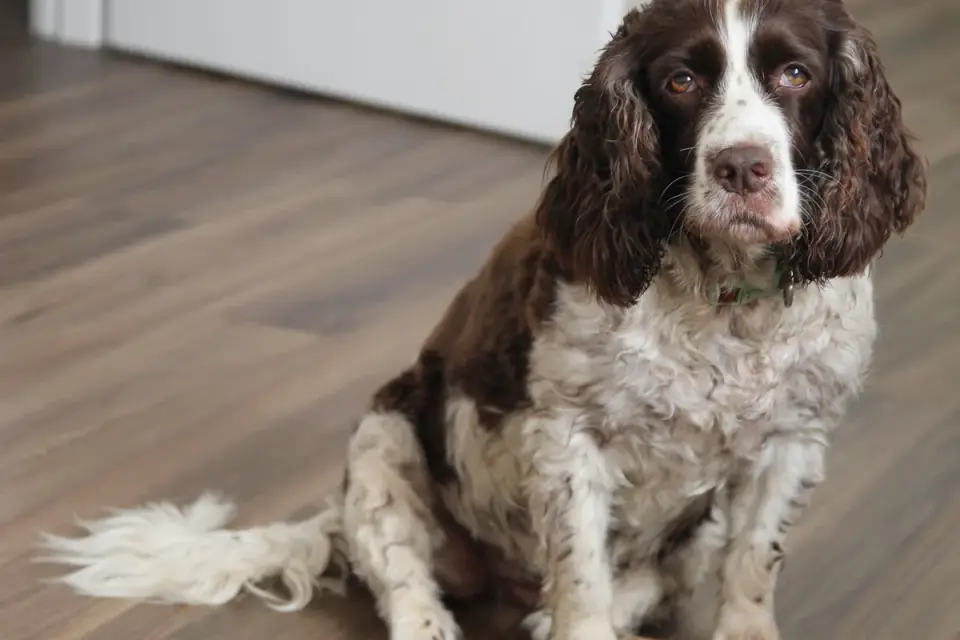
A family I worked with had a 4-year-old terrier mix, about 22 pounds, who started waking at midnight wanting food. They did what most advice columns suggest and shifted dinner two hours earlier. For the first several nights it seemed to help. By day 10, the waking was back, now paired with a new habit — the dog also started pacing before settling, which the family hadn’t connected to the eating at all. It wasn’t hunger driving either behavior. It was early joint discomfort making it harder for the dog to get comfortable at night, and the nudging at the food bowl was closer to generalized restlessness than a request for a meal. Moving dinner earlier hadn’t addressed the actual problem; it had just delayed the moment the real one became obvious.
I bring this up because feeding-schedule fixes are appealing precisely because they’re easy, and easy fixes that don’t work waste weeks a diagnosis could have used productively. If the waking doesn’t resolve within a week or two of a reasonable adjustment, that’s the signal to stop tinkering with mealtime and start asking what else could be driving the behavior.
Building a Routine That Actually Answers the Question
For a healthy dog without red-flag signs — no weight loss, no increased thirst, no vomiting, no lethargy — a structured routine is a fair and low-risk place to start. Split the daily food total so the evening portion is slightly larger, feed within an hour or two of bedtime rather than mid-afternoon, and add a slow-feed puzzle bowl for that last meal so digestion takes longer and blood sugar drifts down more gradually overnight. Keep the kibble itself fresh; food that’s gone stale or rancid can smell different enough to change how satisfying a dog finds a meal, which is one more reason storage matters more than owners assume — our piece on storing dog food to keep it fresh gets into why. And confirm the diet is actually formulated to meet a dog’s full daily needs in the first place; our explainer on what “complete and balanced” means on a dog food label is worth a read before assuming the current food is the baseline it should be.
Here’s the short version, and I’ll say it plainly because it deserves to stand alone: a schedule fix should show a clear result within about two weeks, or it isn’t the fix.
If a structure/function digestive supplement is part of the plan — a fiber source, a digestive enzyme blend, a probiotic — think of it as supporting a gut that’s already being fed and scheduled correctly, not as a substitute for that groundwork. None of those categories are positioned to cure an underlying endocrine or pancreatic disease; they’re meant to support normal digestion once the medical picture is clear.
The Edge Case That Changes the Advice
Age changes the entire calculation, and it’s worth naming the two ends of the spectrum separately. A 10-week-old puppy, roughly 12 pounds, waking at 3 a.m. hungry is usually just telling the truth — small stomachs and fast metabolisms mean genuine overnight hunger is normal until a puppy is transitioned onto three, then two, meals a day, and that timeline is typically weeks, not days. Treating that waking as a medical mystery is the wrong instinct; it’s a growth-stage feeding gap.
The opposite end is a senior dog, particularly one showing any signs of cognitive change, where nighttime waking that looks like hunger-seeking can actually be disorientation — the dog wakes, doesn’t recognize the hour, and defaults to food-seeking behavior because that’s a well-worn routine even when the internal clock is confused. In a 13-year-old dog, six months into slowly worsening nighttime restlessness, I wouldn’t treat that the same way I’d treat a 4-year-old’s sudden appetite change. The workup, and the conversation with the owner about what’s realistic to expect, are different at that stage. Age isn’t a footnote here — it changes which explanation is likeliest before you’ve run a single test.
An Owner’s Nighttime Checklist
- Note when the waking started and whether it’s been consistent, worsening, or intermittent — a new pattern deserves more scrutiny than a lifelong habit.
- Watch for accompanying signs: increased thirst, weight change, vomiting, lethargy, or a pot-bellied appearance are reasons to call the vet before adjusting mealtime.
- Try a reasonable schedule change — a larger, later evening portion — and give it roughly two weeks before deciding whether it worked.
- If the dog is a puppy, expect overnight hunger as a normal stage and plan the meal-schedule transition rather than treating it as a problem.
- If the dog is older or the pattern is new, ask for bloodwork before assuming the fix is behavioral.
- Keep food fresh and confirm the diet is actually complete and balanced for the dog’s life stage — a poorly matched diet can drive real hunger that no schedule trick will solve.
Sources
- Testing for Increased Appetite — VCA Animal Hospitals
- Cushing's Disease in Dogs — VCA Animal Hospitals
- Diagnosis and clinical management of EPI in dogs — Journal of the American Veterinary Medical Association
- Probiotic response variability in dogs with digestive complaints — Frontiers in Veterinary Science