On this page
- Start here: the checklist before you second-guess the breed
- The disputed premise: are Huskies actually stubborn?
- Why are Huskies so hard to train? Five breed traits behind it
- What actually predicts a good training outcome
- A dog I worked with, and one that changed my approach
- Where mobility and joint health fit into the training plan
- Owner checklist before you commit to a training plan
Start here: the checklist before you second-guess the breed
- Recall is the hardest skill, not the exception — plan for a securely fenced yard and a long line before you ever expect an off-leash “come.”
- Reward the behavior, not the mood — Huskies disengage under pressure; food, play, and enthusiasm work, corrections mostly don’t.
- Budget real daily output — a bored, under-exercised Husky is the one that “won’t listen.”
- Screen the hips before you build a training plan around jumping or agility work — joint soundness changes what’s fair to ask of a young dog.
- Expect a short attention span, not low intelligence — sessions should be brief, frequent, and end before the dog checks out.
- Escape-proof the environment first — training will not out-compete a dig-under or jump-over instinct on its own.
I want to walk through why each of those holds up, because “Huskies are stubborn” is the kind of shorthand that gets owners into trouble before they’ve even picked a leash.
The disputed premise: are Huskies actually stubborn?
Every few weeks I get a version of the same call. The owner describes a dog who sits and stays perfectly in the kitchen and then acts like a stranger the second they’re at the dog park. They usually frame it as defiance. I don’t think that’s quite what’s happening.
The American Kennel Club: AKC breed standard describes the Siberian Husky’s temperament as “friendly and gentle, but also alert and outgoing,” with intelligence and tractability that make the breed “an agreeable companion and willing worker” — language that doesn’t match the popular image of an untrainable dog. What the standard doesn’t say, but what shows up constantly in how the breed was developed, is that Huskies were bred to pull, problem-solve, and cover ground with minimal handler input for hours at a stretch. That’s a very different skill set than a retriever bred to hang on a handler’s every cue. A Husky isn’t ignoring you out of spite; it’s running a cost-benefit analysis, and if the payoff isn’t there, it walks away from the exercise the way it might walk away from a sled command with no destination.
So the premise “hard to train” survives contact with evidence, but the reason behind it doesn’t match what most owners assume. The dog isn’t defective. The method usually is.
Why are Huskies so hard to train? Five breed traits behind it
The short answer is that the traits that made Huskies good sled dogs are the same ones that make household obedience feel slow:
- Independent decision-making. A sled team has to keep moving and make choices far ahead of the musher, so the breed was never selected to watch a handler for every instruction.
- High prey drive. Small animals, birds and fast movement are genuinely more rewarding than most training treats, which is why recall breaks down outdoors.
- Endurance-level energy. A Husky built to cover long distances needs real daily exercise; without it, training competes with pent-up energy and loses.
- An escape habit. Digging, climbing and slipping out of collars are common enough in the breed that containment has to come before off-leash training.
- Low tolerance for repetition. Many Huskies stop responding when the same drill runs too long, which owners read as stubbornness.
None of those is a lack of intelligence. They mean training a Husky takes shorter sessions, better rewards, more exercise and more secure containment than training a breed bred to work closely with one person.
What actually predicts a good training outcome
Three things separate the households where training clicks from the ones where it doesn’t, and none of them are about the dog’s raw intelligence.
Reinforcement strategy. Huskies respond to food, play, and genuine enthusiasm; they check out fast under leash pressure, repeated corrections, or a flat, joyless tone. I tell owners to treat every session like an audition — if it’s not fun for the dog, it’s not going to work, full stop.
Exercise budget. A Husky that’s covered real distance that day is a different animal at 6 p.m. than one that’s been in a crate since 7 a.m. Training on top of pent-up energy is training against the dog’s physiology, not with it.
Containment and safety setup. Recall training in an open space, before the fence and long line are solid, sets almost every Husky up to fail, because a squirrel or a scent trail will beat your treat pouch nine times out of ten in the early stages.
One short paragraph on its own: none of this requires a different training philosophy than any other breed — it just requires taking the payoff and the boredom problem seriously from day one.
A dog I worked with, and one that changed my approach
A few years ago I worked with a two-year-old Husky named Koda, about 48 pounds, whose owners had tried three different obedience classes and were ready to give up. He’d sit for a treat in the exam room without hesitation, but on walks he’d hit the end of the leash the moment another dog or a squirrel showed up, and recall in the backyard was close to zero. What stood out in the history was timing: every “come” they’d used at home had been immediately followed by ending playtime and going inside. He’d learned, correctly, that the word meant fun was over. We rebuilt recall from scratch using a long line in the yard, paired the cue only with something better than what he was already doing — usually a handful of freeze-dried liver — and moved his main exercise session to the morning before any training happened at all. Within about six weeks his owners reported he was reliably checking in off-leash in the fenced yard, though we kept the long line going in open spaces for another season. That was one dog, not a guarantee, but it’s the pattern I see again and again: the “stubborn” label softens dramatically once the reward and the timing are actually competitive with what the dog would rather be doing.
Where mobility and joint health fit into the training plan
This is the piece owners often skip, and it matters more than most training advice. Huskies are working dogs built for sustained effort, and the Siberian Husky Club of America, Inc: Siberian Husky Club of America recommends hip screening as part of responsible breeding and ownership because hip and joint soundness affects how much high-impact work — jumping, hard stops, agility-style training — is fair to ask of an individual dog. A Husky with early joint laxity that’s pushed into intense fetch or jump-based training drills may show discomfort as reluctance, slowing on stairs, or general crankiness that looks a lot like “training resistance” but isn’t. Before building a training plan heavy on jumping, weaving, or repetitive impact work, it’s worth confirming the dog’s joints can support it, and keeping early sessions on soft ground with moderate, controlled movement.
None of that means you skip exercise — Huskies need real daily output, full stop — but structuring it as sustained movement (long walks, controlled runs, swimming) rather than explosive impact work supports joints long-term while still meeting the breed’s activity needs.
Owner checklist before you commit to a training plan
- Fence and long-line ready before recall training starts — don’t test it off-leash in an open space early on.
- Sessions short (5–10 minutes), frequent, and always ending on a win.
- Rewards that beat the environment: real food, not just praise, especially early on.
- Daily exercise scheduled before training sessions, not after.
- Baseline joint check with your vet before heavy jump or impact-based training, especially in dogs under two.
- Realistic timeline: expect weeks of consistent reps before recall is trustworthy off-leash, and keep the long line as backup even after progress.
For related breed-fit questions, see how Huskies compare on activity and home setup in guides on best low-maintenance dog breeds for busy people, best dog breeds for apartment living, and how working-line temperament plays out in Border Collie vs Australian Shepherd.
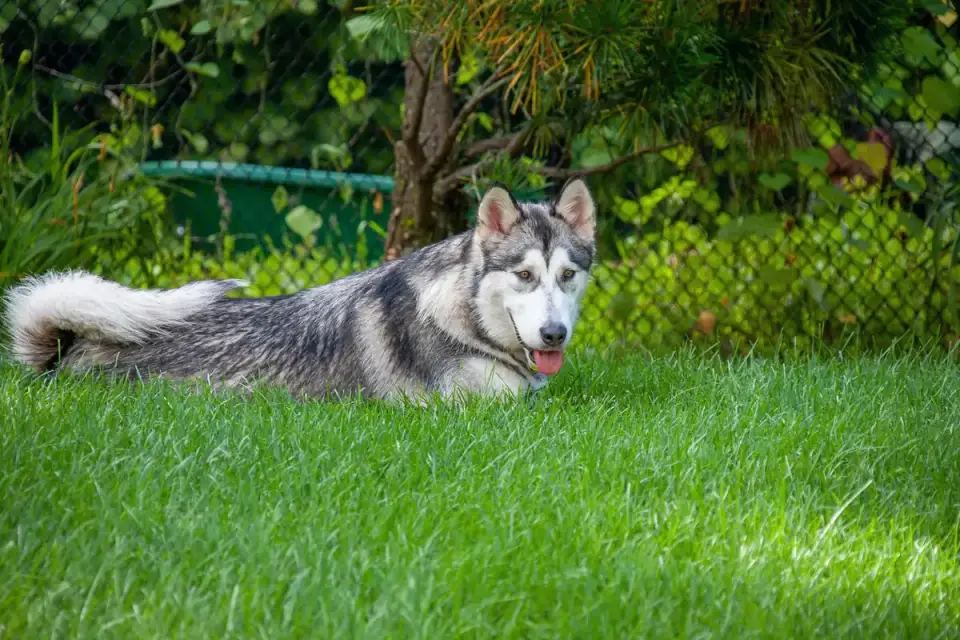
Huskies aren’t hard to train in the way a lot of owners fear going in — they’re just honest about whether a cue is worth their attention. Build the reward, the exercise, and the containment right, and most of what gets called stubbornness turns out to be a dog waiting for a better offer.
Frequently asked questions
Are Siberian Huskies good for first-time dog owners?
They can be, but only for owners ready to commit to daily exercise, secure fencing, and consistent positive-reinforcement training from the start; owners expecting an easy, low-effort dog often struggle.
Why does my Husky ignore recall commands?
Most recall failures come down to competing with something more exciting (prey, scent, another dog) without enough reinforcement history to beat it — training in a secured space with high-value rewards typically resolves this over weeks, not days.
Sources
- Official Standard of the Siberian Husky — American Kennel Club
- Hip Screening — Siberian Husky Club of America, Inc