On this page
- The Premise I Push Back On
- What Selective Breeding Actually Loaded Into These Dogs
- The Breeds Families Ask Me About Most
- Where the Breed Label Breaks Down
- A Family I Sat Down With Over This Exact Choice
- Building the Dog, Not Just Picking the Breed
- Where I Land
- Owner Checklist Before You Choose a Guard Breed
The Premise I Push Back On
Families come to me with a list already made. They want a German Shepherd, a Rottweiler, or a Doberman because a neighbor has one, or because a breed showed up on a “toughest guard dogs” roundup, and they assume the breed itself will do the guarding. I understand the instinct. But I don’t think breed selection is the real decision point here, and I’ll argue that through the rest of this piece: the breed sets the raw material, and everything that makes a guard dog safe around a family — the judgment, the impulse control, the ability to tell a delivery driver from an actual threat — comes from training and socialization layered on top of it. Pick the wrong breed for your household and you’ll struggle. Pick the right breed and skip the training, and you’ve still got a liability. Both parts matter, but only one of them is optional.
What Selective Breeding Actually Loaded Into These Dogs
The genetics behind guarding behavior are not folklore. A large-scale analysis of behavioral data from more than 50,000 dog owners, paired with genomic sequencing across nearly 5,700 purebred dogs and summarized by Penn Today, found that stranger-directed behavior is among the traits most strongly tied to genetics, in the same 60–70% heritability range as trainability and predatory chasing drive. That’s a meaningful number. It means breeds developed for guarding work really do carry a heavier genetic lean toward wariness of unfamiliar people, and that lean shows up whether or not an owner reinforces it.
It also means the researchers were careful about what that number doesn’t say. Genetics explains roughly half of the variation in behavior across breeds overall — a lot, but not the whole picture, and environment and early experience still do real work. I’d put it this way to a client in my exam room: the breed tells you what raw material you’re working with, not what the finished dog will do.
The Breeds Families Ask Me About Most
None of these are ranked against each other — that’s not how I’d counsel a real family, because “best” depends heavily on your home, your energy for training, and your other pets. But these are the breeds that come up most often in my guard-dog conversations, and what I actually tell owners about each one.
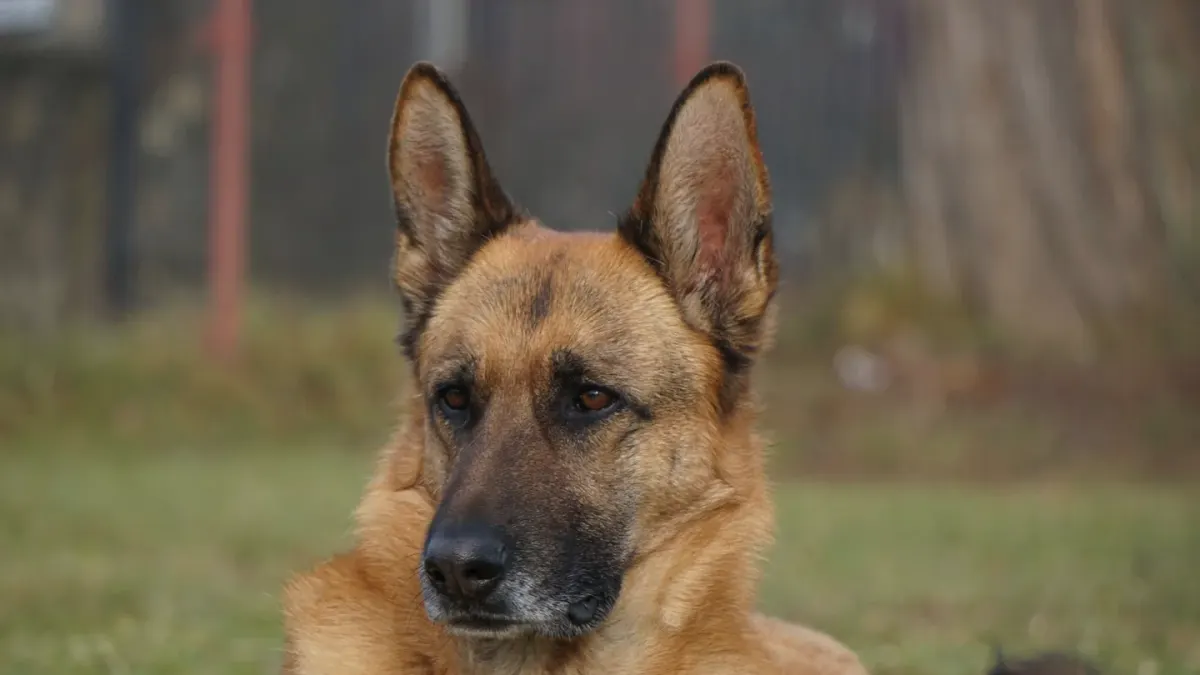
German Shepherd. The AKC describes the breed’s temperament as loyal, confident, courageous, and steady — traits that translate well to family protection when paired with early, consistent training, but that same confidence can tip into pushiness without it.
Doberman Pinscher. Athletic, intelligent, and fast to learn, which is exactly why undertraining a Doberman goes wrong quickly; this is not a breed that does well parked in a backyard with no outlet for its energy or its brain.
Rottweiler. Naturally watchful and physically imposing, with a lower default activity level than a Shepherd or Doberman, which some families find easier to live with day to day.
Boxer. Playful, bonded to children, and less naturally suspicious of strangers than the other breeds on this list — a reasonable pick for a family that wants a watchful presence without heavy guarding instinct.
Giant Schnauzer and Bullmastiff. Both run strongly territorial and protective by temperament, and both need an owner who’s done this before; these aren’t first-guard-dog breeds.
Where the Breed Label Breaks Down
Here’s where I get more emphatic with families than the marketing usually does: breed alone does not predict whether a dog is safe around your household. The American Veterinary Society of Animal Behavior’s Position Statement on Breed-Specific Legislation is blunt about this — breed is a poor predictor of bite risk on its own, and matching the individual dog to the household, along with adequate socialization and training, does more to prevent problems than breed selection does.
Socialization is not a soft add-on for this category. AVSAB’s AVSAB Position Statement on Puppy Socialization makes the case that incomplete or improper socialization during the early developmental window raises the risk of fear, avoidance, and aggression later in life — the opposite of what a family wants from a dog they’re counting on to tell friend from stranger correctly. A guard breed that missed that window doesn’t become more protective. It becomes less predictable.
That single sentence is the whole argument, honestly.
A Family I Sat Down With Over This Exact Choice
A few years ago I worked with a family who’d already picked out a Rottweiler puppy before their first appointment with me — they had two kids, ages seven and ten, and a fenced quarter-acre lot in a suburb outside the city. The mother told me she wanted a dog who’d “know the difference” between the mail carrier and someone who shouldn’t be on the property. What she hadn’t budgeted for was eighteen months of structured obedience work, a private trainer for controlled stranger introductions, and the fact that the breeder recommended waiting until the puppy was fully vaccinated before any real socialization began — a narrow window she had to move fast on. By month four, the family was doing weekly stranger-greeting drills in the driveway. By ten months, the dog would alert at the gate and then settle on command once she recognized the visitor was known. That settle command took longer to build than anything else, and it was the piece that actually made the dog safe to have around the kids’ friends.
Building the Dog, Not Just Picking the Breed
If a family is set on a guarding breed, this is roughly the sequence I walk them through, whether the breed is a Shepherd, a Doberman, or something further down the list:
- Start controlled stranger exposure early, inside the vaccination timeline your vet sets, not after it.
- Teach a reliable settle or release command before you teach anything about alerting — a dog that can’t stand down on cue is not a family guard dog yet.
- Budget for real training time, not a single obedience class; expect months, not weeks, for a dog to reliably distinguish delivery drivers from actual concerns.
- Match the breed’s exercise needs to your household, since an under-exercised guarding breed tends to redirect that energy into pacing, barking, or heightened reactivity.
- Keep a trainer or behaviorist in the loop past puppyhood, especially through adolescence, when guarding instincts often intensify before they settle.
Where I Land
I’d rather a family pick a Boxer they train well than a Giant Schnauzer they don’t train at all. That’s the honest version of my recommendation, and I know it runs against the instinct to reach for the most naturally imposing breed on the list. The counterargument is fair: a dog with less innate wariness genuinely won’t alert to the same things a Rottweiler or a Doberman will, no matter how well it’s trained, and for a family that wants strong natural protectiveness, that gap matters. I still land where I do, because I’ve watched more families struggle with an undertrained high-drive breed than with a mellower breed that simply didn’t guard as hard. A watchful Boxer that’s well socialized keeps a family safer, in practice, than a Rottweiler left to its own instincts. Choose the breed that matches your realistic training capacity first, and let the guarding instinct be the second filter, not the first.
If you’re also weighing space and daily exercise needs against a bigger guarding breed, our guide to Best Dog Breeds for Apartment Living walks through what actually predicts a good fit beyond square footage. And if the time commitment of training a guard breed gives you pause, it’s worth comparing that against our piece on Best Low-Maintenance Dog Breeds for Busy People before you commit. Families torn between two working breeds with different temperaments may also find our Border Collie vs Australian Shepherd comparison useful for thinking through drive and trainability side by side, even though neither is a classic guarding breed.
Owner Checklist Before You Choose a Guard Breed
- Have you budgeted months, not weeks, for structured socialization and obedience work?
- Can your household’s energy and space realistically support the breed’s exercise needs?
- Do you have access to a trainer experienced with protective breeds through adolescence?
- Are young children in the home, and if so, has the breeder or rescue screened for temperament around kids?
- Would a naturally watchful but less guarding breed, like a Boxer, actually meet your family’s real needs better than a heavier guarding breed?
Frequently asked questions
Is any dog breed truly "hypoallergenic guard dog" safe around kids without training?
No single breed is safe around children by default. Temperament testing, early socialization, and structured training matter more than the breed label, according to AVSAB's position on breed-specific risk.
What age should guard-dog training start?
Socialization should begin as early as your veterinarian's vaccination schedule allows, since the early developmental window is when a puppy's responses to strangers and new situations are most shaped.
Are smaller breeds ever good family guard dogs?
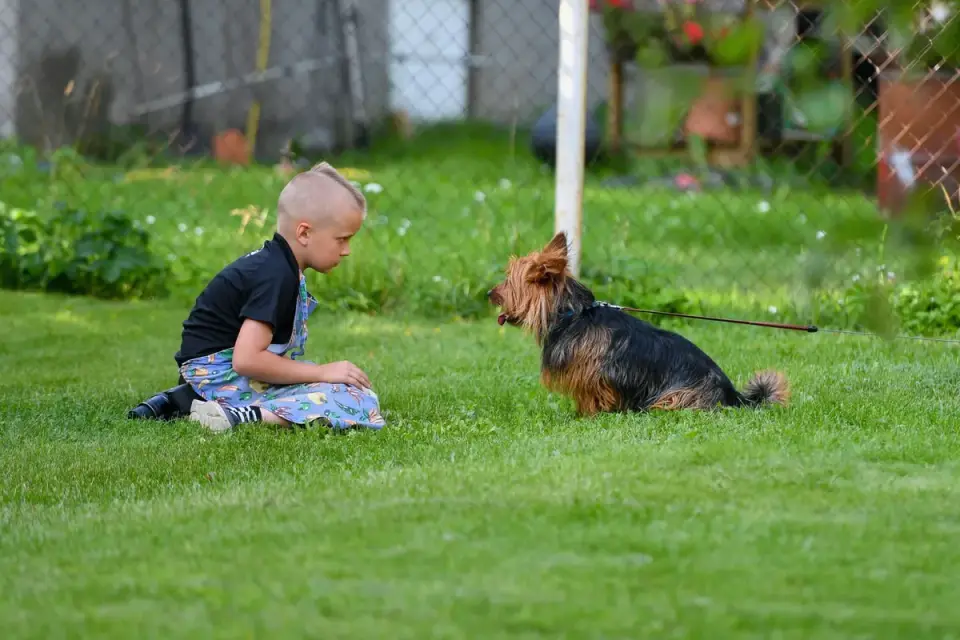
Watchful, alert temperaments aren't limited to large breeds, though a smaller dog's ability to physically intervene is limited. Many families use a smaller alert dog alongside home security measures rather than as a physical deterrent.