On this page
A woman named Priya sat in my exam room with a nine-month-old Bernedoodle named Biscuit, and she looked exhausted. She’d read online that doodles “don’t shed,” and she’d built her whole apartment around that promise — light-colored rugs, a navy couch, no vacuum budget to speak of. By month nine, Biscuit’s coat had blown out its puppy fuzz for an adult undercoat, and Priya was finding fur in her coffee. She wanted to know if she’d bought the wrong dog. She hadn’t. She’d bought the wrong expectation.
That’s the premise I want to test here: that “low-shedding breed” is a fixed, reliable label you can shop for. It isn’t, not entirely. It’s closer to a probability based on coat structure, and the structure matters far more than the breed name on the paperwork.
Shedding is a coat-biology question before it’s a breed question
Dogs grow one of two basic coat systems. A single coat has one layer of hair that grows continuously, closer to how human hair grows, and it gets clipped rather than blown out in bulk. A double coat carries a dense, insulating undercoat beneath a coarser topcoat, and according to the What Is a Double Coat, and What Dog Breeds Are Double-Coated?: AKC, most double-coated breeds shed that undercoat heavily, often twice a year in a seasonal “blow,” and sometimes closer to constantly if they live somewhere warm year-round. Retrievers, Huskies, and Collies all fall into that second group, and no amount of brushing turns a double coat into a low-shedding one — you’re managing volume, not eliminating it.
Breeds built around a single coat — Poodles, Bichon Frise types, Maltese, Chinese Cresteds, Shih Tzus — lose hair in small amounts that tend to get caught in the surrounding coat instead of drifting onto your floor. That’s the mechanical reason they read as “low shedding” in daily life. It isn’t magic, and it isn’t universal within a breed; individual coat density and hair-growth-cycle length still vary dog to dog.
Low-shedding dog breeds, grouped by coat type
If you want a shortlist of dogs that shed the least, sort it by coat type first, because the coat explains why each breed makes the list and what it will ask of you in return.
- Curly, continuously growing coats: Poodles (Toy, Miniature and Standard), Bichon Frise, Portuguese Water Dog, Lagotto Romagnolo, Irish Water Spaniel. Loose hair tends to stay caught in the curl, so these coats mat if brushing slips.
- Long, silky single coats: Maltese, Shih Tzu, Havanese, Yorkshire Terrier, Coton de Tulear. Little drifting fur, but daily or near-daily brushing and regular trims.
- Wire coats: Miniature, Standard and Giant Schnauzers, Wire Fox Terrier, Airedale Terrier, Norwich Terrier, wirehaired Dachshund. Low shedding when the coat is hand-stripped or clipped on schedule.
- Hairless or nearly hairless: Chinese Crested (hairless variety), Xoloitzcuintli, American Hairless Terrier. Almost no hair to shed, but skin needs sun protection and regular care instead.
Size is not the limit people assume. If you need a larger low-shedding dog, the Standard Poodle, Giant Schnauzer, Portuguese Water Dog and Irish Water Spaniel are the usual options; if you need a small one, the Maltese, Bichon Frise, Havanese and Miniature Schnauzer are. Within any of these breeds, an individual dog can still shed more or less than the breed’s reputation, and mixed breeds such as doodles inherit an unpredictable mix of their parents’ coats.
Where the “hypoallergenic” label quietly breaks down
I want to be direct with owners on this, because it’s where I see the most disappointment. The word “hypoallergenic” gets used interchangeably with “low-shedding,” and the two are not the same claim. Per the Does a Completely Hypoallergenic Dog Exist?: AKC, there is no dog breed that produces zero allergenic protein — the allergen most people react to, Can f 1, is carried in dander, saliva, and urine, not just loose hair, and it circulates in a home regardless of how little fur is on the floor. A dog that sheds very little can still be a genuinely difficult housemate for someone with dog allergies, and a moderate shedder can occasionally be tolerable, because allergen output varies more by the individual animal than by the breed line. If a family member has diagnosed dog allergies, I tell them to spend time with that specific dog before committing, not to trust the breed name alone.
What a low-shedding coat costs you in upkeep
This is the tradeoff owners underestimate, and it’s the one I spend the most time on in appointments. Single coats that don’t shed heavily still grow continuously, which means the hair has to go somewhere — professional grooming every four to six weeks, plus real daily or near-daily brushing at home to prevent matting near the ears, armpits, and collar line. I’ve had clients switch from a shedding retriever to a low-shedding terrier mix expecting less maintenance overall, and instead trade a twice-a-year vacuum-heavy shed for a monthly grooming bill and a dog who mats badly if brushing lapses even a week. Neither coat type is objectively easier. They’re different chores.
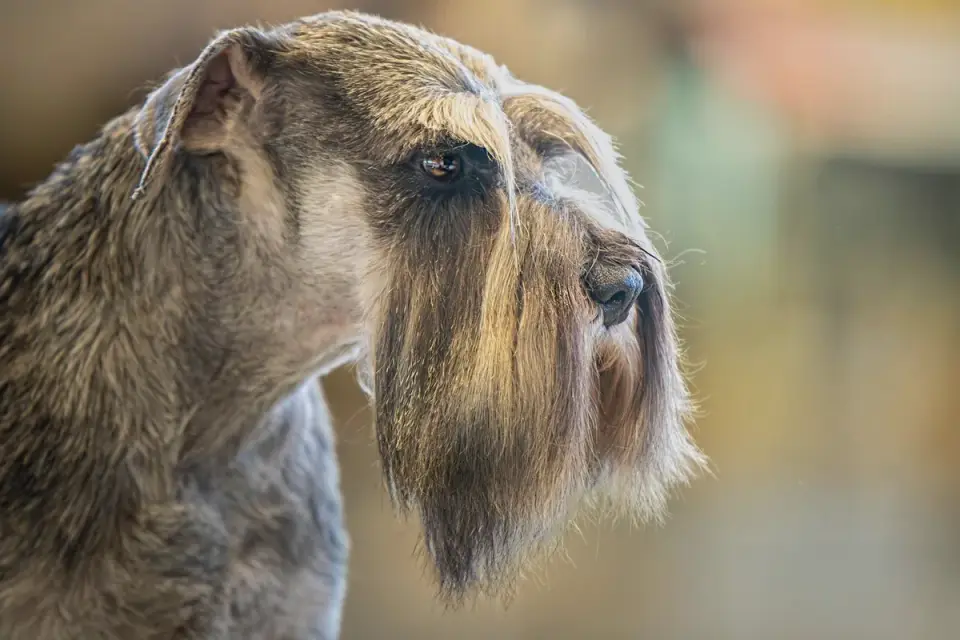
For wire-coated breeds specifically — Norwich Terriers, wirehaired Dachshunds — coat care sometimes means hand-stripping rather than clipping, according to Wisdom Panel, which preserves the coat’s texture and color in a way shaving doesn’t. That’s a specialty skill, and not every groomer offers it, so it’s worth asking about before you commit to a breed known for that coat type.
In my practice, the dogs I see doing best in low-shedding-focused homes are the ones whose owners built the grooming routine into the calendar from week one, not the ones who assumed the breed would take care of itself. One Portuguese Water Dog I worked with, a nine-year-old named Ozzy at roughly sixty pounds, had a coat that genuinely didn’t carpet the house with fur, but his owner brushed him three times a week without fail and still needed a groomer every five weeks for the curl to stay manageable. Compare that to a Labrador down the street who sheds constantly but needs nothing more than a weekly deshedding brush and an occasional bath. Both owners were happy. Both had accurately matched their tolerance for a specific kind of maintenance to the coat in front of them, not the reputation of the breed.
Setting up a home around a low-shedding dog
A washable throw on the furniture and a lint roller by the door do more for daily quality of life than most owners expect, even with a coat that technically sheds very little. Keep dander in mind too — a HEPA filter and regular vacuuming of soft surfaces matter more for allergy-sensitive households than the coat length itself. If you’re weighing a low-shedding breed against a low-maintenance one more broadly, our guide to low-maintenance dog breeds for busy people walks through that separate tradeoff, since the two categories overlap less than people assume. For apartment dwellers specifically, what actually predicts a good apartment fit covers space and exercise needs that matter as much as coat type. And if allergies are the real driver of your search, our deeper look at what the science actually says about hypoallergenic breeds is the more precise read than this one.
Doodle-specific shedding questions come up constantly in my exams, and they deserve their own answer rather than a footnote here — our piece on whether Goldendoodles really don’t shed breaks down the coat genetics behind that specific claim.
Owner checklist before you choose
- Ask what coat type the breed carries — single, double, wire, or curl — before you ask about “shedding” as a yes/no trait.
- If allergies are a factor, spend supervised time with the specific dog, not just the breed, before committing.
- Budget for professional grooming every four to six weeks with most low-shedding coats, plus brushing several times a week at home.
- Expect a double-coated dog to blow its coat seasonally regardless of brushing; plan for that stretch rather than fighting it.
- Match the maintenance style to your actual schedule, not the reputation the breed has online.
Frequently asked questions
Do any dog breeds truly not shed at all?
No. Every dog sheds some hair as part of a normal growth cycle; single-coated breeds like Poodles and Bichon Frise types shed very little visible hair because loose strands tend to stay caught in the surrounding coat rather than falling out.
Are low-shedding breeds better for people with dog allergies?
Not necessarily. Allergens come largely from dander, saliva, and urine, not just loose fur, so a low-shedding dog can still trigger allergies, and reactions vary more by individual dog than by breed.
How often do low-shedding breeds need grooming?
Most single-coated, low-shedding breeds need professional grooming roughly every four to six weeks, plus brushing several times a week at home to prevent matting.
Sources
- What Is a Double Coat, and What Dog Breeds Are Double-Coated? — American Kennel Club
- Does a Completely Hypoallergenic Dog Exist? — American Kennel Club
- A guide to dog coat types and care — Wisdom Panel