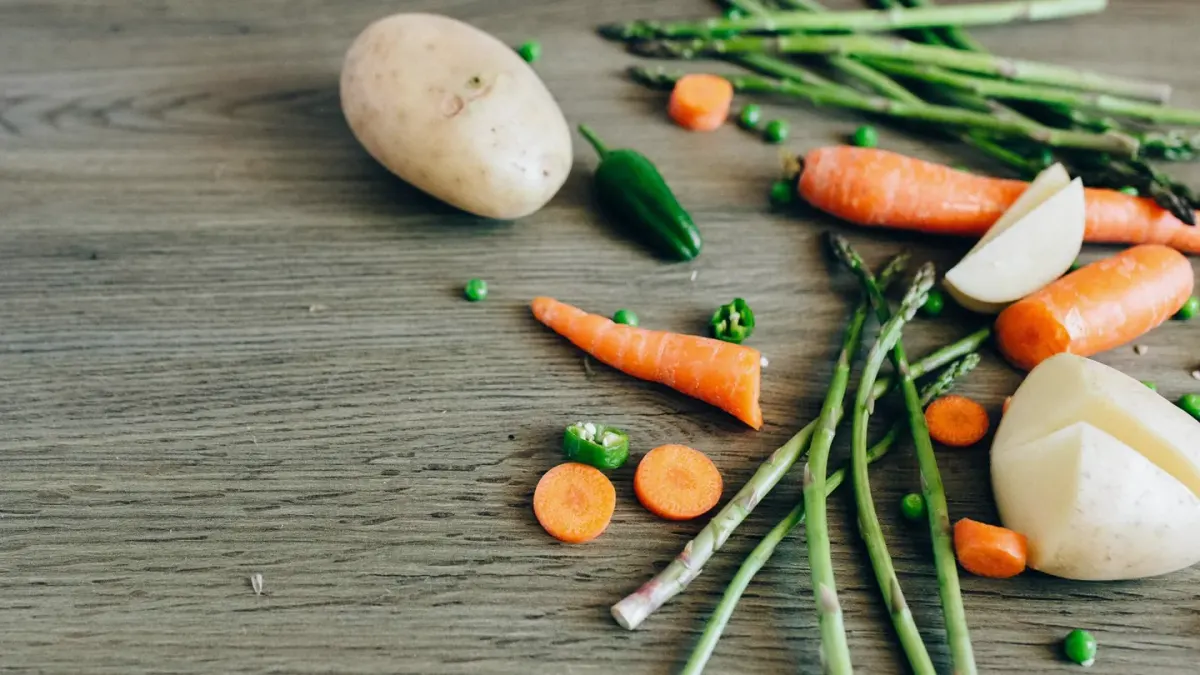
Carrots show up in more kitchens than any other dog treat that isn’t sold in a bag, and the question owners actually mean when they ask “can dogs eat carrots” is narrower than it sounds: is this safe enough to hand over without thinking twice? Mostly, yes. But “mostly” is doing real work in that sentence, and it’s worth unpacking before the carrot bag becomes a daily habit.
Here’s the short version, expanded below:
- Plain carrots, raw or cooked, are safe for most healthy dogs in modest portions.
- Size and shape matter more than the vegetable itself — cut small, always.
- The nutritional case rests on fiber and beta-carotene, not a specific therapeutic effect.
- Dogs on prescription low-fiber or low-glycemic diets need a vet’s input first.
- Treat rules still apply: roughly 10% of daily calories, no more.
What the crunch actually delivers. A raw carrot is mostly water, fiber, and beta-carotene, the plant pigment the body converts into vitamin A. According to the American Kennel Club, carrots also contribute vitamin K, vitamin C, and potassium in small amounts. None of that makes a carrot a supplement. It makes it a low-calorie, high-fiber vegetable that can stand in for a fattier treat, which matters more than owners tend to give it credit for — a dog carrying extra weight is a dog putting more load through hips, knees, and spine on every walk.
Picture a fourteen-pound terrier who gets three training biscuits a day plus dinner, and whose weight has crept up half a pound every few months without anyone quite noticing. Swap two of those biscuits for a few coin-thin carrot slices and the calorie math changes meaningfully over a year, even though nothing about the training routine has to change. That’s the honest case for carrots: not a superfood, just a smarter default for the calories a dog was going to eat anyway. I’d rather see an owner make that swap than reach for a joint chew and assume the supplement is doing the work the diet isn’t.
Where the real risk actually sits. It isn’t toxicity — it’s shape. A whole raw carrot, or a thick round coin, is genuinely hazardous for small dogs and for any dog that swallows food faster than it chews, which describes a lot of dogs at mealtime. VCA Animal Hospitals notes that excess vitamin A intake carries its own risks, including joint stiffness and long-bone changes at toxic doses, though that level of intake from vegetables alone is rare. The more common real-world problem is mechanical: a chunk that’s too big gets swallowed, not chewed, and lodges somewhere it shouldn’t. Cut carrots into bite-sized pieces or thin sticks, size them down further for small breeds and puppies, and supervise the first few times a new dog works through one.
Consider a senior Labrador whose owner has started using carrot sticks as a low-impact reward during short, frequent walks recommended after a mobility check-up. The dog gets the crunch and the calorie discipline; the owner gets a treat that doesn’t undercut the weight-management plan the vet actually wrote out. That combination — appropriate food choices plus a movement routine — does more for a stiff senior than any single ingredient could on its own, and it’s the same principle behind the walking and weight guidance in Does Cold Weather Make a Senior Dog Seem Stiffer and Slower Than Usual?

Vitamin A, beta-carotene, and why more isn’t a strategy. Owners sometimes reach for carrots specifically for “eye health” or coat quality, extrapolating from human nutrition advice. Beta-carotene genuinely is a vitamin A precursor and vitamin A supports vision and skin, but a few carrot pieces a day are a rounding error against a complete commercial diet that’s already fortified to meet a dog’s vitamin A needs. Piling on carrots, or carrots plus a vitamin A supplement, doesn’t produce a bigger benefit — it just narrows the margin before PetMD describes as excess intake becoming a real concern, however uncommon that scenario is from diet alone. I stay skeptical of any single ingredient marketed as a fix for coat or eye issues; those problems are usually about the whole diet, not one missing vegetable.
Carrots beside a supplement, not instead of one. This is where I want to be direct: a carrot is food, not a joint or gut supplement, and it shouldn’t be asked to do a supplement’s job. If a dog needs fiber support for stool quality, or a joint-support product for arthritis, carrots can sit alongside that plan as a genuinely useful low-calorie treat, but they aren’t a substitute for a dosed, tested product when one is medically indicated. The same logic applies to other vegetables owners use interchangeably — see our guide to sweet potato for a comparison of fiber sources and who should be more cautious with either one. And because treat swaps only help mobility if the dog is also moving, pairing better snack choices with a simple home ramp for a dog struggling with stairs, as covered in our DIY dog ramp guide, tends to do more for a stiff or heavier dog than the vegetable alone ever will.
The owner’s carrot checklist. Cut it small. Skip the seasoning, butter, and salt. Watch portion size against the rest of the day’s calories. Check with a vet before making carrots a daily habit if the dog has diabetes, pancreatitis history, or a prescription diet. And treat the carrot for what it is — a smart swap in the treat jar, not a supplement, not a cure, just a better default.
Frequently asked questions
Can puppies eat carrots?
Yes, in smaller, softer pieces. A frozen carrot stick can also ease teething discomfort, but supervise chewing and cut pieces down further than you would for an adult dog to reduce choking risk.
Are cooked carrots better than raw for dogs?
Neither is required over the other for a healthy dog. Cooking softens texture, which can help dogs with dental issues or those prone to gulping, while raw carrots offer more chewing time and dental friction. Skip butter, salt, or seasoning either way.
Sources
- Can Dogs Eat Carrots? Are Carrots Good for Dogs? Can Dogs Have Carrots? — American Kennel Club
- Vitamin A Poisoning in Dogs — VCA Animal Hospitals
- Can Dogs Eat Carrots? Benefits, Risks, and Feeding Tips — PetMD