On this page
I think about digestion the same way I think about gait: as a system under load, not a single symptom to patch. So when an owner asks me whether canned pumpkin or pumpkin powder is “better” for their dog’s stool, I don’t answer with a brand. I answer with what the fiber is actually doing once it’s inside the dog, and what dose the owner can realistically hit twice a day without measuring cups and a kitchen scale.
Quick answer first, for the owners who need to leave for work:
- If you need concentrated fiber in a small volume — a picky eater, a dog on a limited-ingredient diet, or a household that can’t keep an open can in the fridge — pumpkin powder wins on dosing accuracy.
- If your dog needs extra moisture along with fiber — mild constipation, a dog that under-drinks, hot weather — canned pumpkin’s water content is doing real work that powder can’t replicate.
- If cost and shelf life matter more than precision — plain canned pumpkin (100% pumpkin, no added sugar or spice) is cheap and widely available, but it spoils fast once opened and its fiber-per-spoonful varies more than owners assume.
- Either way, treat it as a supplement to a stable diet, not a fix for chronic loose stool — persistent diarrhea needs a vet visit, not a bigger scoop.
The premise I want to test before I recommend either one
The internet treats pumpkin as a near-universal GI reset button. I don’t think that premise holds up cleanly, and it’s worth testing rather than repeating. According to Tufts University’s Tufts University Petfoodology: Petfoodology, canned pumpkin is roughly 90% water, which means the actual fiber delivered in a typical spoonful is a lot smaller than owners assume — often too small to matter at the doses people are actually feeding. That’s not an argument against pumpkin. It’s an argument for being precise about which format gets you a therapeutic amount of fiber and which one mostly gets you a moist treat with a reputation.
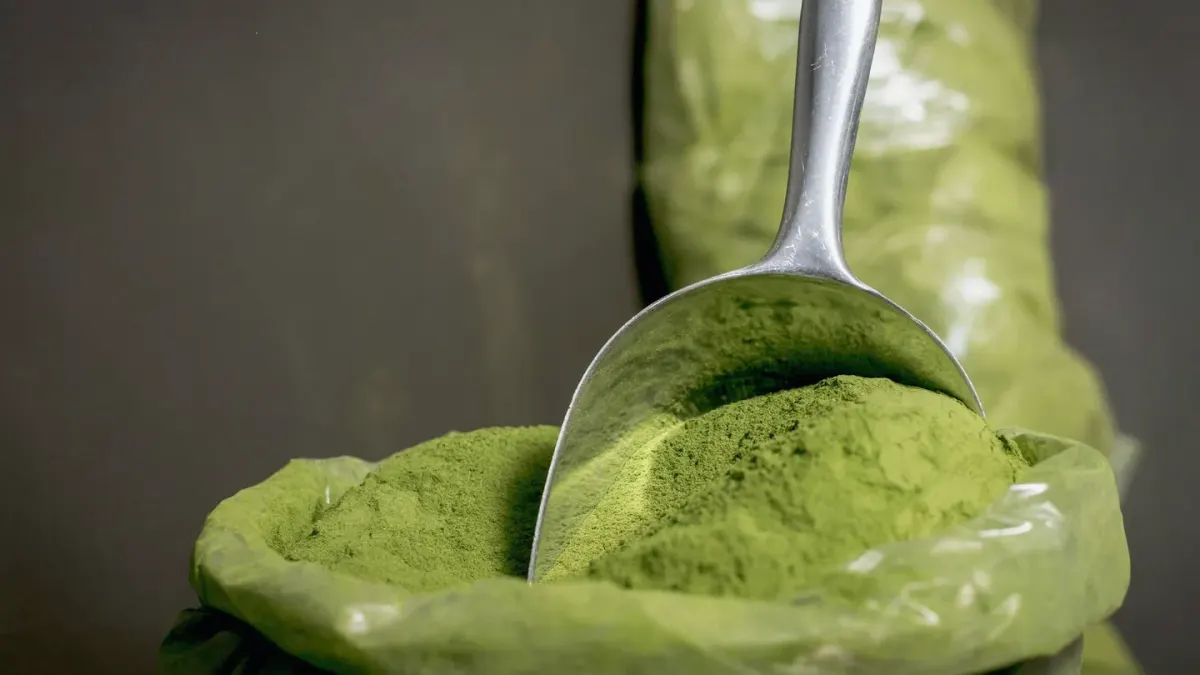
That distinction is exactly where canned pumpkin and pumpkin powder diverge. Canned pumpkin is cooked puree — mostly water, with fiber diluted throughout. Pumpkin powder is dehydrated, so the water is gone and the fiber is concentrated; a level tablespoon of powder can deliver more fiber than several tablespoons of canned puree. That’s a real, mechanical difference, not marketing.
What the fiber is doing once it hits the gut
Fiber’s job in the dog’s colon isn’t just bulk. Soluble fiber gets fermented by resident gut bacteria into short-chain fatty acids — mainly acetate, propionate, and butyrate — and those SCFAs feed the cells lining the colon, help regulate barrier integrity, and support a more stable stool pattern. Research published via the Journal of Animal Science modeling canine in vitro fermentation found that different fiber sources ferment at different rates and yield different SCFA profiles — meaning the source and the dose both matter, not just the presence of “fiber” on a label. This is the same reason I don’t treat all joint supplements as interchangeable just because they share an ingredient name: format and concentration change what actually reaches the tissue, or in this case, the colon.
For dogs prone to loose stool, that fermentation profile is the whole game. Too little soluble fiber and you don’t get enough SCFA production to firm things up. Too much, too fast, and you can tip a dog the other direction into gas or softer stool from over-fermentation. This is where dosing precision — which format gives you more than powder — actually pays off in daily practice.
I had a 9-year-old cocker spaniel in my practice, an overweight dog named Biscuit whose owner had been free-pouring canned pumpkin from an open can into his bowl for two weeks straight, guessing at the amount each time. His stool went from loose to inconsistent — some days firm, some days soft — because the fiber dose was swinging with how full the spoon happened to be, and the can itself was starting to ferment in the fridge by day five. We switched to a measured half-teaspoon of pumpkin powder mixed into his morning meal, weighed once on a kitchen scale to set the baseline, and his stool consistency stabilized within about ten days. That’s one case, not a study — but it’s the pattern I see often enough that I now ask owners how they’re actually measuring, before I ask which format they’re using.
Where moisture changes the calculus
Fiber isn’t the only variable. A dog straining with hard, dry stool from mild constipation needs water in the colon as much as it needs fiber — and that’s where canned pumpkin’s high water content genuinely helps in a way dry powder doesn’t unless you’re already mixing it with wet food or extra water. A dog with intermittently loose stool, on the other hand, doesn’t need more moisture added to the bowl; it needs a controlled, concentrated dose of fermentable fiber, which is where powder’s precision matters more than the puree’s water content. I ask owners to describe the stool — hard pellets versus loose and unformed — before I recommend a format, the same way I’d never prescribe a joint routine without first watching the dog move.
Cost, shelf life, and the practical stuff that determines whether you’ll actually keep doing this
An open can of pumpkin puree needs refrigeration and doesn’t keep much past five to seven days before I’d throw it out. If you’re only using a spoonful a day for a small dog, you’re wasting most of the can or freezing portions in an ice cube tray, which most owners try once and abandon. Pumpkin powder is shelf-stable for months, doses in a scoop with no waste, and travels well for boarding or travel — practical advantages that have nothing to do with fiber chemistry but everything to do with whether the routine survives past week two. If the format you pick doesn’t fit your actual kitchen habits, it doesn’t matter which one has better numbers on paper.
Neither format should be doing this job alone, either. If a dog’s stool issues are tied to a diet transition, stress, or a probiotic gap rather than a simple fiber shortfall, pumpkin — powder or canned — is treating a symptom without addressing the underlying driver. That’s the same whole-patient logic I use for a dog favoring a limb: you don’t just treat the sore joint, you look at the gait, the weight, and the surfaces the dog lives on. For chronic or recurring GI issues, it’s worth reading how prescription veterinary probiotics compare to over-the-counter dog probiotics, since fiber and probiotics often need to work together rather than pumpkin alone carrying the whole job.
Format questions like this one come up constantly with joint and mobility supplements too — I get asked almost as often whether freeze-dried or powder supplements hold up better for a dog’s daily routine, and the underlying logic is the same: concentration, shelf stability, and whether the owner can dose it accurately every single day usually matter more than which format sounds more “natural.” I’d add that dogs with sensitive stomachs sometimes react to GI stress the same way they react to motion sickness, which is why I also point owners toward how ginger compares to chamomile for dog car sickness when the GI upset seems situational rather than dietary.
I remember a litter-mate pair of Labradors, both around 60 pounds, where one dog tolerated canned pumpkin fine and the other developed noticeably softer stool within two days on the same amount. Same breed, same household, same food — different guts. That’s the piece owners underestimate: individual fermentation response varies enough that I tell people to start low with either format, watch stool for five to seven days, and adjust the amount before assuming the format itself is the problem. It rarely is.
Your checklist before you reach for either one
- Identify the stool problem first — hard and dry points toward canned pumpkin’s moisture; loose and inconsistent points toward powder’s dosing precision.
- Measure, don’t eyeball — free-pouring from a can is the single biggest reason owners see inconsistent results with either format.
- Start low for five to seven days and watch the trend before increasing the amount.
- Check the label — plain 100% pumpkin puree or powder only; no added sugar, salt, or pumpkin pie spice, which can upset a dog’s stomach further or, in the case of some spice blends, contain ingredients that aren’t safe for dogs at all.
- Treat it as a supplement, not a diagnosis — persistent diarrhea, blood in stool, or lethargy needs a veterinary visit, not a bigger scoop of either format.
- Match the format to your actual routine — the “better” fiber source is the one you’ll dose accurately and consistently, not the one with the better marketing story.
Frequently asked questions
Can I mix canned pumpkin and pumpkin powder together?
You can, but there's rarely a reason to. Pick the format that matches your dog's stool issue — moisture for hard stool, concentrated fiber for loose stool — and dose it consistently rather than combining two variables at once.
How much pumpkin should I give my dog?
There's no single dose that fits every dog, since fiber tolerance varies by size and individual gut response. Start with a small amount, measured rather than eyeballed, and watch stool consistency over five to seven days before adjusting.
Is pumpkin pie filling safe to use instead?
No — pumpkin pie filling contains added sugar and spices, and some spice blends can be harmful to dogs. Only use plain canned pumpkin or plain pumpkin powder with no additives.
Sources
- The Problem with Pumpkin — Tufts University Petfoodology
- Organic matter disappearance and production of short- and branched-chain fatty acids from selected fiber sources used in pet foods by a canine in vitro fermentation model — Journal of Animal Science