On this page
- Is one format really better, or is that mostly marketing?
- Why I weigh cost and access before I weigh the ideal
- Where the format genuinely changes the outcome: live organisms
- What actually separates a trustworthy product, regardless of format
- Home routine: fitting either format around movement, not instead of it
- The scene that keeps me consistent on this
- Your next step
Is one format really better, or is that mostly marketing?
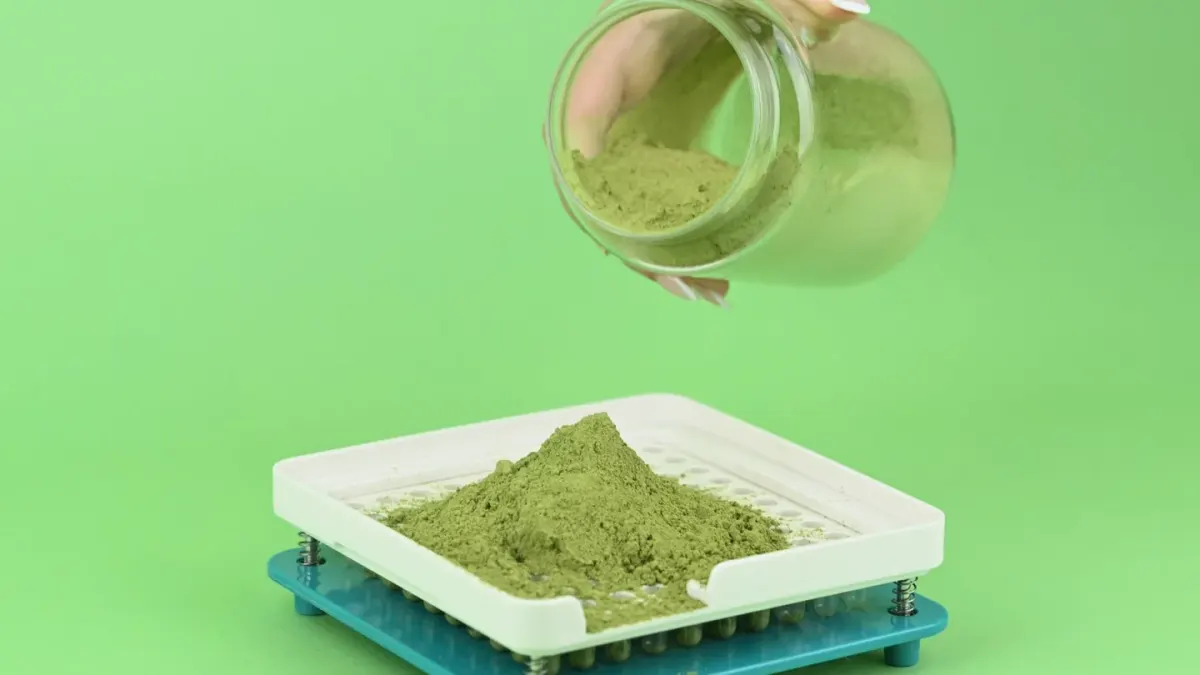
I get asked this more than almost any other supplement question in exam rooms, and my honest answer disappoints people who want a clean winner: it depends on what you’re supplementing, how you store it, and what your dog will actually eat. But if you push me — and owners do — I land on powder for most joint and multivitamin-type products, and freeze-dried for anything live, like probiotics. That’s not a hedge. It’s a distinction that matters more than the marketing copy on either bag lets on.
Freeze-dried processing removes moisture through sublimation at low temperature, which is gentler on heat-sensitive compounds and live organisms than the drying and grinding that goes into most powders. Powders, by contrast, are usually cheaper to produce, easier to standardize, and simpler to mix into food without a texture change dogs notice. Neither fact settles the argument on its own — the right call depends on the ingredient inside.
Why I weigh cost and access before I weigh the ideal
In my practice, I’ve watched an owner named Denise stand in my exam room with two bags in her purse — one freeze-dried probiotic chew at $42 a jar, one powder version of roughly the same strains at $19 — trying to figure out which one her 11-year-old Beagle, Otis, actually needed. Otis had loose stool for about three weeks after a course of antibiotics, worse in the mornings, better by evening. Denise was retired, on a fixed income, and had already spent more than she’d planned on his dental work that spring. She didn’t want the “best” product. She wanted the one she could keep buying every month without resenting it. We talked through what actually degrades in a probiotic powder that sits in a humid pantry versus what survives in a sealed freeze-dried jar, and we talked about whether Otis would even notice the difference in his bowl. That conversation — not a lab sheet — is what most owners are actually navigating.
That’s the tension I keep coming back to: the ideal product on paper isn’t the ideal product if it sits half-used in a cabinet because it’s too expensive to refill or too much trouble to portion. A supplement only works if someone keeps giving it.
Where the format genuinely changes the outcome: live organisms
This is the one category where I won’t soften my position. For probiotics specifically, freeze-drying tends to preserve live bacterial counts better than standard powder processing, because the low-temperature sublimation process is less destructive to bacterial cell membranes than heat-based drying. A study on freeze-dried Lactobacillus plantarum published in PMC (National Library of Medicine): Impact of protectants on the storage stability of freeze-dried probiotic Lactobacillus plantarum found that survival rates depended heavily on the protectant used during freeze-drying and on storage temperature, with refrigeration substantially improving viability retention over time. The strongest counterargument here is that a well-formulated powder probiotic with the right protectants and packaging can still hold up — format alone doesn’t guarantee viability, and a poorly stored freeze-dried product can lose potency just as fast. I still land on freeze-dried for probiotics when cost allows, because the margin for error is wider.
For joint supplements — glucosamine, chondroitin, green-lipped mussel, omega-3s — the calculus flips. These aren’t living organisms that need to survive digestion intact; they’re chemical compounds that are reasonably stable in powder form when kept dry and sealed. Paying a freeze-dried premium for a glucosamine chew doesn’t buy you meaningfully better joint support, in my experience, though it may buy you better palatability if your dog is picky. If cost is tight, this is where I tell owners to save their money and put it toward the ingredient dose instead of the processing method.
What actually separates a trustworthy product, regardless of format

Neither format tells you whether the product inside is honest about its contents. That comes down to manufacturing quality. Look for a company that holds the NASC: National Animal Supplement Council Quality Seal, which requires member companies to submit to random independent lab testing to verify label claims and to pass a facility audit every two years. It’s a process-and-labeling standard, not a guarantee of efficacy — but it’s the closest thing this industry has to a floor.
You can also cross-check ingredient names, forms, and label claims against the NIH Office of Dietary Supplements’ Dietary Supplement Label Database, which catalogs label information submitted by manufacturers. It won’t independently verify potency, but it’s a useful reference point if a label looks vague or inconsistent with what’s typical for that ingredient class.
Home routine: fitting either format around movement, not instead of it
A supplement, in either form, is one piece of a mobility plan — never the whole plan. I tell owners the same thing whether the jar says freeze-dried or powder: pair it with daily low-impact movement, keep your dog lean, and manage the home environment before you lean on anything in a bottle.
- A 10–15 minute leash walk twice daily on flat ground, working up gradually if your dog has been sedentary
- Non-slip mats or runners over hardwood and tile where senior dogs slip getting up
- A ramp or step for the couch or car if jumping has become hesitant or absent
- Weekly weigh-ins at home, since even a few extra pounds measurably increases joint load
If you’re also managing gut health alongside joint support, our comparison of Prescription Veterinary Probiotics vs. Over-the-Counter Dog Probiotics goes deeper into strain identity and dosing, and our piece on Wild Salmon vs. Fish Oil Supplements for a Senior Dog’s Brain covers a related format-versus-substance question for omega-3s.
The scene that keeps me consistent on this
Near the end of a longer appointment a few months back, I watched an owner named Marcus lay both containers on my exam table — a $38 freeze-dried joint chew and a $16 powder version with the same two active ingredients at comparable doses — and ask me, almost apologetically, if he was cheating his 8-year-old Labrador, Duke, by picking the cheaper one. Duke was 84 pounds, stiff after naps, slower on the stairs to the second floor than he’d been the winter before. Marcus worked two jobs and budgeted his pet spending to the dollar. I told him what I’m telling you here: for a compound-based joint supplement, the powder wasn’t cheating Duke out of anything. The dose and the ingredient mattered; the drying method didn’t move the needle for that category. Marcus bought the powder, kept it up consistently for months, and that consistency — not the format — was the part actually doing work for Duke’s joints.
I still say plainly, to every owner in that room, that a supplement supports wellness — it doesn’t replace veterinary care, weight management, or movement. Duke’s stiffness needed all three.
Your next step
Match the format to the ingredient, not the marketing. Choose freeze-dried for live probiotics if your budget allows it; choose powder for stable compounds like glucosamine and let the savings go toward dose or consistency. Either way, confirm the National Animal Supplement Council seal is on the label, check the ingredient against the Dietary Supplement Label Database if anything looks off, and build the supplement into a routine that also includes daily movement and a home setup that protects aging joints. If your dog’s mobility questions extend to breed-level fit or daily activity load, our guides on Best Low-Maintenance Dog Breeds for Busy People and Border Collie vs Australian Shepherd may help you plan around it.
Frequently asked questions
Do freeze-dried supplements last longer than powder once opened?
It depends on the ingredient. Freeze-dried probiotics generally hold live bacterial counts better over time, especially with refrigeration, while stable compounds like glucosamine keep well in powder form if the container stays sealed and dry.
Is freeze-dried always worth the extra cost?
Not for every ingredient. For live probiotics, the added stability can be worth it. For compound-based joint supplements, the processing method matters less than the dose and the ingredient quality, so a powder can be the more practical choice.
How do I know a supplement's label is accurate?
Look for the NASC Quality Seal, which requires independent lab testing and facility audits, and cross-check ingredient claims against the NIH Dietary Supplement Label Database if a label seems inconsistent with typical formulations.
Sources
- Impact of protectants on the storage stability of freeze-dried probiotic Lactobacillus plantarum — PMC (National Library of Medicine)
- National Animal Supplement Council — NASC
- Dietary Supplement Label Database — NIH Office of Dietary Supplements