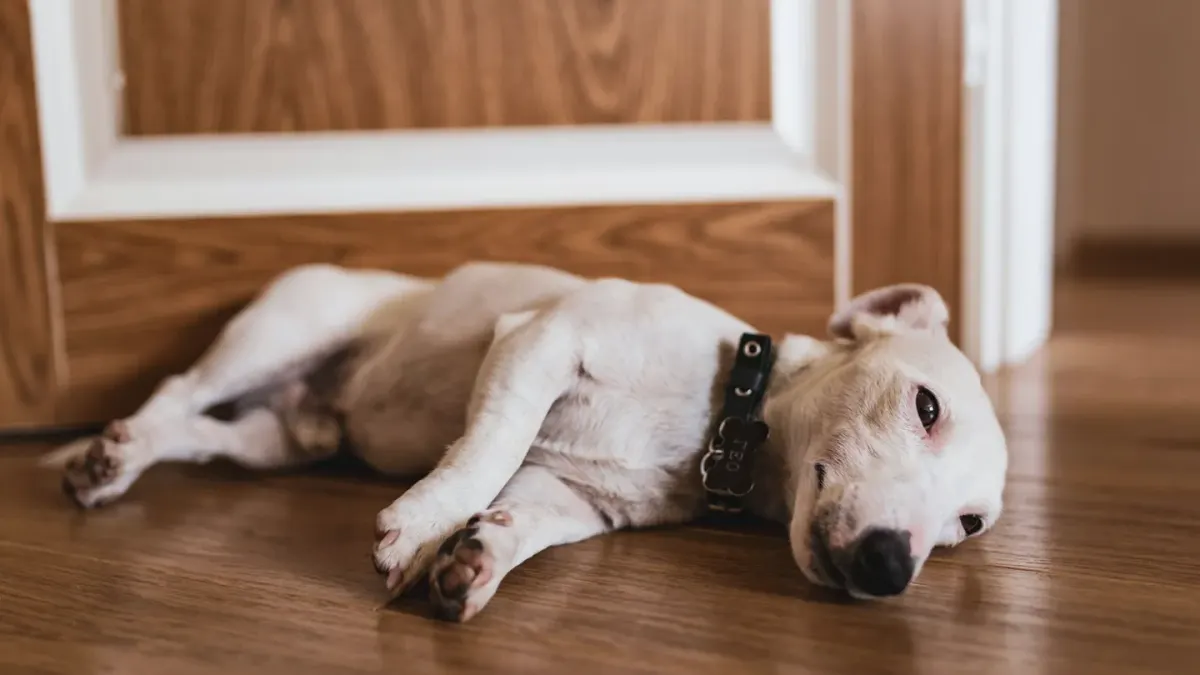
The premise I want to test before I reach for either one
Here’s the claim I hear most often at the front desk: that L-tryptophan and L-theanine are interchangeable “natural calming” ingredients, and you just pick whichever one is cheaper or in stock. I don’t buy that, and the biomechanics-first habit I bring to gait work applies just as well here — you don’t treat a hip like a shoulder because they’re both joints, and you shouldn’t treat tryptophan like theanine because they’re both amino acids. They reach the brain through different doors.
Quick-scan checklist before you choose:
- Trigger pattern matters. Chronic, diet-linked irritability (dominance or territorial aggression, general reactivity) leans toward tryptophan. Acute, situational anxiety (vet visits, storms, travel) leans toward theanine.
- Mechanism, not marketing. Tryptophan is a serotonin precursor delivered through the diet; theanine works faster, on GABA, serotonin, and dopamine together.
- Evidence quality differs. Tryptophan’s dog data is old and mixed. Theanine (as Anxitane) has more recent, dog-specific open-label data, though not a large blinded trial.
- Dosing format changes the outcome. Tryptophan needs sustained dietary inclusion to shift the plasma ratio that matters; theanine is typically dosed as a standalone tablet before a known trigger.
- Neither is a fix. Both sit alongside training, exercise, and environment — not in place of them.
What tryptophan is actually doing
L-tryptophan is the sole dietary precursor of serotonin, and its role in brain serotonin synthesis is well documented as a driver of mood and behavior, per a review in National Center for Biotechnology Information: L-Tryptophan: Basic Metabolic Functions, Behavioral Research and Therapeutic Indications. The idea in dogs isn’t a single dose before a stressful event — it’s a sustained shift in diet composition that changes how much tryptophan competes with other large neutral amino acids for transport into the brain. That’s a slow lever, not a fast one, and it only moves if the rest of the diet’s protein and amino acid profile cooperates.
The dog-specific evidence is older than I’d like and genuinely mixed. A study in the Journal of the American Veterinary Medical Association (JAVMA) found that adding tryptophan to a high-protein diet, or switching to a low-protein diet, modestly reduced dominance aggression, and tryptophan supplementation of a low-protein diet helped with territorial aggression — but there was no effect on hyperactivity, and later placebo-controlled work didn’t replicate the aggression findings consistently. I read that as: real biological plausibility, weak and inconsistent clinical proof. I still bring it up with owners of chronically irritable dogs because the mechanism holds up, but I don’t promise a behavior change on a timeline.
Where theanine’s evidence actually stands
Theanine works differently and faster. It’s an amino acid from tea leaves that raises inhibitory GABA activity while also influencing serotonin and dopamine, and in dogs it’s most studied as the branded product Anxitane. An open-label prospective study of storm-sensitive, client-owned dogs published in Topics in Companion Animal Medicine reported a significant decrease in global anxiety scores from baseline to the end of the study, using dosing scaled to body weight — 25 mg twice daily for dogs up to 10 kg, up through 100 mg twice daily for dogs over 25 kg. That’s encouraging, but it’s an open-label design without a placebo arm, so I treat it as supportive, not conclusive. What I like about theanine clinically is the timing flexibility: you can dose it ahead of a known trigger — a thunderstorm forecast, a car ride, a grooming appointment — in a way you simply cannot do with a slow-acting dietary precursor.
In my practice, the dogs where theanine earns its keep are rarely the chronically irritable ones — they’re the situationally overwhelmed ones. I worked with a nine-year-old, 62-pound Bernese Mountain Dog named Otto whose owners first noticed a problem the way most people do: he started refusing to get in the car for vet visits, something he’d done without complaint for years, and by the third missed appointment they were carrying a 62-pound dog down porch steps. The trigger wasn’t chronic irritability — it was the exam room itself, the cold table, the nail trim. We layered theanine dosed ahead of the appointment with a slow desensitization plan (treats on the porch, then in the car, then in the lobby) over about six weeks. The car problem eased well before the exam-room tolerance did, which told me the theanine was buying behavioral windows, not rewriting the underlying fear. That’s the honest ceiling on what any calming supplement does.
Weighing the two honestly
If I had to land on one default, it’s this: theanine has the better-fitting evidence for acute, situational anxiety because the studied dosing schedule matches how owners actually need to use it — ahead of a known trigger, in Topics in Companion Animal Medicine. Tryptophan’s plausibility is strong on paper, tied to its role as L-tryptophan’s serotonin precursor function, but the dog behavior data in JAVMA is old, inconsistent, and tangled up with overall diet composition — you can’t isolate the amino acid from the rest of the protein picture. The strongest counterargument to my lean is that a chronically irritable dog on a poorly balanced high-protein diet might genuinely benefit more from the dietary tryptophan approach than from a standalone theanine tablet, because the underlying driver is metabolic, not situational. I still land on theanine as the more defensible first try for most owners, because the evidence is dog-specific, recent, and dosed the way real life demands — but I don’t dismiss tryptophan for the right case.
Neither ingredient replaces the rest of the plan. A dog whose anxiety shows up as pacing, shifting weight off a sore hip, or reluctance to jump into the car deserves a gait and comfort check before anyone reaches for a supplement — see how we sort that out in Arthritis vs. Normal Aging Stiffness in Dogs: How to Tell the Difference. And if the household is already using an antihistamine or a pressure wrap for situational stress, it’s worth comparing those tools honestly rather than stacking everything at once — we cover that ground in Benadryl Versus Natural Calming Supplements for Dogs and Thundershirt vs. an Oral Calming Aid for Dog Anxiety.
Your checklist before you buy either one
- Identify the pattern first: chronic irritability points toward diet-level tryptophan strategies; situational, trigger-specific anxiety points toward theanine dosed ahead of the event.
- Don’t expect a single dose of either to override months of an unaddressed trigger — pair with desensitization or a trainer’s plan.
- If choosing tryptophan, think diet composition, not a bottle of capsules — talk to your vet about the whole protein picture.
- If choosing theanine, dose ahead of the known trigger, scaled to body weight, and track anxiety signs before and after.
- Rule out physical discomfort — a sore joint or spine can look exactly like anxiety-driven avoidance.
- Bring both options to your vet before combining either with prescription behavioral medication.
Which one would actually change your dog’s Tuesday — the diet, or the tablet before the storm rolls in?
Frequently asked questions
Can I give my dog L-tryptophan and L-theanine together?
Some owners combine them, but there's no dog-specific study on the combination, so talk with your vet before stacking supplements, especially alongside prescription behavioral medication.
How fast does L-theanine work for dogs?
In the storm-sensitivity study, dogs were dosed ahead of known triggers, and owners are generally advised to give it roughly 30–60 minutes before an anticipated stressful event, though individual response varies.
Does tryptophan in dog food actually change behavior?
The evidence is mixed — one older study found a modest reduction in dominance and territorial aggression with dietary changes, but later placebo-controlled work didn't consistently reproduce that effect.
Sources
- An open-label prospective study of the use of l-theanine (Anxitane) in storm-sensitive client-owned dogs — Topics in Companion Animal Medicine
- Effect of dietary protein content and tryptophan supplementation on dominance aggression, territorial aggression, and hyperactivity in dogs — JAVMA
- L-Tryptophan: Basic Metabolic Functions, Behavioral Research and Therapeutic Indications — National Center for Biotechnology Information