
I get a version of this question in exam rooms almost every month now: a client has read about NAD+, senescent cells, or “zombie cells,” and wants to know whether resveratrol or quercetin is the one to buy for their aging dog. My honest answer is that they aren’t really competing for the same job, and treating them as interchangeable is where owners go wrong.
I think about mobility and longevity the way I was trained to think about the whole patient — through balance, not through a single molecule doing all the work. A polyphenol can nudge a system in a useful direction. It cannot substitute for weight management, joint-friendly movement, or the manual therapies I use every week, like Tui-na and acupuncture, to keep an older dog’s tissue mobile. That framing matters here because resveratrol and quercetin get sold with very different promises, and only one of them currently has a dog-specific clinical trial behind the promise that gets the most attention.
Puppyhood and young adulthood: neither ingredient has a real job yet. In a healthy young dog, there is no established indication for resveratrol or quercetin. Cellular senescence — the process both compounds are marketed against — accumulates with age; it is not something a two-year-old dog needs help managing. If you’re reading this with a puppy or a young adult dog, the more useful early investment is joint-conscious exercise, lean body condition, and a diet built for growth, not a senescence supplement.
Middle age: this is where resveratrol’s evidence base actually lives. Most of the controlled work on resveratrol in dogs has looked at safety and physiological effect, not longevity outcomes. A subchronic toxicity study in Beagles gave daily oral resveratrol at 200, 600, or 1,200 mg/kg for 91 days; researchers reported no mortality and no treatment-related gross toxicity, though both sexes showed a statistically significant drop in body weight at the highest dose, according to a review published in Cells that synthesized resveratrol research relevant to aging-related cardiovascular disease in dogs. Separately, resveratrol administration to kennel dogs under chronic stress was associated with changes in gut microbiome composition and tryptophan-related metabolites tied to stress physiology, per a study in Resveratrol Ameliorates Chronic Stress in Kennel Dogs and Mice by Regulating Gut Microbiome and Metabolome Related to Tryptophan Metabolism: PMC. That’s a real, measurable effect — but it’s a stress and metabolic finding, not a lifespan finding. I tell clients that resveratrol’s strongest current case in a middle-aged dog is as a general antioxidant and cardiovascular-support ingredient, used at label-appropriate doses, alongside a conditioning program — not as a senescence-clearing intervention on its own.
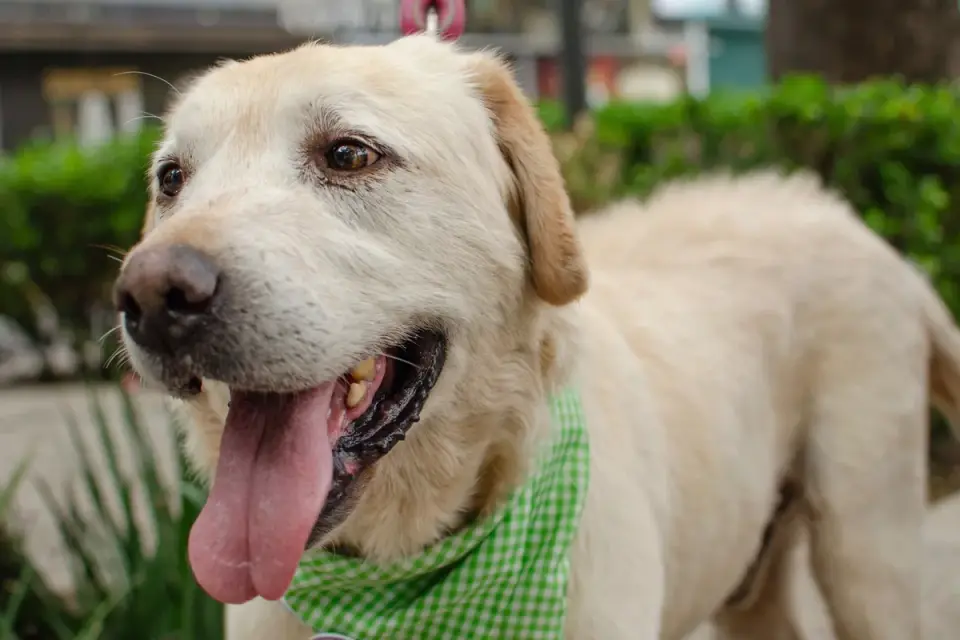
Senior years: quercetin’s evidence is smaller but more targeted, and this is where the interesting trial sits. Quercetin is one of the two agents in the dasatinib-plus-quercetin senolytic combination that has been studied specifically for clearing senescent (“zombie”) cells rather than just neutralizing oxidative stress. In canine-derived valve interstitial cells from dogs with myxomatous mitral valve disease, dasatinib plus quercetin reduced senescence markers and senescence-associated beta-galactosidase activity while increasing a marker of programmed cell death, according to research summarized in a review on anti-aging strategies published on vetsci.org. That same review notes quercetin’s oral bioavailability in dogs is low — around 4.6% absolute — which is a real limitation for any owner assuming a capsule delivers a predictable dose to tissue. Quercetin has also been studied in a broader supplement blend with bromelain and Lentinula edodes extract in kennel dogs, where researchers tracked antioxidant capacity alongside fecal and morphofunctional parameters, reported in A Supplement with Bromelain, Lentinula edodes, and Quercetin: Antioxidant Capacity and Effects on Morphofunctional and Fecal Parameters in Kennel Dogs: PMC. None of this is proof that quercetin extends a dog’s life. It’s early, targeted work on a specific senescence pathway, mostly in cell models and small studies, and I say that to clients directly rather than let the “senolytic” label do the selling for me.
I had a 12-year-old Cavalier King Charles Spaniel in my practice last year, 17 pounds, whose owner had already read every longevity blog post available before our appointment. The dog was slower on stairs, took longer to settle after her evening walk, and had started skipping her usual jump onto the couch by early winter — changes the owner had tracked in a notes app over about six weeks. We talked through what she actually wanted: was it joint comfort, cardiac support, or general vitality she was chasing? Her dog had early mitral valve changes on auscultation, so we weighed resveratrol’s cardiovascular-adjacent research against her budget and her dog’s modest pill tolerance, and layered in twice-weekly low-impact walks and a home ramp instead of stair access. That’s the actual decision most owners are making — not “which polyphenol wins,” but which one addresses the specific system that’s showing wear, and whether the dog will even tolerate it long term.
What I actually prioritize before either ingredient. Structure-and-function support only works when the rest of the picture is in place. That means a body condition score you can feel ribs through without a heavy press, a floor surface that isn’t slick tile at the top of the stairs, and movement that’s frequent and low-impact rather than one long weekend hike. Supplement format matters too — the same active ingredient behaves differently depending on how it’s delivered, which is worth understanding before you commit to a product; our guide on freeze-dried vs. powder supplements covers that trade-off in more depth. If your dog is already on a joint or immune-support regimen, it’s also worth checking how a new polyphenol might layer on top of what’s already in the bowl — our piece on supplements to support a senior dog’s immune system is a reasonable starting point for that conversation with your vet.

Where I land, and the counterargument I take seriously. If I had to choose one for a dog with early cardiovascular or general-aging changes and no specific mobility complaint, I’d reach for resveratrol first, because its dog-relevant safety data is broader and its dosing is better characterized. If the concern is more specifically joint or cellular aging tied to a diagnosed condition like valve disease, quercetin’s senolytic mechanism is the more targeted argument, even with its bioavailability problem. The strongest counter to my own position is that neither ingredient has a completed, dog-specific longevity trial showing lifespan extension — the closest we have is mechanistic and small-scale work. I still land where I do because “targeted, mechanistically plausible, and safety-tested” is a defensible bar for a structure/function supplement, even without a lifespan endpoint. I’d rather an owner spend on the ingredient matched to what’s actually changing in their dog than chase whichever polyphenol trended this month.
One more thing I bring up with almost every senior-dog owner: match the supplement conversation to what you’re seeing at home, not to what’s trending online. I had a client bring in her 10-year-old mixed-breed after reading about a competitor’s “vs Boops” marketing page and assuming one brand’s public testing record settled the ingredient debate for her. It didn’t — testing transparency tells you about a specific product, not about whether resveratrol or quercetin is the right molecule for her dog’s actual symptoms. We ended up focusing on her dog’s early stiffness after rest, added a short morning stretch routine, and revisited supplementation only after her regular bloodwork ruled out anything else driving the slowdown. That sequencing — symptom first, mechanism second, product last — is the habit I want every owner reading this to walk away with.
Before you buy either one, run through this list:
- Identify the actual concern: cardiovascular changes, joint stiffness, or general vitality — they point toward different ingredients.
- Ask your vet whether your dog’s current medications or conditions (especially clotting issues or diagnosed heart disease) change the calculus for either compound.
- Check the label for a stated dose per body weight, not just “polyphenol blend.”
- Reassess in six to eight weeks using the same markers you started with — stairs, jump height, gait after rest — rather than a vague sense of “seems better.”
- Keep movement and weight management as the non-negotiable baseline, regardless of which supplement you choose.
Bottom line: resveratrol has the broader dog-relevant safety and physiological data and fits a general aging or cardiovascular-support role, while quercetin’s evidence is narrower but more mechanistically targeted at senescent cells — pick based on what’s actually changing in your dog, not on which polyphenol is trending.
Sources
- Pleiotropic Effects of Resveratrol on Aging-Related Cardiovascular Diseases—What Can We Learn from Research in Dogs? — Cells (MDPI)
- Resveratrol Ameliorates Chronic Stress in Kennel Dogs and Mice by Regulating Gut Microbiome and Metabolome Related to Tryptophan Metabolism — PMC
- Anti-aging strategies for dogs: current insights and future directions — vetsci.org
- A Supplement with Bromelain, Lentinula edodes, and Quercetin: Antioxidant Capacity and Effects on Morphofunctional and Fecal Parameters in Kennel Dogs — PMC