On this page
Is a seat belt harness, a crate, or a barrier actually the safer bet?
Owners ask me this constantly, and my honest answer disappoints some of them: a cargo barrier alone isn’t really a restraint at all, and most seat belt harnesses on shelves haven’t been tested the way you’d assume. My working premise, after years of counseling clients through this decision, is that the restraint category matters less than whether the specific product has independent crash data behind it — and right now, crates dominate that data.
I want to test that premise honestly rather than just assert it, because barrier and harness fans have a real point: a well-fitted harness keeps a dog upright, visible, and able to look out the window, and a lot of owners simply won’t use a crate in a sedan. So let’s walk through what each option actually does in a collision, and where the trade-offs are legitimate rather than just habit.
What crash testing has actually measured
Independent crash testing is where this question gets settled, and the Center for Pet Safety is the group that has actually run it. Their harness crashworthiness study found major differences in performance among popular pet restraints, with many resulting in catastrophic failure — buckles releasing, straps tearing, or the dog being launched forward — that could injure both the pet and the humans in the car. Only a handful of harnesses have passed both the static load test and the simulated 30 mph frontal-impact test.
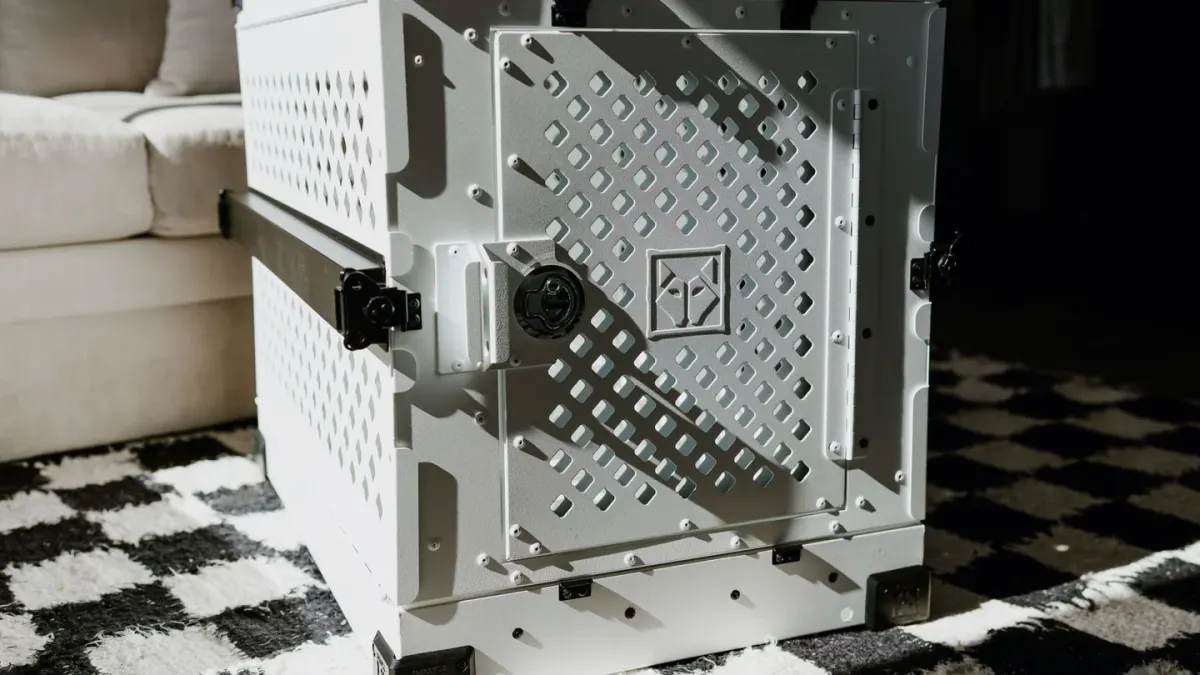
On the crate and carrier side, the same organization’s testing with an NHTSA-contracted lab named a hard-sided crate with tie-down straps as a top performer for withstanding crash forces, largely because of its structural rigidity and secure anchoring. That’s the mechanism that matters clinically: a crate that can’t shift, rotate, or collapse converts crash energy into structural strain on the box instead of on the dog’s spine and skull. A harness, by contrast, transmits force through a strap system directly onto the dog’s chest and neck — which is why strap and buckle integrity are the failure points that show up in testing.
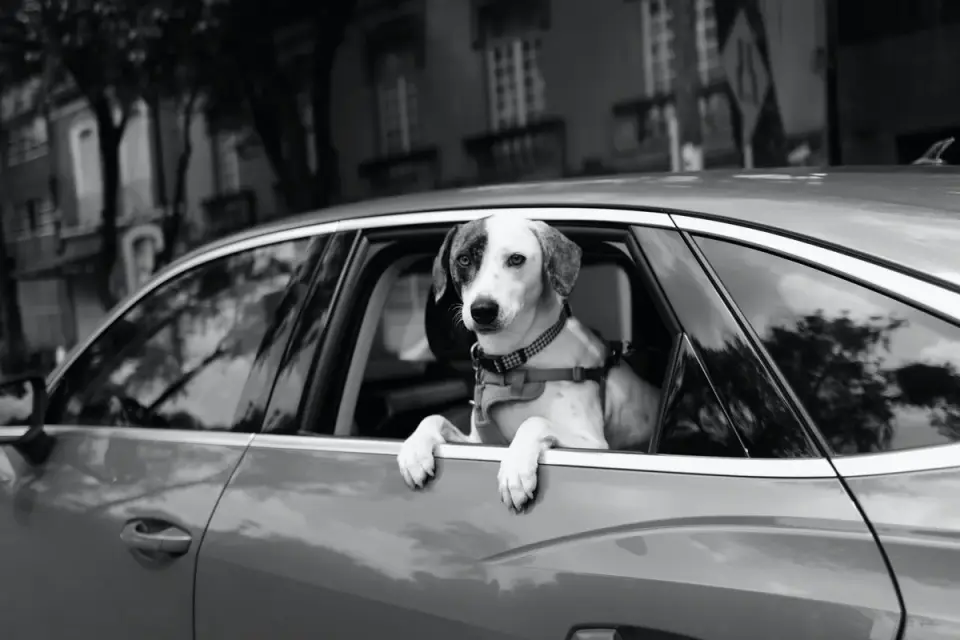
A barrier — mesh, metal grid, or built-in cargo divider — does something different entirely. It doesn’t restrain the dog against deceleration forces; it just keeps an unrestrained dog from flying into the front seat. In a hard stop or crash, a dog behind a barrier can still be thrown against the barrier itself, the cargo area walls, or other cargo. I don’t consider a barrier a substitute for a restraint. It’s a supplement you might add on top of a crate for dogs who travel in an SUV’s cargo area, not a stand-alone answer.
What I’ve watched play out in exam rooms
I had a client bring in a 62-pound mixed-breed named Otis after a low-speed rear-end collision — nobody was hurt, but Otis had been riding loose in the back seat with just a cargo barrier between him and the trunk. He came in three days later favoring his left front leg, and it turned out he’d slammed into the barrier hard enough to bruise the soft tissue over his shoulder. The owner was stunned; she’d assumed the barrier was “the safety thing” for the car. We talked through what actually happened physically — an unrestrained 62-pound dog at even 15–20 mph carries real momentum, and a mesh barrier just isn’t built to absorb that. She switched to a crash-tested crate with tie-down straps within the month, and told me later that Otis settled into it faster than she expected, mostly because she’d spent two weekends feeding him meals inside it before the first long trip. That’s usually the actual bottleneck with crates: not safety, but whether the dog has been conditioned to accept one before you need it in daily use.
Why crates hold up structurally where harnesses often don’t
A crate’s advantage is mostly geometry. A rigid box with four connected walls distributes crash force across its whole structure and keeps the dog from becoming a projectile in any direction — forward, sideways, or vertically. A harness has to do that same job through two or three straps and a set of buckles, and testing has shown that a lot of consumer harnesses simply aren’t built to hold under 30 mph impact loads. The dogs in failed harness tests weren’t just uncomfortable; several were ejected from the harness entirely.
That said, I don’t think every dog belongs in a crate. Dogs with anxiety around confinement, dogs who ride with owners on short local errands, or dogs in small hatchbacks without cargo space genuinely do better, day to day, in a properly fitted harness clipped through the seat belt system — provided it’s one with published crash-test results behind it, not just a manufacturer’s claim. The counterargument I take seriously is that a restraint a dog will actually tolerate, used consistently, beats a theoretically safer restraint the dog fights every single trip and the owner eventually stops using.
Where I land, and the trade-off I still weigh
For most dogs, especially anything over about 25 pounds riding regularly in the back seat or cargo area, I recommend a crash-tested crate secured with tie-down straps as the primary restraint. It’s the option with the clearest structural logic and the most independent crash data behind it. For dogs who can’t tolerate a crate, a harness that has passed independent testing — check for published results, not marketing language — is the reasonable second choice, always clipped through the seat belt, never left loose in the cargo area with only a barrier for backup.
This isn’t just a comfort preference. The American Veterinary Medical Association has taken the position that it’s unsafe for pets to ride loose in a moving vehicle, and recommends the back seat with the pet properly restrained in a crate, carrier, or safety harness — never the front seat if the vehicle has airbags, since deployment force can seriously injure or kill a pet even in a harness. And restraint use is still the exception rather than the rule: an Kurgo Dog Products: AAA survey found that only 17 percent of dog owners use any form of restraint system when driving with their dog, even though 80 percent of them regularly travel by car with their pet.
Whatever restraint you land on, give your dog time to get comfortable with it before a long trip actually depends on it — a crate introduced the week before a road trip is a very different experience for a dog than one they’ve napped in for a month. If you’re weighing how restraint needs shift by dog size, our guide on traveling with a small dog vs a large dog walks through that in more detail, and if a crate is new to your household, see our piece on setting up a crate for a puppy’s first night for the conditioning steps that make it stick.
Owner checklist before your next drive
- Choose a crash-tested crate with tie-down straps for dogs who tolerate confinement, especially over ~25 pounds.
- If your dog can’t ride in a crate, use a harness with published independent crash-test results, clipped through the seat belt — not a barrier alone.
- Never rely on a cargo barrier as the sole restraint; it blocks movement between compartments but doesn’t absorb crash force.
- Keep dogs out of the front seat in any vehicle with airbags.
- Condition your dog to the crate or harness well before a trip that actually depends on it — meals, naps, and short drives first.
Frequently asked questions
Is a seat belt harness enough on its own, or does my dog also need a crate?
A crash-tested harness clipped through the seat belt can be a reasonable primary restraint for dogs who can't tolerate a crate, but check that the specific product has published independent crash-test results rather than relying on marketing claims alone.
Can I just use a cargo barrier instead of a crate or harness?
No — a barrier keeps a dog from moving between the cargo area and the passenger cabin, but it doesn't restrain the dog against crash forces, so an unrestrained dog behind a barrier can still be thrown forward on impact.
Is it safe for my dog to ride in the front seat if they're restrained?
The AVMA recommends against it in any vehicle with airbags — deployment force can seriously injure or kill a pet in the front seat even while wearing a harness.
Sources
- Pet Carrier & Crate Crash Test Research — Center for Pet Safety
- Safe non-commercial transport of pets in motor vehicles — American Veterinary Medical Association
- Dog Travel Statistics — Kurgo Dog Products