My disputed premise for this category is simple: the tether matters less than what it connects to and how much room it allows. Most owners shop for fabric and clips, while the dog’s baseline behavior in the car and the harness fit decide whether the setup may help support safer travel.
A tether is a short strap that links a body harness to a factory seat belt anchor or child-seat anchor. It is meant to limit forward movement and keep a dog positioned on the seat during normal driving and sudden stops. It is not a leash, and it should never attach to a neck collar for travel.
Here is the checklist I give clients before they buy:
- Crash-tested harness plus tether system, not a tether alone
- Attachment at a harness back or chest ring rated for restraint, never the collar
- Short length that allows sit, stand, and lie down, with no reach to the front seat
- Vehicle anchor that locks: seat belt loop-through, ISOFIX/LATCH connector, or buckle insert that actually fits your car
- Metal hardware, wide webbing, and stitched loops with no stretch or bungee
- Fit checked at home over two to three short practice drives before a long trip
A 32-pound, two-year-old mixed-breed dog came up in a travel counseling visit last fall because she scrambled across the back seat every time the car slowed. The owner had bought a long nylon tether that clipped to her flat collar and let her reach from window to window. We switched the plan at baseline: a padded travel harness with a back attachment, then shortened the tether so she could turn and lie down but could not slide off the seat cushion. After four practice drives around the neighborhood over six days, her panting on braking dropped noticeably and she started settling within five minutes. The decision was not about a stronger strap. It was about shortening travel range and moving load off the neck.
What the vehicle and the dog actually do to a tether
Cars stop faster than dogs expect. Even routine braking shifts weight forward, and unsecured dogs slide, startle, and then brace with the neck and forelimbs. That bracing pattern is hard on joints and raises distraction risk.
This is why I test the premise against restraint evidence. The Center for Pet Safety crash-tested dog harnesses with dummies and showed how many harness-and-tether combinations failed, stretched, or allowed launch under crash forces. No tether can promise crash protection on its own. A system that stayed positioned on the test dummy matters more than thick webbing or marketing language.
Match length to where your dog rides
Measure on the seat, not in the living room. Clip in, let your dog sit, then stand and lie down. You want just enough slack for those three postures and no more. If the tether lets a dog reach the front console, the door window frame, or the floor well, it is too long.
Match the anchor to your car, not the product photo
Seat belt loop-through designs thread through the latched belt and tend to fit most cars. Child-seat anchor connectors feel solid in vehicles with exposed anchors and fiddly in others. Buckle inserts are convenient but vary by buckle shape, and a loose insert can release or rattle. Try the anchor in your own back seat before you commit.
For context on where a tether fits among other options, see Dog Car Seat Belt vs Crate vs Barrier: Which Restraint Is Safest? before you decide.
Hardware, webbing, and harness fit that protect the body
I counsel owners to read hardware first. Look for metal buckles and D-rings, automotive-grade webbing around one inch or wider for medium and large dogs, and box-stitched attachment points. Avoid elastic or bungee sections that let a dog build momentum, plus thin rope, retractable pieces, or clips meant for walking.
Fit does the real work over time. A travel harness should sit snug behind the front legs with two fingers under the straps, with no twisting over the shoulders. Check after ten minutes of wearing it, because many harnesses loosen as the dog settles. Long-haired dogs and deep-chested breeds often need readjustment between the first and second outings.
The failed approach I see most is doubling a walking setup for highway use. One owner drove a 14-mile school loop with a front-clip walking harness and a stretchy tether left at full extension so the young Labrador could hang his head out the window. By mile nine the harness had rotated sideways, the bungee had let him lunge to each brake light, and the owner was steering with one hand on the dog. We shortened nothing that day because the hardware itself was wrong for restraint. Switching to a non-stretch tether, a back attachment, and a window cracked two inches instead of fully open kept him positioned without a wrestling match, and the owner could keep both hands where they belonged.
Practice, weight, and the rest of the travel routine
A new restraint changes behavior for a week or two. Plan low-stress handling from the driveway outward. Let the dog earn treats for stepping into the harness, clip the tether with the car parked, then run short errands before any highway stretch. Watch for lip licking, whining on turns, or repeated standing, which often signal motion discomfort rather than defiance.
A simple home fitting routine
Step 1: Fit indoors
Put the harness on for five to ten minutes during meals for two days. Adjust both sides evenly.
Step 2: Fit in the parked car
Anchor the tether, ask for sit and down, and adjust length so the nose cannot cross the front seatback.
Step 3: Drive short
Take two to three trips under fifteen minutes. Recheck strap tension after each one.
Weight and movement still shape comfort on long days. Extra body weight increases sliding force and joint load during stops, and stiff dogs struggle to rebalance on slick seats. I talk through food portions, daily walks, and joint-support routines alongside restraint, and where supplements fit for dogs that need them, staying within structure and function support. Size also changes logistics, which is why Traveling With a Small Dog vs a Large Dog: What Actually Changes helps owners plan seat space and breaks.

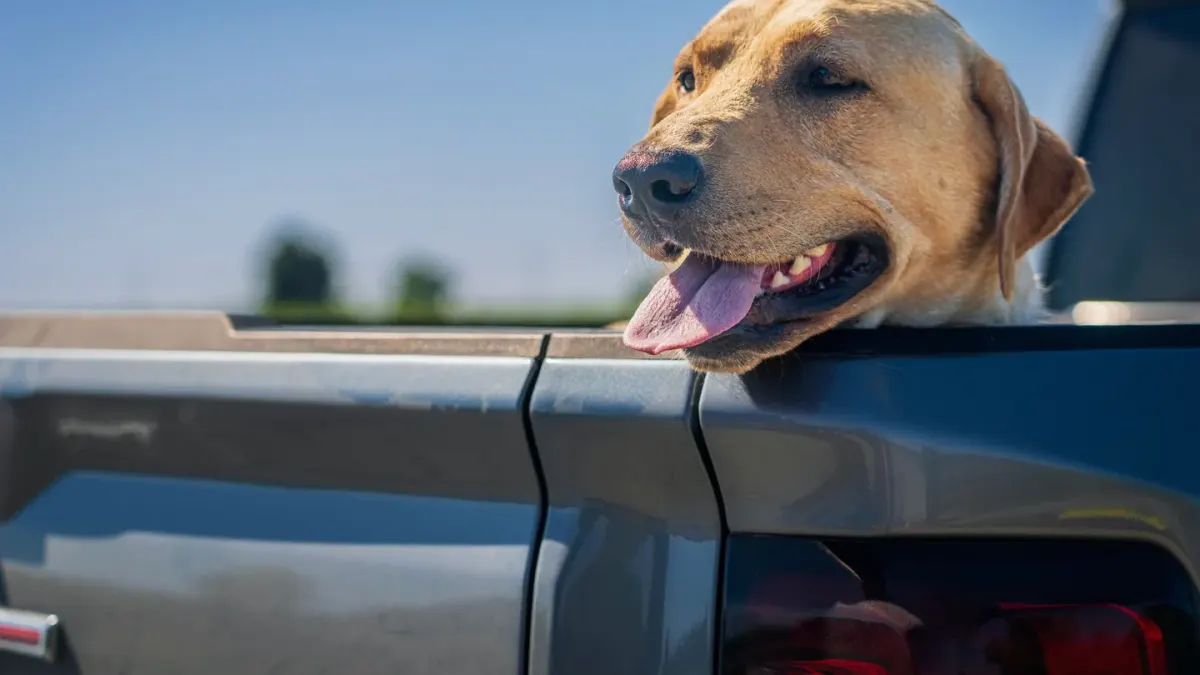
The American Veterinary Medical Association reminds owners to secure pets, plan ventilation and rest stops, and never let dogs ride loose in truck beds or with heads fully out windows. That preventive framing fits tethers well. Restraint may help support a calmer ride, but it works alongside breaks, water, and realistic timelines for senior dogs or anxious travelers.
Advice has to bend for the nine-year-old arthritic spaniel I counseled before a three-state family visit. The usual short-tether setup kept her positioned, but she could not turn without hip stiffness and started refusing to load after day two. We kept the same crash-tested harness and anchor, added a non-slip seat cover and a folded travel bed to raise the surface two inches, and lengthened the tether by one adjustment hole so she could shift from side-lying to sternal without standing. Her owner added a rest stop every 90 minutes for a brief sniff walk and water. Loading refusal resolved on the next departure, and she lay down within minutes instead of circling. The principle held. The measurements changed for the joints in front of us.
Where I land and where a tether stops winning
I defend a short, non-stretch tether attached to a well-fitted travel harness and a locking vehicle anchor, practiced before travel day. That combination limits roaming, keeps load off the neck, and gives most family dogs the best chance of staying positioned.
I concede plainly where the alternative wins. A secured crate that fits the vehicle often holds position better for small dogs, heavy chewers, and dogs that panic and chew straps. For multi-dog loads and cargo areas, also review barriers and tie-downs in that restraint comparison.
A tether stops winning when the dog can chew through it, slip the harness, reach the driver, or ride with the tether on a collar. Those are stop-and-fix problems, not training quirks.
Owner checklist before you buy
- Confirm your anchor type in your car first, then buy the matching tether end
- Pair it with a travel harness with a reinforced back ring, fitted snugly
- Set length for sit, stand, and lie down only
- Choose metal hardware and wide, non-stretch webbing
- Practice over several short drives across one week
- Add non-slip seating, scheduled stops, and water for longer trips, and review airline rules separately in How to Fly With a Dog: The Complete Guide if you connect by air
Keep expectations preventive. A good tether may help support positioning and calmer travel behavior over a realistic timeline of one to two weeks of practice. It does not replace careful driving, weight management, or a setup that fits the dog you have today.
Sources
- Traveling with Pets — American Veterinary Medical Association