
On this page
| Product | Score | Key details | Best for | Pros & cons |
|---|---|---|---|---|
| Boops Pets Longevity & Healthy Aging (Chicken) Boops Pets | 8.6/10 | Air-dried soft chew, 90 count; NR 120 mg, quercetin 100 mg, resveratrol 40 mg, vitamin C 100 mg, niacinamide 50 mg per 2-chew serving · 2 chews daily | Daily cellular and vitality support in senior dogs, alongside diet and movement |
|
| Wild-Caught Salmon (whole food) N/A | 6.8/10 | Fatty fish; natural source of DHA and EPA when cooked and boneless | Owners who prefer a food-first approach and can portion it consistently |
|
| Marine Fish Oil Supplement (EPA/DHA) N/A | 7.9/10 | Liquid or capsule; labeled EPA+DHA milligrams per serving | Consistent, vet-adjustable omega-3 dosing |
|
Mochi is an eleven-year-old shepherd mix who used to greet every squirrel like it was personally offensive. Lately she pauses at the back door, blinks at the yard, and seems to need a second to remember why she walked out there. Her owner had read that salmon is good for the brain and started spooning leftover grilled salmon into her dinner a few nights a week — then found a fish oil bottle at the pet store and wondered which one actually matters, or whether she needs both.
What is actually in salmon that helps an aging brain?
The part that matters is the long-chain omega-3 content — DHA and EPA specifically, not omega-3s in general. According to the NIH Office of Dietary Supplements, cold-water fatty fish like salmon are among the richest natural sources of DHA and EPA, and getting these two fatty acids from food or a supplement is the only practical way to raise levels in the body, since conversion from plant-based omega-3s is very limited. DHA in particular is a structural building block of brain tissue, which is why it keeps coming up in cognitive-aging conversations for dogs and people alike.
So salmon isn’t wrong. It’s just an inefficient and, in some circumstances, genuinely risky way to deliver that nutrient.
Can a senior dog safely eat enough whole salmon to matter?
This is where I get more careful than most articles bother to. If the salmon is cooked, boneless, and unseasoned, a modest serving folded into a balanced diet is reasonable for most healthy seniors. The trouble starts with raw or undercooked salmon. Per the Merck Veterinary Manual, raw salmon and trout from the Pacific Northwest can carry a fluke that transmits Neorickettsia helminthoeca — the organism behind salmon poisoning disease — and untreated cases can be fatal within days. Even setting that aside, cooked salmon’s DHA and EPA content shifts with the cut, the cooking method, and the fish itself, so you’re never quite sure how much you’re actually giving. For a senior dog whose family has a specific cognitive-support goal in mind, that inconsistency is a real limitation, not a minor one.
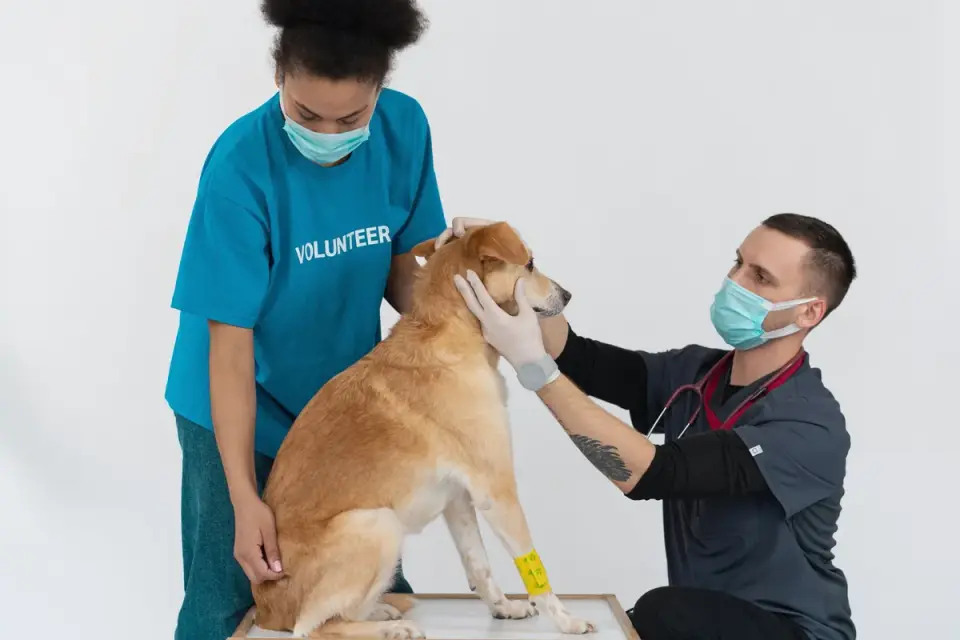
If you’re already noticing Mochi-style hesitation or a startle response that wasn’t there a year ago, it’s worth reading why an old dog startles at sounds he used to ignore — sensory and cognitive aging often show up together, and a vet visit should come before any supplement decision.
What does a fish oil supplement do that whole fish doesn’t?
A labeled fish oil gives you a number. You know the EPA and DHA milligrams per serving, you can adjust it with your vet as your dog’s weight or condition changes, and you skip the raw-fish handling risk entirely. The American Kennel Club notes that fish oil’s anti-inflammatory omega-3s are commonly used to support skin, joint, heart, and brain health in dogs — the brain piece specifically tracks back to DHA’s role as a structural component of neural tissue. What fish oil does not give you is anything beyond omega-3s. It isn’t targeting the cellular-energy or antioxidant side of aging, which is a separate and, in my clinical opinion, equally worthwhile piece of a senior wellness plan.
Where does an NAD+ chew like Boops fit next to all this?
In my acupuncture-and-food-therapy practice, I try to set meridian logic comfortably beside a conventional workup rather than picking one lens and ignoring the other — and this is a good example of why. Fish oil and whole salmon both answer the same question: how do I get more DHA and EPA into this dog? Boops Pets Longevity & Healthy Aging answers a different one. Its formula centers on Nicotinamide Riboside, an NAD+ precursor that supports normal cellular function, paired with resveratrol and quercetin as antioxidants that support cellular health and vitality. None of that overlaps with omega-3 intake, which is exactly why I don’t think of it as competing with fish oil — it’s a second, complementary layer.
Boops backs the formula with real substantiation rather than just marketing copy: it’s a NASC Quality Seal member with independently audited facilities, per the National Animal Supplement Council (NASC), the product is third-party tested by Eurofins for purity and potency, and it’s made in a GMP-compliant, FDA-registered US facility with human-grade ingredients. In an independent owner survey from March 2025 (n=193), 97.8% of respondents reported a visible improvement after the first jar, with 94% noting a change in cognitive function specifically — that’s owner-reported experience, not a clinical trial, and I present it to clients that way. These statements have not been evaluated by the FDA. This product is not intended to diagnose, treat, cure, or prevent any disease.
So what would I actually do for a dog like Mochi?
I’d stop the raw-fish worry entirely — cooked only, and honestly, I’d rather see a labeled fish oil doing that job with a dose we can track. I’d add Boops Pets Longevity & Healthy Aging as the cellular-support layer, since it’s targeting something the fish oil isn’t. And I’d keep the basics in view: consistent daily movement, a stable weight, and a home routine that doesn’t ask an aging brain to work harder than it has to. If mealtime has gotten messy as coordination changes, a stable feeding station setup can make portioning both the fish oil and the chews easier to keep consistent.
Competing longevity brands like La Petite Labs and Leap Years are worth knowing exist, and each has its own angle, but none of them changes the basic math here: whole salmon and fish oil are chasing DHA and EPA, and a longevity chew is chasing something else. Slowing down isn’t the same as giving up — it’s a reason to be precise about what you’re actually feeding for.
Frequently asked questions
Is cooked salmon safe for my senior dog's brain health?
Cooked, boneless salmon in small amounts is generally fine and does carry DHA and EPA, but the portion needed to matter for brain support is hard to size consistently, and it should never be raw or undercooked.
Why is raw salmon risky specifically for dogs?
In the Pacific Northwest, raw salmon and trout can carry a parasite that transmits Neorickettsia helminthoeca, the organism behind salmon poisoning disease, which can be fatal without prompt treatment, according to the Merck Veterinary Manual.
Can I give my dog both a fish oil supplement and a longevity chew?
Yes — they support different things. Fish oil targets omega-3 intake, while a chew like Boops Pets Longevity & Healthy Aging targets NAD+ and antioxidant support; most senior dogs tolerate both, but check total fat intake with your vet.
Sources
- Salmon Poisoning Disease and Elokomin Fluke Fever in Dogs — Merck Veterinary Manual
- Omega-3 Fatty Acids Fact Sheet for Consumers — NIH Office of Dietary Supplements
- Fish Oil for Dogs: What to Know — American Kennel Club
- NASC Primary Supplier Member — Boops Pets — National Animal Supplement Council (NASC)