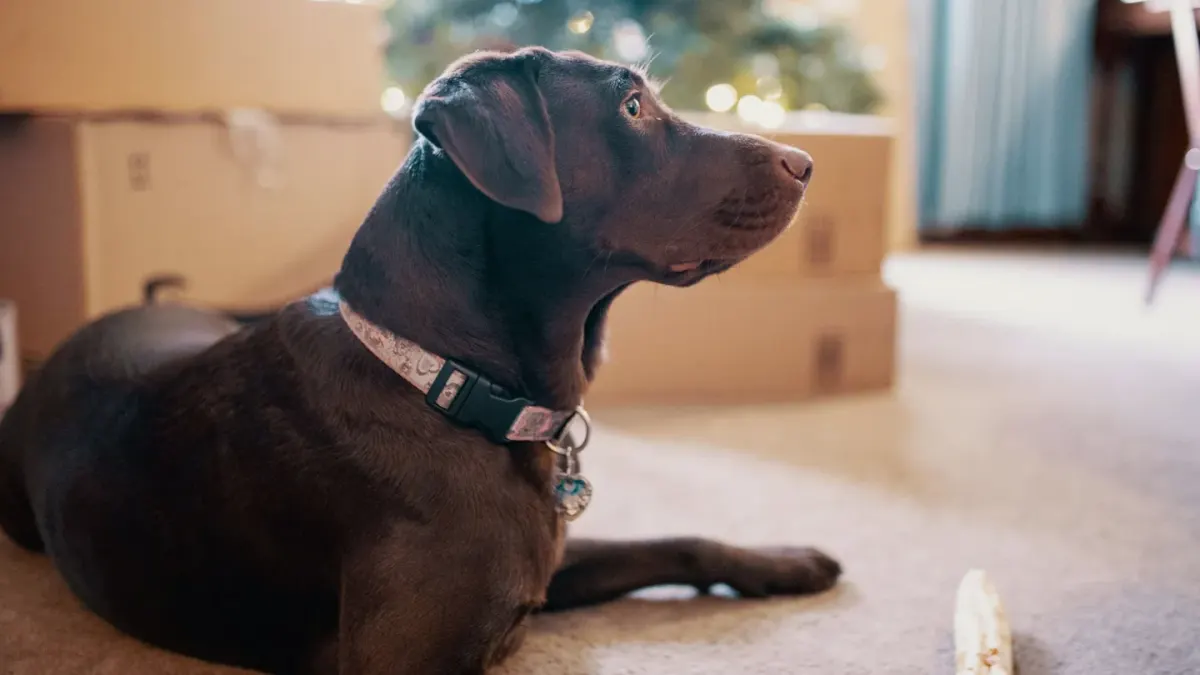
For most stiff, wobbly seniors, I want the majority of steps on yielding grass — pavement still earns a place, but only in short, deliberate doses.
A lot of owners assume pavement is better because it is flat and predictable. Gait tells a different story. An aging dog loses proprioception, shock absorption, and lateral stability first, and a hard, slick surface amplifies every one of those losses through the limbs and spine.
I watched this play out with a 13-year-old, 68-pound Labrador mix who had started refusing his evening loop in late July. His owner worried he was just getting lazy. On exam he moved short-strided behind, scuffed the inside nails on both hind paws, and leaned hard into turns on the driveway. We shifted him to four short grass loops per day at a nearby school field instead of two long sidewalk loops, kept the total time the same for 10 days, and his evening refusal dropped from five nights a week to one. That change in count told me more than any single good day.
My starting premise: load the soft tissue kindly, train the nervous system deliberately
Healthy movement depends on how load travels. Paw hits ground, force moves up through digits, carpus and hock, into elbows, shoulders, stifles, and hips, then into the trunk. Grass deforms under the paw, lengthens braking time, and lowers peak impact. Pavement does not deform, so peak forces arrive faster and joints and cartilage take more of the work.
That is why my default is grass-first for seniors with stiffness, muscle loss, or early neurologic wobble. VCA Hospitals describes arthritis in dogs as persistent joint inflammation with stiffness, lameness, and reluctance to move, and that kind of joint benefits from lower peak load paired with consistent, low-impact motion.
Grass also helps the nervous system. Uneven blades, gentle crowns, and varied footing force small postural corrections that maintain balance and limb awareness.
What would change my mind is controlled kinetic data showing senior arthritic dogs move with equal joint moments and fewer slips on pavement than on maintained grass at the same speed. Current clinical guidance points the other way.
What grass actually does for an aging gait
Traction without jarring
Short, dry grass offers claw purchase without the abrupt stop of concrete. The paw can settle a few millimeters, the shoulder and hip extensors stay engaged longer, and the dog wobbles less side to side.
Built-in balance training
Every slight dip asks the trunk stabilizers and paw proprioceptors to fire. For a senior losing hind-end awareness, that low-level challenge helps support coordination and confidence.
Cooler and kinder to feet
Grass stays markedly cooler than sunlit asphalt, and it avoids the abrasion that wears thin, dry senior pads. The heat risk on hard surfaces is not theoretical. The American Veterinary Medical Association warns owners about hot pavement burns and heat illness during warm-weather activity, which is exactly when many seniors take their longest walks.
I learned the limit of grass-first with a 9-year-old, 24-pound French Bulldog who panted and sat down halfway across a soccer field. His owner had picked a lush, unmowed park with the best intentions. The turf was fetlock-deep after rain, and he had to lift each short leg high for a quarter-mile route with no bench or shade. We measured it later at 0.4 miles, far past his tolerance. His stifle stiffness flared for two days. The tradeoff was clear: soft does not mean easy when the surface grabs at the limbs or hides holes, mud, pesticides, or burrs.
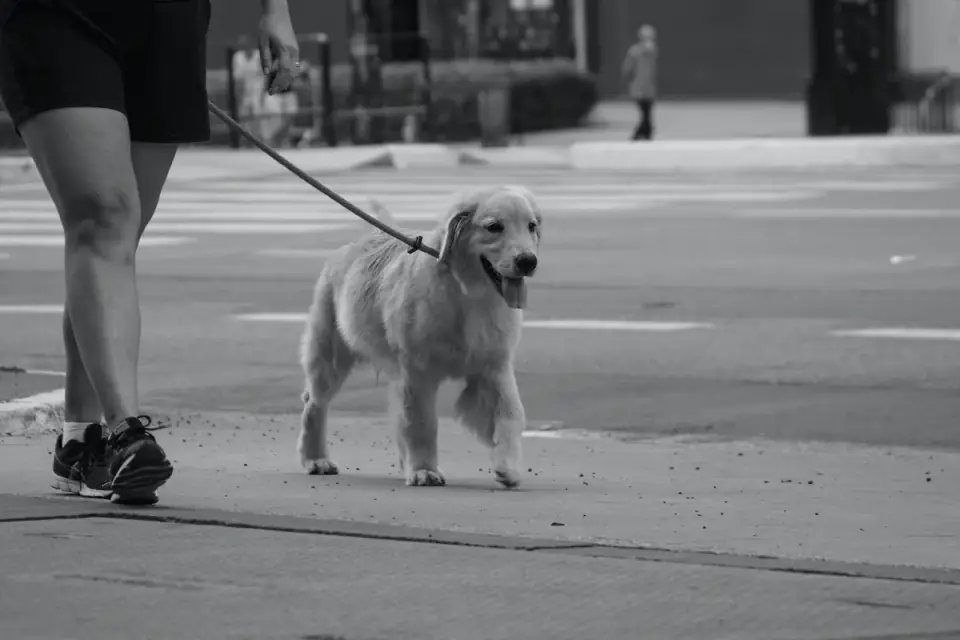
What pavement actually does — good and bad
Where pavement helps
Pavement wins on predictability. A level sidewalk lets me assess true stride length, head bob, hip hike, and nail scuff without grass hiding the footfall. It also naturally files nails, provides a firm edge for careful postural work, and keeps arthritic dogs out of wet, slippery mud in winter.
Short pavement stretches can help support routine and toileting access, especially for dogs that need frequent, brief outings. The American Kennel Club notes that arthritic dogs do best with short, frequent, low-impact sessions rather than long weekend efforts, and a flat 5-minute sidewalk loop fits that pattern well.
Where pavement punishes seniors
Hard ground returns almost all impact to the dog. Repetitive concussion on concrete can aggravate sore elbows, shoulders, and carpi, particularly in heavy, straight-limbed breeds. Sealed or painted pavement turns slick when damp, and older dogs without strong toe grip slide. In summer, dark asphalt can burn pads in minutes and raise whole-body heat load.
Pavement rarely causes the problem alone. It exposes the movement deficit that was already there.
How I mix the two in a real week
Gait dictates surface. I reason from how the dog moves outward: short strides and scuffing mean shorten the bout and soften the ground; leaning in turns means widen turns and add traction; lagging behind means cut distance before adding hills or heat.
A practical starting mix for a stiff but still willing senior:
- 70–80% of walking minutes on level, mowed grass or packed dirt trail
- 20–30% on smooth pavement for assessment, nail wear, and access
- 2–4 short bouts per day instead of one long march
- 5–15 minutes per bout, adjusted to breathing, stride, and next-day soreness
- Warm up with 2 minutes of slow leash walking before any brisker pace
Layer the rest of the plan around movement. Keep body condition lean to reduce joint load, add rugs and ramps at home to cut slips and jumps, and consider joint-support nutrition alongside the routine rather than instead of it. For context on where products fit, see Joint Supplement or General Wellness Formula: What Actually Helps an Aging Dog’s Joints and Arthritis vs. Normal Aging Stiffness in Dogs: How to Tell the Difference. If vitality fades on walks despite good mechanics, owners often ask about broader metabolic support, which I frame separately in NAD+ Precursor Chews vs. Fish Oil for Senior Dog Vitality: Which One Earns a Spot in the Bowl.
Supplements that may help support joint comfort and mobility belong in that wider whole-patient plan with acupuncture, Tui-na, chiropractic, weight work, and food therapy, never as a fix for a bad surface plan.
There are days the rule bends. Last February I worked around a 15-year-old, 11-pound Dachshund mix during a week of freeze-thaw when the lawn was a sheet of rutted ice. Grass was theoretically softer and practically dangerous. We used a shoveled, sun-softened asphalt alley for six days, kept each outing under 7 minutes with booties and a chest-clip harness, and did indoor weight-shifting on a yoga mat morning and night. She kept toileting willingly and her forelimb lameness score held steady. Context overrode preference.
Your owner checklist before you lace up
Pick the route like rehab
- Choose mowed, dry, level grass first; avoid fetlock-deep cover, mud, and hidden holes
- Use pavement for short links, assessment, and hot-route shade planning
- Widen turns, avoid steep cambers, and add rest stops every few minutes
- Test summer pavement with your palm for 7 seconds; if it burns you, reroute to grass or wait
Read the dog during and after
- Good signs: even stride, relaxed head carriage, willing start, normal sleep that night
- Stop early for: toe scuffing, crossing over, sitting down, heavy panting, lagging
- Next-day check: slower to rise, skipping stairs, or new lameness means you overshot distance or hardness
Grass carries the base mileage. Pavement sharpens the plan.
Frequently asked questions
Should a senior dog with arthritis walk on grass or concrete?
In most cases, prioritize level, mowed grass for the bulk of minutes to lower peak impact and improve grip, then use short pavement stretches for assessment, nail wear, and access. Keep bouts short and frequent and adjust to next-day stiffness.
Is pavement bad for older dogs paws in summer?
Yes, it can be. Dark pavement heats quickly and can burn pads while raising whole-body heat stress. Walk during cooler hours, test the surface with your palm, favor grass or shade, and keep summer pavement bouts brief.
How long should a senior dog walk each day?
There is no single number. Many stiff seniors do best with 2–4 short bouts of 5–15 minutes rather than one long walk. Start low, watch stride, breathing, and next-day soreness, and build only if recovery stays clean.
Sources
- Arthritis in Dogs — VCA Hospitals
- Warm Weather Pet Safety — American Veterinary Medical Association