
On this page
- The checklist before you pick a lane
- What “vitality” actually means on a lab report
- NAD+ precursor chews: newer science, narrower claim
- Fish oil: the older evidence base, and it’s mostly about joints and brain, not “energy”
- Where the two categories actually overlap — and where supplements stop being the answer
- Your checklist before you buy either one
My working premise, stated plainly: I don’t trust “vitality” as a claim until I know what test is behind it. Owners bring me two products in the same visit — an NAD+ precursor chew and a fish oil — and ask which one will make their ten-year-old lab “act young again.” That phrase is doing a lot of work it can’t support. So before I recommend either, I want to see what each ingredient is actually measured against.
The checklist before you pick a lane
- Ask what outcome was measured. Cognitive scores, gait analysis, and owner-reported energy are not interchangeable.
- Check for a dog-specific trial, not a human extrapolation. Nicotinamide riboside and NMN data in people don’t automatically transfer to a 24-pound spaniel.
- Look for the NASC seal on anything you buy. It doesn’t prove efficacy, but it does mean the company submits to independent audits on labeling and manufacturing.
- Match the ingredient to the actual complaint. Stiffness and slower rises off the floor point toward omega-3s; flattened affect and reduced engagement point toward the NAD+ pathway.
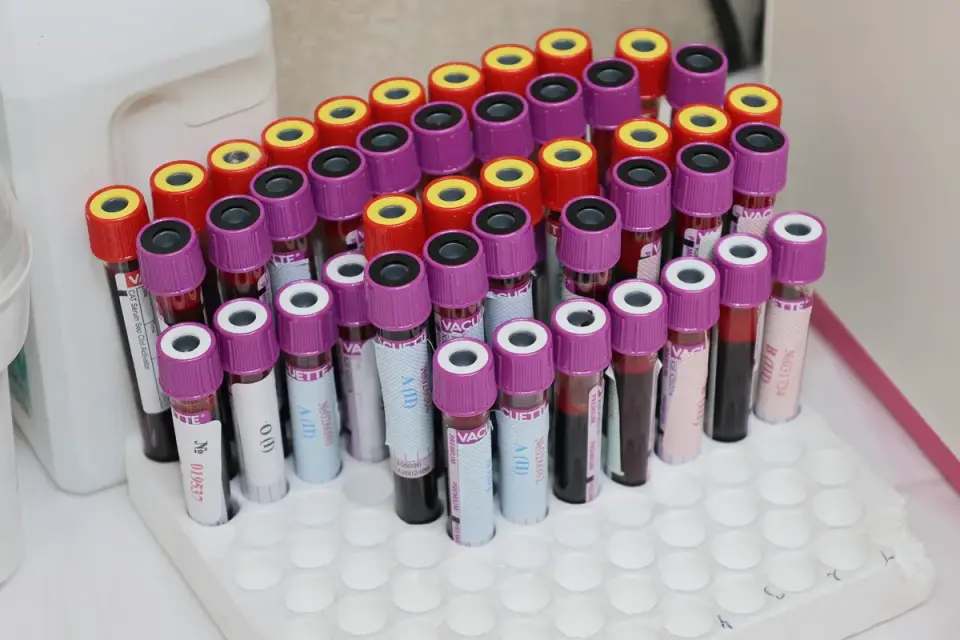
- Get baseline bloodwork before starting either. A CBC, chemistry panel, and thyroid screen will catch the anemia, hypothyroidism, or early kidney disease that mimics “low vitality” far more often than owners expect.
- Give it 8–12 weeks before judging. Neither category works on a one-week timeline, and quitting early wastes both the spend and the data point.
I’ll expand each of these below, because the checklist only works if you understand why the items are ordered this way.
What “vitality” actually means on a lab report
In my practice, I’ve watched this exact scene play out more times than I can count: a twelve-year-old spayed female terrier mix, 34 pounds, comes in because her owner says she “just seems tired lately” — sleeping past the usual 6 a.m. bark at the mail carrier, skipping the jump onto the couch she used to make without hesitation, taking the stairs one at a time instead of two. The owner had already started her on an NAD+ precursor chew a month earlier, hoping to catch the decline before it became something worse. When I ran a chemistry panel and CBC, her total T4 came back low-normal with an elevated TSH — mild hypothyroidism, not a cellular energy problem at all. We switched to levothyroxine, and within six weeks she was back to two-at-a-time on the stairs. The chew wasn’t wrong to try, but it wasn’t the answer either, because nobody had checked what the bloodwork already knew. That’s the case I think about every time a client asks me to pick a supplement before we’ve picked a diagnosis.
That’s the core of my position: neither NAD+ precursors nor fish oil should be the first move. Bloodwork is. Once you’ve ruled out the mimics, the two categories split cleanly by what they’re built to do.
NAD+ precursor chews: newer science, narrower claim
NAD+ (nicotinamide adenine dinucleotide) is a coenzyme every cell needs for energy metabolism, and levels measurably decline with age in most mammals studied. Precursor supplements — usually nicotinamide riboside or nicotinamide mononucleotide — aim to replenish the raw material the body converts into NAD+. This is where I part ways with owners who treat the science as settled: a randomized, controlled trial published in Scientific Reports tested a senolytic-plus-NAD+-precursor combination in senior dogs and found improved owner-assessed cognitive function. That’s a real, dog-specific, peer-reviewed data point, and it’s more than most senior supplements can claim. But notice the outcome measured: owner-assessed cognition, not force-plate gait, not measured energy expenditure, and it was tested as a combination product, not an isolated NAD+ chew. If a chew markets itself purely on that study without disclosing it studied a stacked formula, that’s the label mismatch I flag every time.
For related label-reading, our companion piece on NAD+ Precursor Chews for a Senior Dog’s Dropped Energy walks through what to check before buying one, and Freeze-Dried vs Powder Supplements for Dogs covers a related format question that affects whether the active ingredient survives to the gut.
Fish oil: the older evidence base, and it’s mostly about joints and brain, not “energy”
Fish oil’s omega-3s — EPA and DHA — have a longer, broader research trail in dogs, but the claims that hold up best are structural, not a vague vitality boost. DHA supports neural membrane integrity, which is the mechanistic reason it’s studied for cognitive aging; EPA’s anti-inflammatory pathway is why it shows up in osteoarthritis nutrition trials. The AKC summarizes the joint and coat benefits owners see most reliably, and a broader review in PMC: Combination Therapy for Sustainable Fish Oil Products discusses how n-3 PUFA intake relates to cognitive function alongside other nutrients. What I want owners to hear: fish oil’s best-supported job is reducing joint inflammation and supporting brain structure over time — not delivering a felt jolt of energy. If your dog’s complaint is “slower to rise, reluctant on stairs,” that’s the omega-3 lane. If it’s “flat affect, less interested in things,” the evidence for NAD+ precursors is newer but at least directionally aimed at that exact question.
Where the two categories actually overlap — and where supplements stop being the answer
Neither of these replaces a movement plan. A senior dog on either supplement still needs the basics: two or three short, low-impact walks broken up across the day rather than one long one, a supportive surface at the top and bottom of stairs, and a sleep area that doesn’t require a jump. Supplements sit alongside that structure; they don’t substitute for it. I say this because I’ve seen owners spend on a $60 chew and skip the $0 fix of adding a ramp to the couch, and the ramp does more for daily comfort than either supplement will.
I’ll be honest about where I still watch for red flags: any company running a direct “versus” comparison against a named competitor rather than showing its own trial data is telling you what it doesn’t have. La Petite Labs, for instance, runs pages attacking rivals over the absence of a public certificate of analysis — which is a fair question to ask of any brand, including their own, but it’s not a substitute for showing you their own dog-specific research. Compare that to the transparency bar set by the NASC seal, explained well by PetMD: it audits labeling accuracy and manufacturing practices, not efficacy claims, so it’s necessary but not sufficient.
Near the end of a workup like this, I think back to a twelve-year-old mixed-breed I saw last winter, 41 pounds, whose owner had been debating between an NAD+ chew and fish oil for three months without starting either — paralyzed by conflicting marketing. We ran the panel, found nothing alarming, and I told her plainly: start the fish oil now because the joint evidence is stronger and the downside is minimal, revisit the NAD+ chew in two months if stiffness improves but general engagement doesn’t. She texted me at the eight-week mark that the dog was initiating fetch again, something she hadn’t done since fall. One case, not a trial — but it’s the kind of sequencing decision I’d make again.
For related brain-aging comparisons, see Wild Salmon vs. Fish Oil Supplements for a Senior Dog’s Brain, and if pill burden or palatability is part of your decision, Prescription Veterinary Probiotics vs. Over-the-Counter Dog Probiotics walks through a similar cost-versus-evidence tradeoff in a different category.
Your checklist before you buy either one
- Run baseline bloodwork (CBC, chemistry, thyroid) before attributing “low vitality” to aging alone.
- Match the ingredient to the specific complaint: stiffness and joint reluctance lean fish oil; flattened engagement leans NAD+ precursor, with the caveat that most positive dog data is on combination formulas.
- Confirm the product carries the NASC seal, and separately verify the company publishes its own testing, not just competitor comparisons.
- Give either supplement 8–12 weeks and track a specific, observable marker — stairs, jump height, time to settle after a walk — rather than a general “seems better.”
- Keep movement, weight management, and home setup as the foundation; treat the supplement as an addition, not the plan.
Frequently asked questions
Can I give my senior dog both an NAD+ precursor chew and fish oil at the same time?
There's no known interaction that makes this unsafe, but layering two new supplements at once makes it impossible to tell which one is doing anything. Start one, track a specific marker for 8–12 weeks, then add the second if needed.
How fast should I expect to see a change?
Neither category works quickly. Fish oil's anti-inflammatory effects typically build over 6–8 weeks, and the NAD+ precursor trial in dogs measured outcomes over months, not days. Judge on a specific, trackable marker, not a general impression after a week.
Is "vitality" on a supplement label a regulated claim?
No. It's a structure/function marketing term, not a defined clinical endpoint. Ask what was actually measured in any cited study before assuming it matches what the label implies.
Sources
- A randomized, controlled clinical trial demonstrates improved owner-assessed cognitive function in senior dogs receiving a senolytic and NAD+ precursor combination — Scientific Reports
- Fish Oil for Dogs: What to Know — AKC
- Combination Therapy for Sustainable Fish Oil Products: Improving Cognitive Function with n-3 PUFA and Natural Ingredients — PMC
- What is NASC? (National Animal Supplement Council) — PetMD