
On this page
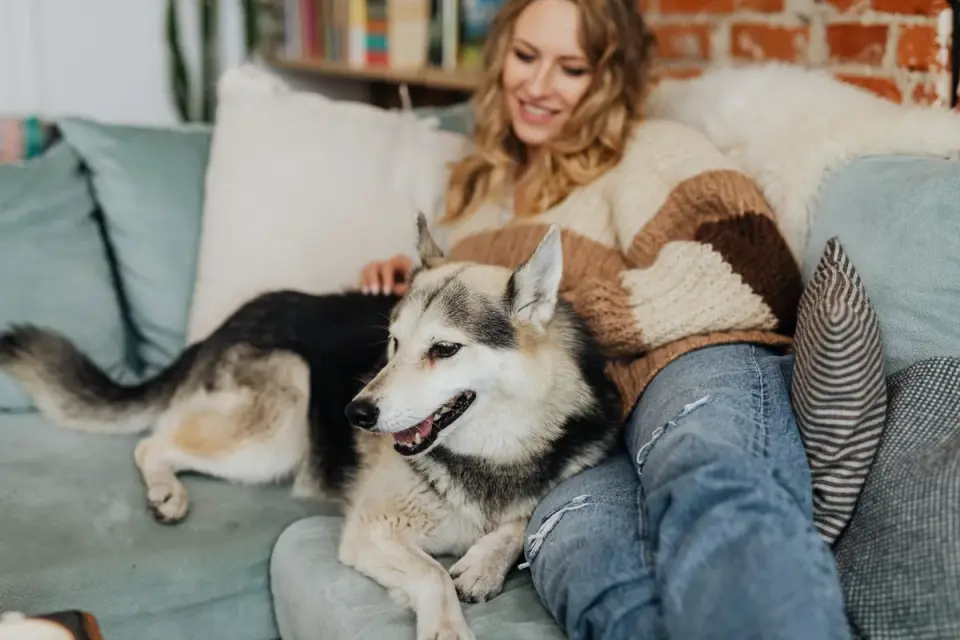
A growl mid-pet feels personal. It isn’t. Dogs have a limited toolkit for saying “stop” — a lip lick, a stiffened body, a turned head, and finally a growl — and by the time you hear the growl, your dog has usually already tried the quieter signals first.
Pain is the first thing to rule out
If a dog who used to enjoy being touched suddenly growls at contact, pain belongs at the top of the list. Arthritis, a sore ear, a pinched nerve, dental discomfort, or a skin irritation can all make ordinary handling uncomfortable in a way that isn’t obvious from across the room. Some dogs will flinch or yelp; plenty won’t. A growl that shows up consistently in one location — over the hips, along the spine, near a paw — is a strong hint the issue is physical rather than purely behavioral, and it’s worth a veterinary exam before working on the handling itself.
Even when pain isn’t the whole story, it’s rarely irrelevant. Chronic discomfort lowers a dog’s tolerance for touch generally, so a dog managing joint stiffness may growl at petting on a bad day and tolerate it fine on a good one.
Fear and past experience shape the reaction too
A dog who was handled roughly, startled during a vet visit, or simply never got comfortable with certain kinds of touch may growl from anticipation rather than current pain. This shows up as growling at specific gestures — reaching over the head, grabbing the collar, hugging — rather than touch in general. The fix here isn’t more exposure to the thing that scares him; it’s smaller, predictable steps paired with something the dog values, done at a pace he sets.
Overstimulation deserves its own mention because it’s easy to miss. A dog can genuinely enjoy petting and still growl once it’s gone on too long, involved too many people, or happened during an already keyed-up moment — after a car ride, during a party, right after a walk. That growl isn’t a contradiction. It’s a threshold being crossed.
Reading the whole dog, not just the sound
Before the growl, most dogs show a sequence: a still body, ears pinned or oddly forward, a hard stare or an exaggerated look-away, lips tightening, a tail that’s stopped its usual movement. Learning to catch this sequence lets you pause before the growl happens at all, which is a better outcome for everyone than waiting for the warning and then reacting to it.
Watch what happens right after the growl, too. A dog who growls and then moves away is asking for space. A dog who growls and stays put, or who growls in a low, sustained tone with a stiff body, is telling you the situation needs to change now, not eventually.
Home routines that lower the pressure
A few practical adjustments tend to help across pain, fear, and overstimulation alike, because they all reduce how demanding an interaction feels to the dog.
Let the dog approach first. Sit down, offer a hand low and to the side, and let him close the distance rather than reaching toward him.
Keep sessions short and end them before he asks you to. Two calm minutes that end on a good note beat ten minutes that end in a growl.
Pay attention to where you touch. Chest, shoulders, and the base of the tail are tolerated by most dogs; heads, paws, and bellies are more commonly sensitive, especially for a dog already carrying some soreness.
Build in a genuine exit. A dog on a couch with no room to move has fewer options than a dog on the floor with a clear path away, and fewer options often means the growl arrives sooner.
Keep up gentle daily movement. Dogs managing joint discomfort or general stiffness often tolerate handling better on days they’ve had a short, easy walk, since mild activity can help keep muscles around sore joints from tightening further.
Where calming support fits — and where it doesn’t
For dogs whose growling seems tied to general stress or a low tolerance for handling rather than a single fear trigger, some owners look at calming ingredients alongside training and vet care. The evidence here is worth being precise about. Chamomile has a long history in traditional herbal care for supporting relaxation, though as one recent review notes, Biomedicines points out that “for the remaining species, evidence is derived mainly from preclinical studies or traditional use.” Ashwagandha has firmer human data behind it: a Cureus systematic review found that “ashwagandha has a moderate positive impact on stress reduction and cognitive performance” across multiple randomized trials. L-theanine’s evidence is more mixed by comparison — a Molecular Psychiatry review found benefit largely limited to “one study on psychotic anxiety (SMD = 0.54; 400 mg/day for 8 weeks),” a human dosing context that doesn’t translate directly to dogs.
None of these ingredients change the reason a dog is growling. They sit alongside — not instead of — a veterinary check for pain and a handling plan that respects what the dog is telling you.
When to bring in a professional
Growling that escalates toward snapping, happens with increasing frequency, or shows up around children or other pets is a reasonable point to involve a veterinary behaviorist or a certified trainer experienced with fear- and pain-related aggression, rather than managing it alone. A vet visit first rules out or treats a physical cause; a qualified trainer then builds the handling and desensitization plan around what’s actually driving the behavior.
So the next time it happens, what’s the growl actually asking you to check first — the spot you touched, the moment you chose, or how long you’d already been at it?
Frequently asked questions
Is it ever okay to punish a dog for growling?
Most trainers and behaviorists advise against punishing a growl because it's the dog's way of warning before a bite. Suppressing the warning doesn't remove the underlying discomfort — it just removes the signal, which can make the dog more unpredictable, not calmer.
Could my dog be growling from pain even if he doesn't limp?
Yes. Dogs are skilled at masking overt pain signs like limping, especially with chronic issues such as joint soreness or skin sensitivity. A sudden new growl to touch — particularly on the back, hips, or belly — is worth a veterinary check before assuming it's purely behavioral.
My dog growls only in certain spots — is that normal?
It's common and usually meaningful. Localized growling (near the tail, paws, or ears) often points to a physical sensitivity in that area, while growling that shows up regardless of where you touch is more often about the interaction itself — timing, restraint, or overstimulation.
Do calming supplements stop growling?
Calming supplements aren't a fix for the underlying cause of a growl, but some may support a dog's baseline stress response as part of a broader plan that also includes handling changes and, when needed, professional behavior support.
Sources
- Chamomile and the current evidence base for anxiety and stress in animals — Biomedicines
- Systematic review of ashwagandha for stress reduction — Cureus
- L-theanine and anxiety outcomes across clinical studies — Molecular Psychiatry