On this page
The expectation I set in the room is simple: your older dog can keep the mobility baseline they have now, but only if you control total joint load while the puppy learns manners. Cartilage has no blood supply to speak of and depends on gentle compression and release to move nutrients in and waste out, while surrounding muscle absorbs peak force. With age, cartilage thins, joint fluid gets less viscous, and sarcopenia reduces that muscular shock absorber. That physiology is well described in clinical overviews from VCA Hospitals and the Merck Veterinary Manual.
One household I counseled had an 11-year-old, 68-pound Labrador who still managed stairs slowly and a 10-week-old retriever mix who wanted to body-slam every time the older dog stood. The owners had planned to let them sort it out together all day. We changed the decision to structured contact instead: four short supervised visits daily, puppy on a house line, senior free to leave. By day 5 the Labrador was choosing to stay in the room again, and morning stiffness after rising eased from nearly two minutes of shuffling to under 30 seconds.
My disputed premise: this is a load problem first, a behavior problem second
A common question is whether the senior just needs to correct the puppy. Correction does not change physics. Each jump-on, hip-check, and fast turn adds shear across elbows, hips, and carpus, and an older dog compensates with the neck and lumbar spine. I would rather owners manage joules than manners in week one. My recommendation is controlled exposure with protected rest, because it preserves muscle support and joint nutrition without repetitive impact. What would change my mind is controlled data showing free, all-day inter-dog play preserves senior gait scores better than matched managed contact. That evidence does not exist, and current osteoarthritis literature points the other way.
What aging joints lose, and what puppies add
Healthy movement feeds cartilage. Short, low-impact bouts maintain range and circulation. Prolonged wrestling, slippery starts, and fatigue do the opposite. Tired seniors stop using hindlimb drive and shift weight forward, which loads shoulders and elbows.
Keep the whole picture in view. Body weight determines load per step. Floor traction determines slip risk. Sleep determines tissue recovery. Supplements may help support normal joint structure and function alongside those levers, but they do not offset chronic overload. I tell clients to fix weight, footing, and rest before debating any chew.
A second home tried the opposite path and it is worth learning from. They allowed open access between a 9-year-old cattle-dog mix and a new terrier puppy, hoping constant play would tire the puppy. After three nights of interrupted sleep and four walks cut short by lagging and sitting, the older dog began avoiding the hallway and growling at approaches. We paused shared access for 10 days, added rugs and a gated rest room, and rebuilt contact from parallel walks. Play tolerance returned, but only after total daily load dropped.
Testing the routine: where contact helps and where it harms
Use criteria, not hope. Good contact is loose-bodied, reciprocal, and easy to interrupt. The senior re-engages after a break. Concerning contact is pinning, repeated mounting, chasing into corners, or a senior who freezes, lip-licks, or leaves and does not return.
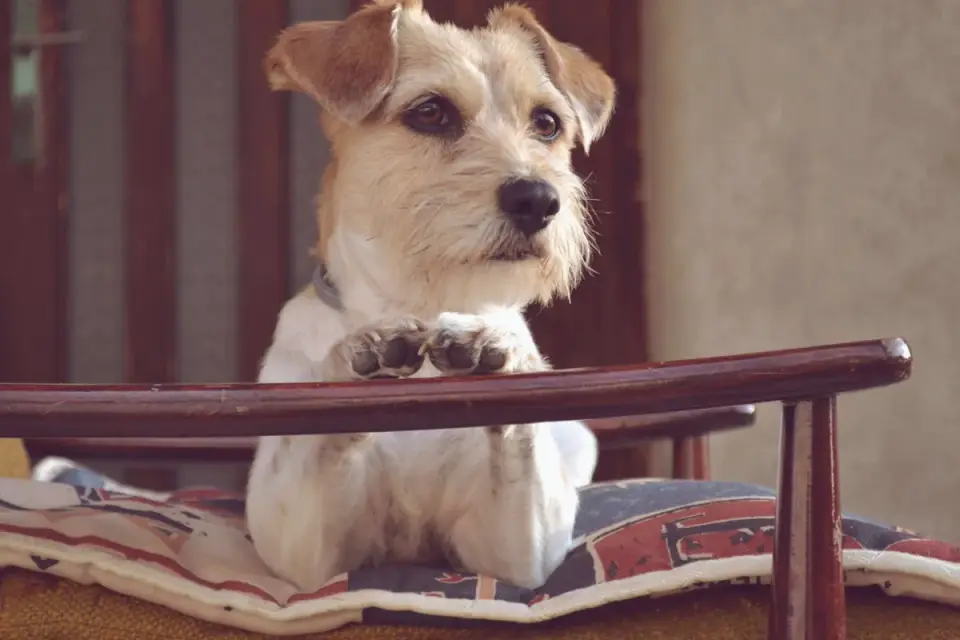
Build days around low-impact routines owners can repeat. Walk them separately at first, then in parallel at a distance where both can sniff and disengage. Keep puppy greetings on leash. Give the senior a non-slip rest zone the puppy cannot enter, with water, a supportive bed, and white-noise distance from play. Feed separately to prevent resource guarding around bowls. For arousal between sessions, brief training breaks help; many owners also review material on How to Stop Puppy Biting and Mouthing and Is Humping a Dominance Behavior or Just Excitement? so puppy energy has an outlet that is not the senior’s hips.
A short paragraph matters here. Rest is treatment.
The exception case looks like a small senior and a large-breed puppy in a walk-up apartment. Standard advice says more walks together, but stairs plus a pulling adolescent can overload a 14-year-old, 12-pound spaniel mix with a known heart murmur. In that setup we did the opposite: elevator or carried stair transport for the senior, a 200-foot hallway sniff walk for mental work instead of a block loop, and puppy play with humans rather than the senior. Joint protection bent toward cardiovascular and fall protection, which was the limiting system.
Your owner checklist to close the week
Measure baseline this week: time to rise in the morning, willingness on stairs, distance before lagging. Protect sleep with a gated room. Add traction runners on turns and stairs. Trim total play to brief supervised bouts with recall breaks. Keep body condition lean. Call your veterinarian promptly for new lameness lasting more than a day, night vocalizing, or reluctance to rise. Management first preserves choice later, and choice is what keeps an older dog social without paying for it in stiffness.
Sources
- Arthritis in Dogs — VCA Hospitals