On this page
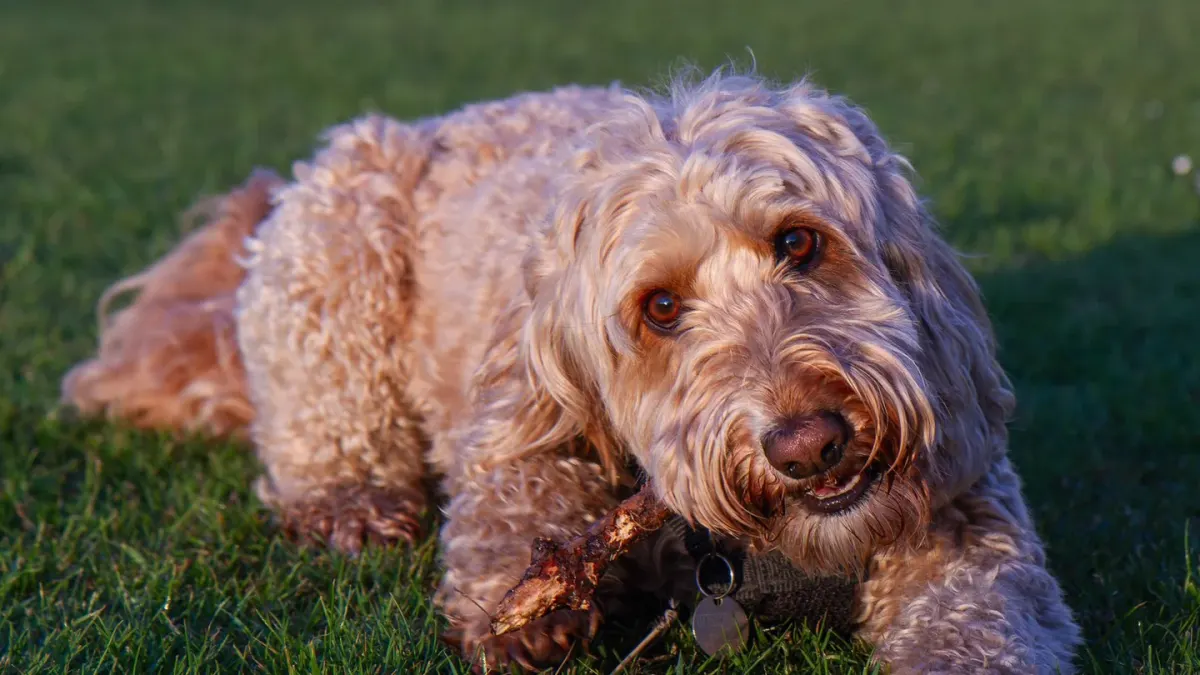
Every few weeks a client sits down in my exam room certain of one thing: they’ve already decided between a Labradoodle and a Goldendoodle, and they just want me to confirm it. Usually the deciding factor was a photo, a friend’s dog, or a breeder’s description of “low-shedding.” I understand the appeal. But I’ve watched enough of these dogs grow up to know that coat is the least useful axis for this decision. The premise I want to test here — that the choice comes down to Poodle-cross cuteness and a shedding guess — doesn’t hold up once you look at what these dogs actually inherit and what a week in their life demands of an owner.
Both breeds are Poodle crosses first, and everything else follows from that. A Labradoodle is a Labrador Retriever crossed with a Poodle; a Goldendoodle crosses a Golden Retriever with a Poodle. That single-generation difference in the retriever parent shapes coat texture, shedding pattern, and — more importantly for a mobility-focused reader — joint risk and exercise tolerance.
What the parent breeds actually hand down
Labrador Retrievers and Golden Retrievers both carry a real predisposition to hip and elbow dysplasia, and doodles inherit that risk rather than escaping it. According to Ortho Dog, Labradoodles can carry meaningful rates of hip dysplasia, and outcomes track closely with whether the parent dogs were hip-screened before breeding. This is not a coat-type issue. It’s a genetics-and-breeder-practice issue, and it applies to both crosses roughly equally. If a breeder can’t show you OFA or PennHIP results on both parents, that matters more than which retriever is in the pedigree.
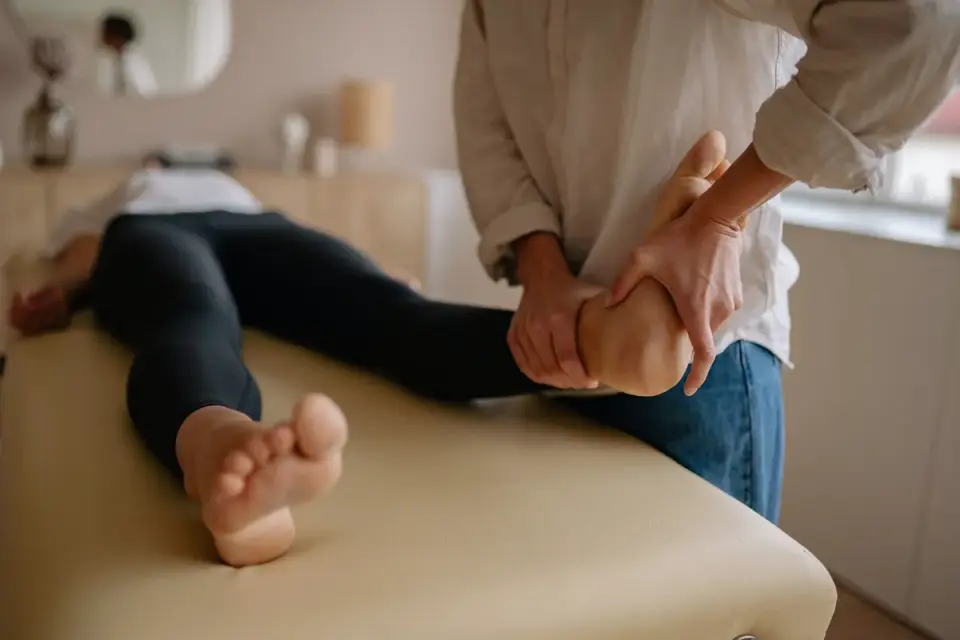
Body size plays a role too. Standard Goldendoodles and standard Labradoodles both run large enough that joint stress compounds over a lifetime — jumping off furniture, sprinting on hard floors, or carrying extra weight all add load to joints that may already be structurally borderline. Mini and toy lines carry different orthopedic risks, including patellar luxation, so “smaller means safer” isn’t a reliable assumption either.
Energy budgets: what a week with each dog really looks like
Golden Retrievers are described by the AKC as an exuberant, athletic gundog breed with genuine working drive, and that temperament comes through in most Goldendoodles as sustained enthusiasm — for retrieving, for swimming, for anyone who walks through the door. Labradors bring a similar drive but often a slightly steadier, more food-motivated focus that some owners find easier to channel into structured exercise.
In practice, both crosses need real daily output, not a stroll around the block. I tell owners to plan on 45 to 60 minutes of active movement a day for a healthy adult standard-sized doodle, split across a walk and some off-leash or fetch-style play, with more mental work added on days the weather keeps outdoor time short. Skimping on this doesn’t just produce a bored dog — an under-exercised large-breed dog is more likely to be overweight, and excess weight is one of the few joint-health factors an owner can fully control.
One family I worked with had a two-year-old Goldendoodle, about 55 pounds, who’d started refusing the back porch stairs by early evening. They’d assumed it was joint pain and were bracing for an arthritis conversation. What we found instead was a dog getting a single 15-minute leash walk a day and pacing the living room for the rest of it — restless, understimulated, and stiff from being sedentary rather than overworked. We built up to two structured 25-minute sessions daily, added a food puzzle at dinner, and within about three weeks the evening stair refusal was gone. Not every case is this simple, but it’s a pattern I see often enough to check exercise load before assuming joint disease.
Coat, grooming, and the allergy promise
This is where most people start the comparison, so it’s worth being direct about it: coat outcome depends far more on generation than on which retriever is in the mix. An F1 (first-generation) doodle of either breed has a genuinely unpredictable coat — wavy, flat, or loosely curled — and moderate shedding. An F1B, bred back to a purebred Poodle, leans much curlier and lower-shedding, which is why breeders market it toward allergy-sensitive households. Neither pairing is meaningfully more or less shedding-prone than the other at the same generation; the retriever parent barely factors in.
Grooming commitment scales with how Poodle-like the coat turns out, regardless of whether the other parent was a Lab or a Golden. Curlier coats mat if they aren’t brushed to the skin several times a week, and most owners end up on a six-to-eight-week professional trim schedule once the adult coat comes in. According to PetMD, Goldendoodles require this kind of regular grooming and coat maintenance regardless of generation, which mirrors what I tell Labradoodle owners as well.
Building a joint-safe routine for either doodle
Whichever cross you land on, the daily structure I recommend is close to identical, because the risks and the dog’s size are close to identical.
- Warm up before hard play. A five-minute loose-leash walk before fetch or a run lets muscles and tendons ease into load, especially in dogs under two years old whose growth plates may not be fully closed.
- Cap high-impact repetition. Repeated jumping for a ball, especially on hard surfaces, is harder on joints than the same total activity spread across walking, swimming, and controlled play.
- Keep a visible weight target. Ask your veterinarian what your dog’s ideal body condition score looks like, and check it monthly by feel along the ribs, not by the scale alone.
- Add traction at home. Runners on slick flooring near stairs and favorite jumping spots (like a couch) reduce the slip-and-strain injuries I see most often in young, exuberant doodles. Our guide on common mistakes when setting up a dog recovery space covers footing setup in more detail if your dog is already recovering from an injury.
- Plan for aging joints early. A ramp for the car or a favorite piece of furniture is easier to introduce before a dog needs it than after; see our DIY dog ramp build guide if you want to build one yourself.
- Watch coat and heat together. Curlier, denser coats trap heat during summer exercise, so timing walks for cooler parts of the day matters more for heavily-coated F1B doodles; our piece on cooling options for a thick-coated breed at home has practical setups.
I had a Labradoodle patient, a nine-year-old male around 60 pounds, whose owners noticed he’d stopped initiating games of fetch in the yard that spring — no limping, no yelping, just quietly opting out. His gait after a nap was a little stiff for the first few steps before smoothing out, a detail the owner almost didn’t mention because it seemed too minor to matter. That early-morning stiffness pattern, combined with his age and size, was enough for us to start a joint-support conversation well before he showed obvious lameness. Catching that kind of subtle change is exactly why I ask owners to track how a dog moves in the first few minutes after rest, not just during activity.
Which one actually fits your household
Neither breed is the “easier” choice in the abstract. The real fork is whether your household can sustain 45-plus minutes of genuine daily exercise for a large, food- and play-motivated dog, and whether you’re prepared for the grooming commitment that comes with curlier coat generations — a commitment that has nothing to do with which retriever is in the pedigree. If your priority is a steadier, slightly more food-focused temperament, a Labradoodle from health-tested parents is a reasonable bet. If you want a dog leaning toward that retriever exuberance and don’t mind matching its enthusiasm daily, a Goldendoodle fits that profile. Either way, ask for hip and elbow clearances on both parents before the coat conversation even starts.
Owner checklist before you choose
- Ask for OFA or PennHIP hip and elbow results on both parent dogs, not just the Poodle.
- Confirm the generation (F1, F1B, multigen) and match it to your grooming tolerance, not your allergy hopes alone.
- Budget 45–60 minutes of real daily activity for a standard-sized adult of either cross.
- Set up traction and a ramp plan before joint issues appear, not after.
- Track gait in the first few minutes after rest as an early, low-drama check-in on joint comfort.