On this page
At 16 weeks a Labrador puppy is built for learning movement, not logging miles, so keep forced exercise short and let free play set the pace. Build the day around 10- to 15-minute blocks: sniff walk, training with sits and downs, scatter feeding in grass, then crate or mat rest. Repeat that cycle 3 to 4 times daily rather than taking one long walk.
Why short and varied protects a 16-week frame
Growth plates at the ends of long bones are still open cartilage at this age and handle brief, varied loading better than repeated impact. That is why two play sessions with turns, pauses, and sniff breaks serve joints better than a straight 30-minute march on pavement.
Watch the puppy, not the clock. Slow down when trotting turns into plodding, when recall gets laggy, or when the pup flops down unasked. End on a win.
That single-sentence rule prevents most overdoing.
Keep footing soft and grippy: grass, dirt trail, rubber matting, or dry carpet. Avoid long stair repetitions, jumping in and out of the SUV, extended fetch on slick floors, and wrestling with much larger dogs. Carry over grates and lift into the car if the jump is chest-high.
A daily routine you can repeat
Do this sequence morning, midday, and evening:
- 5-minute warm-up sniff walk on a loose leash.
- 5 minutes of training: name response, follow, sit, settle on mat.
- 5 to 10 minutes of free exploration in a fenced grass area or long line.
- Drink, potty, then enforced nap for 1 to 2 hours.
Add one short socialization outing: sit outside a store, watch bikes, hear trash cans, reward calm. Mental work tires a Labrador puppy faster than distance.
Where off-leash play and water fit
Let the puppy choose the pace off leash where it is safe. Casual start-stop play with one calm, vaccinated dog teaches body awareness and brakes. For help deciding when free play helps and when a leash walk is smarter, compare Off-Leash Play vs On-Leash Walks for Exercise: What Actually Serves a Dog’s Joints.
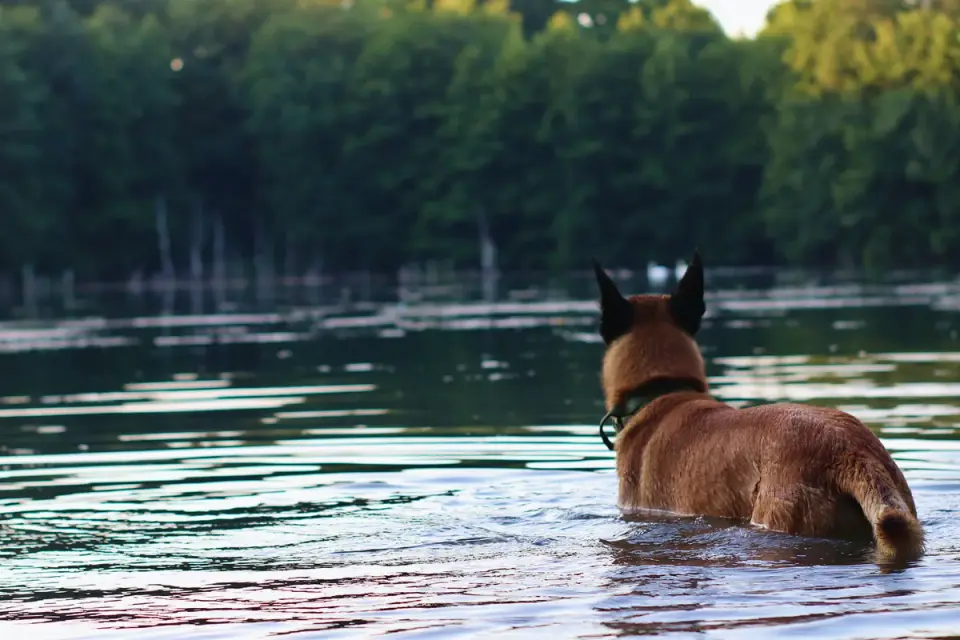
Skip sustained swimming as workout laps for now. Brief wading with good entry, warm water, and support can build confidence, but long retrieves in water fatigue young shoulders quickly. The same pacing logic in Swimming vs Walking for an Arthritic Dog: Which Actually Helps More? applies here: short bouts, easy exit, full rest after.
Avoid treadmills and forced jogging at 16 weeks. If weather blocks outdoor time, use indoor scent games, food puzzles, and footing drills instead of adding treadmill minutes. Dog Treadmill vs Outdoor Walking: Which One Actually Serves an Achy Dog Better? explains why steady machine pace rarely suits a dog that needs frequent stops.
Weigh what food and joint nutrition can do here
At this stage, balanced large-breed puppy food, steady weight gain, and lean body condition support skeletal development far more than any extra powder or chew. Ingredients like glucosamine and chondroitin are among the most studied joint support ingredients for dogs, and green-lipped mussel contains omega-3 fatty acids and glycosaminoglycans that have been studied for joint support in marine-oil arthritis research reported in Nutrients — yet they may help support normal joint function alongside movement, not make up for too much running or jumping.
Keeping play self-directed with frequent rest matches a food-first plan: feed a complete large-breed puppy diet to label, track ribs and waist weekly, and ask your veterinarian before adding any joint supplement.
Vets often see the 4-month-old who suddenly refuses the last block of an evening walk after three good days of longer outings. In practice, the fix that holds is cutting forced distance in half for a week, keeping free play on grass, and adding an extra nap — then lameness checks if stiffness lasts beyond a day.
Owner checklist for the next 2 weeks
Check paws, nails, and footing before each outing. Keep leash walks under 15 minutes on soft ground. Count naps: 18 to 20 hours of sleep in 24 hours is normal. Log weight weekly; you should feel ribs easily without seeing them. Call your veterinarian promptly for limping that persists after rest, swelling, yelping on handling, or reluctance to rise.
Make tomorrow easier: set out the long line, two food puzzles, and a mat tonight so the first play block stays short and calm.
Frequently asked questions
How far can a 16-week Labrador puppy walk?
Keep on-leash walks to about 10 to 15 minutes on soft ground with sniff breaks, once or twice daily, plus free play. Stop early for lagging, panting that does not settle quickly, or flopping down.
Is fetch okay at 16 weeks?
Use 2 to 3 short tosses on grass with a soft toy, then stop. Avoid repeated long throws, hard stops, and slick floors.
How much sleep does a 16-week Labrador need?
Most need 18 to 20 hours in 24 hours. Enforce naps after play blocks to protect learning, mood, and growing joints.