On this page
I had a client a few winters back — a nine-year-old Labrador named Otis, about 78 pounds, who’d started refusing the stairs to the back deck and hesitating before jumping into the car. The owners, both working long hours, had bought a dog treadmill off a resale site because the nearest safe sidewalk loop meant crossing an unlit intersection after dark. Six weeks in, Otis was walking the belt for fifteen minutes most evenings, and his gait looked smoother on flat ground. But he’d also stopped sniffing at the mailbox, stopped pulling toward the neighbor’s yard, stopped doing the small investigative detours that, frankly, told me he was engaged with his world. That case is where I usually start when owners ask me to just pick one.
The disputed premise: is a treadmill “just as good”
The pitch for a dog treadmill is straightforward — consistent pace, controlled surface, no weather, no leash reactivity, and a way to hit a mobility goal even when the owner’s schedule or the sidewalk situation makes outdoor walking hard. For a dog recovering from an orthopedic procedure or one with significant joint disease, that predictability has real value; a rehab-supervised treadmill session lets a clinician control speed and incline precisely, which is exactly why underwater and land treadmills show up in veterinary rehab protocols in the first place.
But “just as good” is doing a lot of work in that sentence, and I don’t think it holds up as a wholesale swap for daily outdoor movement in an otherwise healthy or mildly stiff older dog. A treadmill belt is flat, uniform, and predictable in a way no sidewalk, trail, or backyard ever is — and that lack of variation is a feature for rehab, but a limitation for day-to-day joint and cognitive health. Outdoor terrain forces small, constant postural corrections: a slight camber, a patch of gravel, a curb step down. Those micro-adjustments recruit stabilizing muscle groups around the hip and shoulder that a flat belt simply doesn’t ask for.
What actually differs between the two, mechanically and behaviorally
- Surface variability. Grass, dirt, and uneven pavement change the load path through a dog’s paw, carpus, and hock stride to stride. A treadmill belt does not, which is useful for isolating a specific gait pattern during rehab but means the dog isn’t building the broader proprioceptive tolerance that varied ground requires.
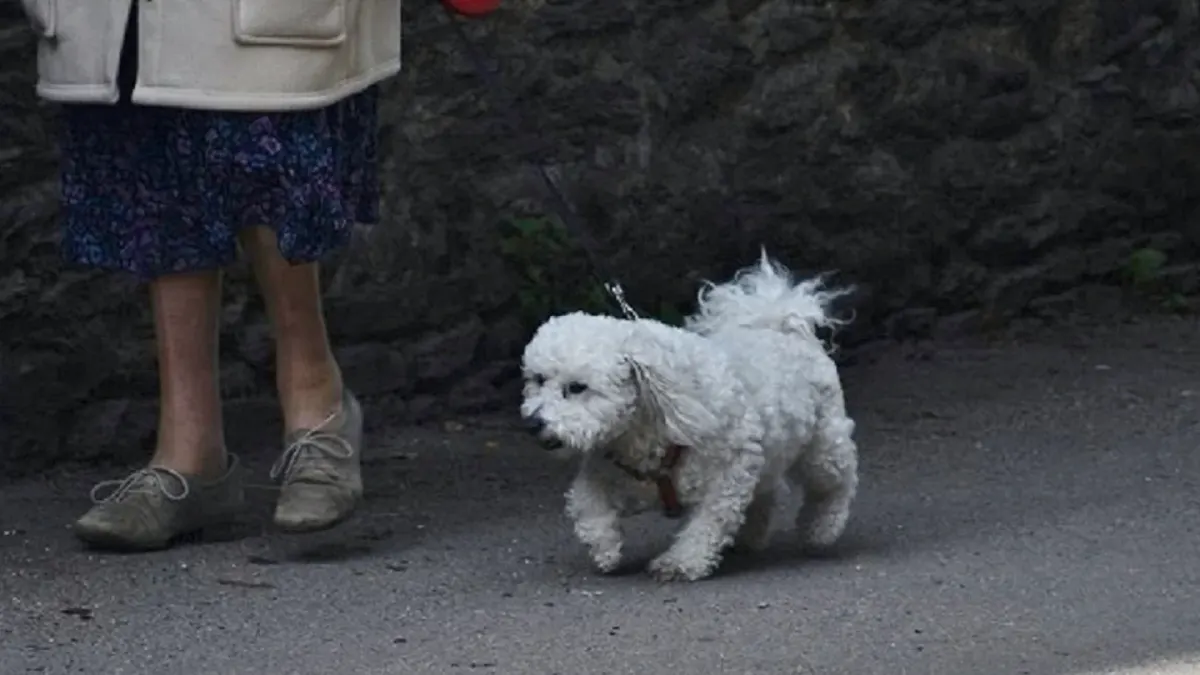
- Pace and stopping. Dogs on a treadmill move at the machine’s pace; dogs outside self-select their pace, stop to sniff, and vary their cadence, all of which is part of normal exploratory behavior and mental engagement, not “wasted” time.
- Environmental enrichment. Scent tracking and novel stimuli outdoors are a documented piece of canine welfare that a treadmill, by design, removes.
- Weather and safety control. This is the treadmill’s clearest structural advantage — no ice, no heat index, no traffic, and a controllable incline for weight-bearing rehab work.
Where the joint-support conversation actually fits
Neither a treadmill nor a walk changes the underlying biology of a stiff or arthritic joint on its own, and this is where I get direct with owners: movement modality is a management tool, not a treatment for joint disease. What’s inside the joint capsule — synovial fluid quality, cartilage integrity, inflammatory load — responds to a different set of levers.
Chondroitin, for instance, is one of the more studied joint-support ingredients precisely because of its role in synovial fluid; research summarized in Frontiers in Veterinary Science describes chondroitin as supporting healthy synovial fluid homeostasis. Glucosamine HCl has a longer research history still — a review in the Journal of Veterinary Medical Science notes its capacity to prevent experimentally induced cartilage degradation in vitro, which is a mechanistic finding, not a promise about any individual dog’s outcome. And green-lipped mussel powder, a common addition to joint blends, has shown anti-inflammatory activity in animal models — a study in Nutrients found that mussel-derived compounds alleviated paw swelling and reduced inflammatory markers including TNF-α and IL-17 in a rat model. None of that is a substitute for appropriate exercise; it’s a complement to it, and I frame it that way with clients every time.
A case where the choice actually mattered
One of the dogs I worked with, a twelve-year-old Australian Shepherd named Sadie, had moderate hip dysplasia and an owner who traveled two weeks out of every month. During travel weeks a pet sitter used a treadmill set at a slow, flat pace for ten-minute sessions, because the alternative was no structured movement at all. During home weeks, Sadie got her normal 25-minute neighborhood loop with two hill sections. Over about four months, the owner noticed Sadie was more reluctant to get up after the treadmill-only stretches — stiffer for the first few steps out of her bed — than after weeks that included the hill walks, even though the treadmill sessions were, on paper, “easier.” That’s one dog, one owner’s observation, not data I’d generalize from, but it matches what I’d expect: incline and terrain variety load and unload the hip joint through a fuller range than a flat belt does, and that range matters for a dysplastic hip specifically.
An owner’s practical checklist
- If your dog has been cleared for exercise and can physically manage outdoor terrain, treat outdoor walking as the default, not the treadmill.
- Reserve the treadmill for weather extremes, post-op flat-pace rehab under veterinary guidance, or safety gaps (no sidewalk, dark commute hours) — not as a permanent substitute.
- Keep sessions short and frequent for a stiff senior dog rather than one long push; two 10-minute outdoor walks often beat one 25-minute treadmill block for both joints and mood.
- Watch for the same red flags either way: reluctance to rise afterward, a bunny-hop gait, or skipping stairs the dog used to take without hesitation — those warrant a veterinary joint exam before you troubleshoot the exercise plan.
- If your dog’s living situation makes daily outdoor walks hard, look at your home setup too — see our guide on common mistakes when setting up a dog recovery space and, for thick-coated dogs struggling in heat, cooling options for a thick-coated breed at home.
- If a joint supplement is part of the plan, ask your vet how it fits alongside — not instead of — whichever movement plan the dog can actually sustain.
My practical answer, most of the time, is to default to outdoor walking and treat the treadmill as a tool for specific gaps — bad weather, rehab protocols, unsafe routes — rather than a like-for-like replacement. The counterargument I take seriously is the safety one: a dog that gets zero movement because the only outdoor route is unlit or icy is worse off than a dog getting flat, predictable treadmill minutes. I don’t dismiss that. But for the average dog with the average backyard-and-sidewalk access, the variability of the outdoors is doing real orthopedic and behavioral work that a belt can’t replicate, and that’s the case I’ll keep making to clients like Otis’s owners.
For breed-specific context on how much daily movement a dog actually needs and tolerates, see our pieces on Border Collie vs Australian Shepherd exercise needs and best low-maintenance dog breeds for busy people.
Frequently asked questions
Is a treadmill safe for a dog with arthritis?
It can be, but only under veterinary or rehab guidance with an appropriate speed and incline; unsupervised treadmill use can push a stiff or arthritic dog past what its joints can comfortably handle.
Can a treadmill fully replace outdoor walks?
Not for most dogs. It can substitute during bad weather or for short-term safety gaps, but outdoor terrain provides sensory engagement and varied joint loading that a flat belt doesn't.
How long should a senior dog walk each day?
This varies by dog and diagnosis, so it's worth confirming with your veterinarian, but many stiff senior dogs do better with two shorter walks than one long one.
Sources
- Chondroitin sulfate and synovial fluid homeostasis — Frontiers in Veterinary Science
- Glucosamine HCl and cartilage degradation — Journal of Veterinary Medical Science
- Green-lipped mussel compounds and inflammatory markers — Nutrients