On this page
Marlowe, a four-year-old Bernese mix, growled every time his housemate flopped onto the same dog bed. His owners weren’t sure if he was warning her off or just narrating a wrestling match that hadn’t started yet. That confusion is the whole reason this topic keeps coming up in my exam room — the sound alone almost never tells you what you need to know.
The premise I ask owners to test first
Here’s what I push back on: the idea that growl pitch or volume is diagnostic. It isn’t. A deep, sustained growl during a tug game can be pure play arousal, and a soft, almost mumbled growl during petting can be a real warning. I ask owners to mute the sound in their heads and watch the body instead — that single habit resolves more of these questions than any amount of listening ever will.
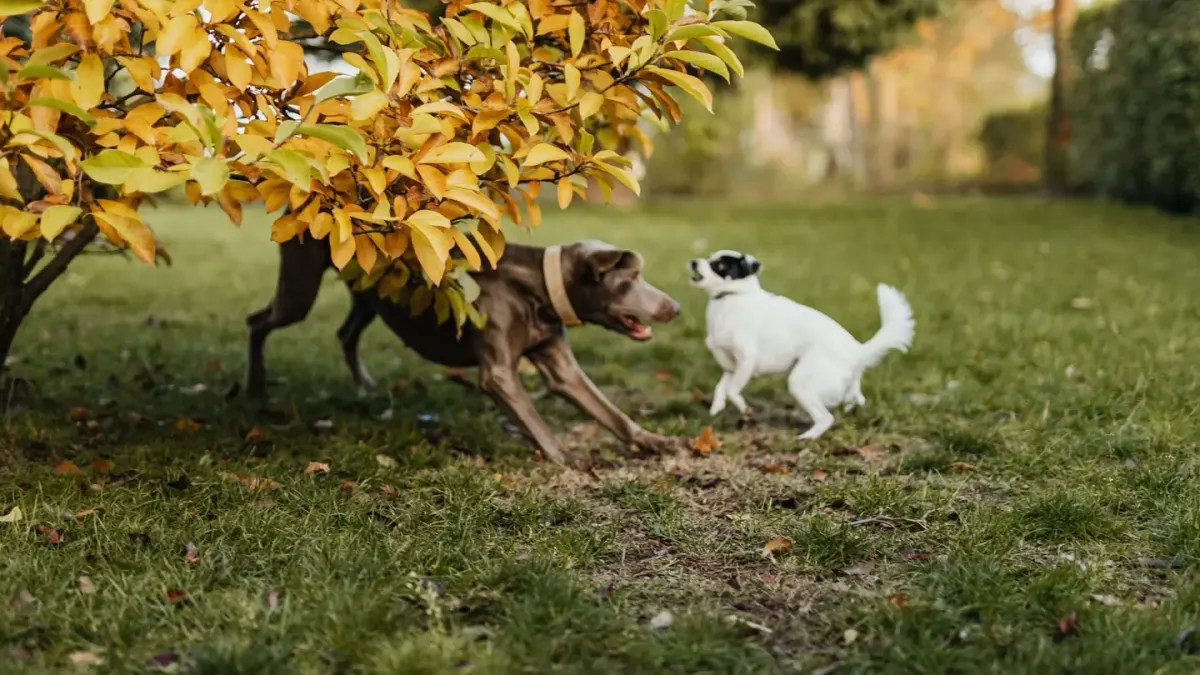
Play growls tend to show up alongside a loose, bouncy body: weight shifting side to side, a relaxed or open mouth, paws that come off the ground, and pauses where the dog checks back in before diving back into the game. A play bow — front end down, rear end up — almost always brackets a play growl, either right before it or right after a lull. The growl rises and falls with the action instead of holding steady.
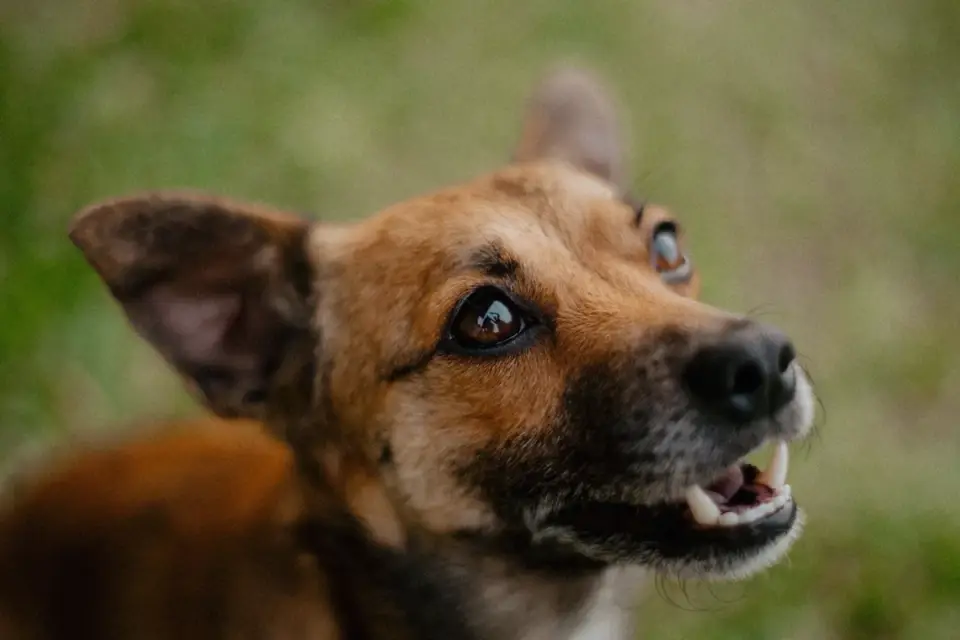
A warning growl reads differently. The body stiffens rather than loosens. Weight shifts forward and low, or the dog leans away and freezes. The mouth closes to a tight line, whites of the eyes may show, and the tail goes still or tucks instead of wagging loosely. Context matters here too — warning growls cluster around resource guarding, being cornered, being handled somewhere sore, or being approached while resting. If you remove the trigger and the growl stops immediately, that’s a strong sign it was a warning, not a game.
Why the pattern matters more than the moment
One of the dogs I worked with, a fourteen-month-old Lab named Otis, had owners who described him as “growling for no reason” during evening play with their older cat-safe household. When we walked through video together, the pattern was obvious once we slowed it down: every growl happened in the first thirty seconds of a new game, always paired with a play bow, and always followed by loose zoomies around the living room. What looked random in the moment was actually a consistent structure once we looked at the whole sequence instead of the isolated sound. That’s the piece owners miss most — a single growl tells you almost nothing, but the pattern across five or ten interactions tells you everything.
This distinction matters because misreading it goes wrong in both directions. Punishing a play growl teaches a dog to suppress a perfectly normal communication signal, which can make future warnings harder to read, not easier. Ignoring a real warning growl because “he’s just being dramatic” removes the one clear signal a dog gave before escalating. Growls exist to prevent a bite, not cause one — a dog who growls and is heard doesn’t need to try harder next time.
Reading the whole dog, not just the sound
A few markers I return to with almost every case:
- Movement quality: bouncy and curved during play, stiff and direct during a warning.
- Recovery time: a play growl is followed by more play within seconds; a warning growl is followed by distance-seeking or continued stillness.
- Trigger removal: take away the thing being contested — a toy, a touch, a passing dog — and see whether the growl resolves immediately (warning) or the dog re-engages the game anyway (play).
If your household includes a dog who growls more often around housemates than strangers, it’s also worth ruling out the anxiety-flavored version of this pattern — some dogs growl reflexively when they’re overstimulated or under-rested, which can look a lot like irritation but tracks closer to stress. It’s a similar diagnostic problem to the one owners face separating true boredom from something more like separation anxiety: the behavior looks the same on the surface, but the underlying state driving it is different, and that changes what actually helps.
Where calming support fits, and where it doesn’t
Calming support has a real but limited role here, and I want to be direct about the limit: no chew, oil, or supplement resolves a resource-guarding growl or a pain-driven warning. Those need management, training, or a veterinary exam. What structure/function calming ingredients may help with is the baseline arousal level a dog brings into a play session — a dog who starts overstimulated has less room to self-regulate before a growl tips from play into something sharper.
Chamomile and valerian root have a long history in traditional herbal care for supporting relaxation, though for most species the human-relevant evidence is still mostly preclinical or based on traditional use rather than large controlled trials, per a review in Biomedicines. L-theanine, an amino acid found in tea, has been studied for calming properties in humans, with one trial on anxiety showing a moderate effect at 400 mg/day over eight weeks, according to a review published in Molecular Psychiatry. KSM-66 ashwagandha has also drawn attention for stress support — a systematic review in Cureus covering multiple randomized controlled trials found a moderate positive impact on stress reduction and cognitive performance. None of that evidence is dog-specific bite prevention data; it’s a reasonable basis for “may help support a calmer baseline,” not a promise about growling.
The routine I actually recommend
For a dog whose growling pattern still looks ambiguous, I walk owners through the same sequence: film two or three real interactions instead of relying on memory, note what happened in the ten seconds before the growl, and separate resting-dog growls from active-play growls into two different mental buckets. Households in tighter quarters — the same layout questions that come up when people are choosing among the best dog breeds for apartment living — often see more resource-guarding-style growls simply because personal space is harder to give, which is a management fix, not a temperament flaw.
Marlowe’s case turned out to be play. Once his owners watched for the bounce and the bow instead of listening for the growl, the pattern was easy to trust, and the dog bed standoff stopped worrying them within a week. Otis’s case was the same story from a different angle — once the video slowed things down, what looked like unpredictability was just a young dog announcing the start of a game every single time.
Your checklist before you react
- Watch the body first: loose and bouncy usually means play, stiff and still usually means warning.
- Check what happens right after the growl — more play, or more distance.
- Remove the trigger and see if the growl resolves immediately.
- Separate resting-dog growls from active-play growls; they usually mean different things.
- Treat every growl as useful information the dog gave you, not a behavior to punish.
- If growling shows up mainly around handling, resting, or a specific body part, rule out pain before assuming it’s behavioral.
Frequently asked questions
Can a play growl turn into a real bite?
Yes, if play gets overstimulating and a dog can't self-regulate — that's why watching for stiffening or a closed mouth mid-play matters, so you can pause the game before it escalates.
Should I punish my dog for growling?
No. A growl is a warning signal that helps prevent a bite. Suppressing it through punishment can remove that signal without changing how the dog actually feels.