On this page
You’re not imagining it when your steady walking partner starts fading halfway around the block. My premise for this guide is a little unpopular: most exercise intolerance isn’t low motivation or aging alone, it’s the body telling you movement now costs more than recovery allows.
That framing matters because it changes what you do next. You don’t push through, and you don’t quit moving altogether. You learn to read the pattern, adjust the workload, and support diet, weight, and joint comfort alongside movement.
A 7-year-old, 68-pound sporting mix I followed in rehab notes came in for exactly this question. For three weeks his owner logged shorter evening walks, from 30 minutes down to 12 before he sat down and panted with his elbows flared. By day 10 of tracking, the pattern was clear: he started bright, lagged at the same corner, then needed two hours on a cool floor to settle. That log made the decision concrete — this wasn’t stubbornness, it was a workload problem that needed a vet check and a lighter plan.
The slowing pattern I watch before I blame age
Exercise intolerance is a change in capacity, not one tired day. You’ll see lagging behind, frequent sit-downs, refusing stairs or the last hill, heavy panting that lasts long after you stop, coughing or gagging with effort, pale gums, wobbling, or a dog who’s flat for the rest of the day.
Compare what you see to your dog’s own baseline. A young Boxer is built for bursts and then a flop, while an older retriever may walk steady but pay for it tomorrow. Our guide to Boxer Care and Exercise Needs: A Vet’s Real-World Guide is a useful reminder that breed and build set normal. What flags intolerance is a sustained drop, new effort sounds, or recovery that keeps getting longer.
Keep a two-week log. Note distance, heat, hills, panting time after stopping, and next-day stiffness. Vets use that trend far more than any single walk.
What effort looks like versus normal tired
Normal tired is soft panting, a drink, a nap, then ready to go. Intolerance looks louder.
Watch for panting with a roaring effort, nostrils flaring, tongue wide and dark, drooling, or a dog that seeks shade and won’t re-start. Watch the gait too: short steps, bunny-hopping behind, head bobbing, or lying down mid-walk. Afterward, look for prolonged standing to cool off, restlessness at night, or soreness getting up the next morning.
Heat and weight raise the cost fast. An overweight dog in humidity can look intolerant when the real drivers are insulation and conditioning.
This is where owners get stuck.
When I scale back and test, not push
A 5-year-old, 42-pound mixed-breed dog in my notes shows the tradeoff well. The owner tried to rebuild fitness by adding a Saturday long hike after a week of short leash walks, thinking one big effort would catch him up. By day 3 after the hike he was still stiff rising, then refused the evening loop he usually liked. That failed approach complicated the plan — fitness didn’t improve, confidence dropped, and we had to spend two weeks rebuilding with flat, 10-minute walks before we could progress again.
The lesson holds for most dogs. Cut the hardest variable first — distance, hills, heat, or off-leash sprints — then rebuild in small steps. Structured leash work often tells you more than free play, as we break down in Off-Leash Play vs On-Leash Walks for Exercise: What Actually Serves a Dog’s Joints and Dog Park vs Structured Exercise for Your Dog: Which Actually Builds Fitness?.
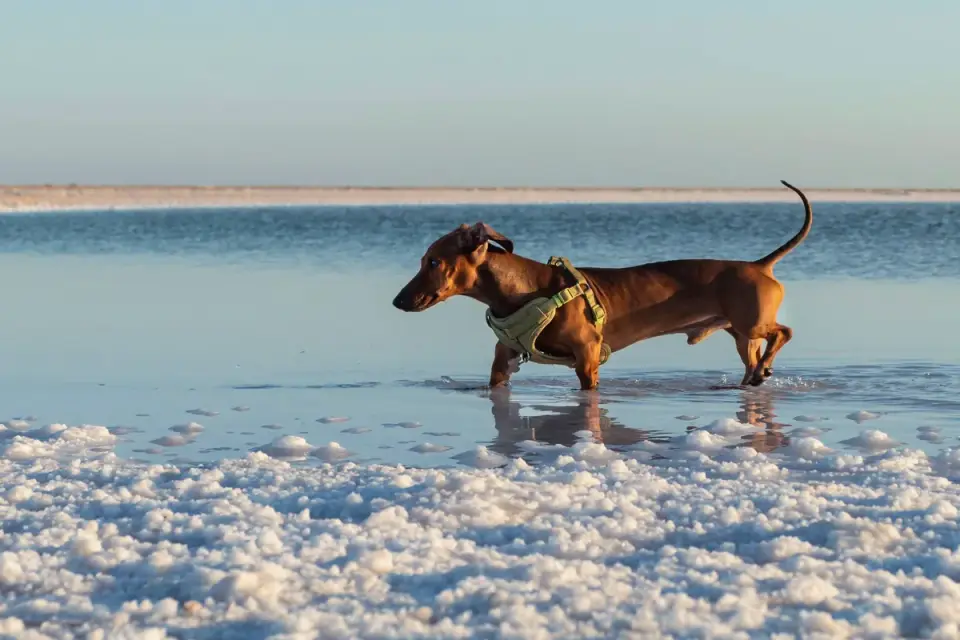
If swimming is your backup, keep it measured and supervised. Our comparison in Swimming vs Walking for an Arthritic Dog: Which Actually Helps More? explains why water unloads joints but still taxes heart and lungs.
Where food, weight, and joint support fit
Here’s where I land, and where I’ll defend one line: for a dog that’s slowing down, steady low-impact movement plus lean body weight and consistent nutrition will do more than any powder or chew alone.
The strongest counterargument is fair — why bother with joint nutrients if exercise and weight matter most? Because diet is the daily background those walks happen on, and some ingredients have direct joint-related research behind them, even if the results are modest and mostly supportive rather than curative.
Ground an integrative claim in the nutritional evidence this way: glucosamine and chondroitin are widely studied joint-support ingredients, and newer work reported chondroitin “supports healthy synovial fluid homeostasis” in a study published in Frontiers in Veterinary Science. In lab work, glucosamine was reported to “prevent experimentally induced cartilage degradation in vitro” according to Journal of Veterinary Medical Science. For green-lipped mussel oils, researchers noted that “BMO, GMO, and KO all alleviated paw swelling in rats and reduced serum levels of rheumatoid factor (RF), anti-cyclic citrullinated peptide (anti-CCP) antibody, and pro-inflammatory cytokines such as TNF-α and IL-17” in Nutrients.
Weigh what a supplement can realistically do for diet, mobility, and recovery: it may help support the nutritional background for joint comfort and normal movement, but it won’t replace conditioning, weight loss, pain control, or a cardiac workup when panting and fatigue are new.
That’s why I still land here.
Talk with your vet about whether a joint-support diet or supplement fits your dog’s whole plan, especially if appetite, weight, or medications are in play.
The edge case owners miss
A 10-year-old, 55-pound herding mix taught me to check assumptions. She looked classically exercise intolerant on walks — lagging by minute eight for three weeks in — yet her home play was bright and her recovery after short swims was quick. The difference was footing and pacing: she slipped on a slick entryway and pounded downhill on leash, so impact and fear, not stamina, shut her down. Once we added rugs, a ramp to the car, and flat out-and-back routes, her walk time doubled without any change in effort sounds.
Look beyond lungs and legs. Nails, pads, slippery floors, ill-fitting harnesses, heat, and anxiety can mimic intolerance. Older dogs also hide pain until movement ends, so next-morning stiffness counts as much as mid-walk slowing.
Your owner checklist before you call it intolerance
Run this list for two weeks, then bring it to your vet:
- Log baseline: usual distance, pace, rest stops, and minutes until panting eases.
- Control heat: walk early or late, bring water, watch humidity as much as temperature.
- Trim load: shorten by one-third, stay flat, add rest breaks before your dog demands them.
- Check weight and ribs: you should feel ribs easily with a visible waist from above.
- Audit home: rugs on slick floors, ramp for car or couch, supportive bed in a cool spot.
- Note red flags that need prompt care: fainting, blue or white gums, collapse, coughing up foam, or panting that won’t settle within 30 minutes.
Bring video if you can. A 20-second clip of the lag, the pant, and the recovery tells your vet more than adjectives.
Your next step is practical: shorten tomorrow’s walk, log what changes, and book a check if the pattern holds.
Frequently asked questions
How do I know if my dog has exercise intolerance or is just out of shape?
Look for a sustained change from baseline over 2 weeks: quitting earlier, harder panting, longer recovery, or next-day stiffness. Deconditioning improves steadily with gradual walks; intolerance plateaus or worsens and deserves a vet exam.
When should I call the vet right away for exercise intolerance?
Call promptly for fainting, collapse, blue/white gums, severe coughing, panting that won't settle, or sudden inability to finish a usual walk. Bring your activity log and video if you have it.
Can weight and home setup really change exercise tolerance?
Yes. Extra weight, heat, hills, slick floors, and missing rest breaks all raise effort. Lean weight, flat routes, cool timing, rugs and ramps, and shorter frequent walks often improve tolerance before anything else changes.
Sources
- Chondroitin and synovial fluid homeostasis — Frontiers in Veterinary Science
- Glucosamine and cartilage degradation in vitro — Journal of Veterinary Medical Science
- Green-lipped mussel oils and inflammatory markers — Nutrients