
On this page
- The Easy-Lab Myth Misses the First Two Years
- Plan Daily Movement Before You Bring One Home
- Keep Growth Lean and Weight Honest
- Set Up Your Home for 60 to 80 Pounds of Momentum
- Where Joint Support Fits in a Labrador Plan
- My Recommendation and the Objection I Take Seriously
- Owner Checklist Before You Say Yes
Labradors look like easy dogs until you live with the pace of one. I counsel owners to expect a smart, social, food-motivated athlete that grows fast, carries weight easily, and stays puppy-like far longer than the photos suggest. A young couple I counseled last spring captures the decision well. They worked full-time, lived in a two-story rental with slick hardwood stairs, and wanted a friendly dog for weekend hikes and evening couch time. They had met a calm 6-year-old therapy Lab and assumed a puppy would match that temperament by six months. At home they had no fenced yard, a toddler nephew who visited weekly, and about 45 minutes a day for walks. At 2 years old and 78 pounds, their neighbor’s intact male Lab still counter-surfed, pulled hard on leash, and paced at the door each evening until he received a structured retrieve session, which reframed their timeline from months to years of active management.
The Easy-Lab Myth Misses the First Two Years
My disputed premise is simple: trainability is not the same as low maintenance. Labs learn quickly, yet adolescence brings jumping, mouthing, pulling, and relentless scavenging.
What trainability does not solve
Build your plan around management first. Teach settle on a mat. Use gates and crates. Reward check-ins on walks. Keep sessions short and frequent. Practice recalls with a long line before you trust off-leash freedom. In my exam room, food motivation speeds learning when owners measure the day’s kibble and use it for training.
That structure protects behavior while growth finishes.
The American Kennel Club describes the Labrador as active, friendly, and outgoing, which matches what I see when exercise and training stay consistent. For help weighing temperament and lifestyle fit, compare notes in Labrador vs Golden Retriever: How to Choose.
Plan Daily Movement Before You Bring One Home
Adult Labs often need an hour or more of purposeful activity, split across the day. Puppies need far less forced exercise and far more skill-building.
Build a low-impact base
Start with what you can repeat. Take two brisk leash walks. Add ten minutes of nose work. Teach loose-leash skills in the driveway. Swim with controlled entries and exits once your veterinarian clears growth and vaccines. Choose grass or dirt over hard pavement for longer sessions.
Add training into motion
Turn movement into manners. Ask for a sit before throwing a bumper. Practice down-stays between short retrieves. End fetch before arousal spikes. Cool down with sniffing on a long line. Track what leaves your dog calm afterward, not only what tires them in the moment.
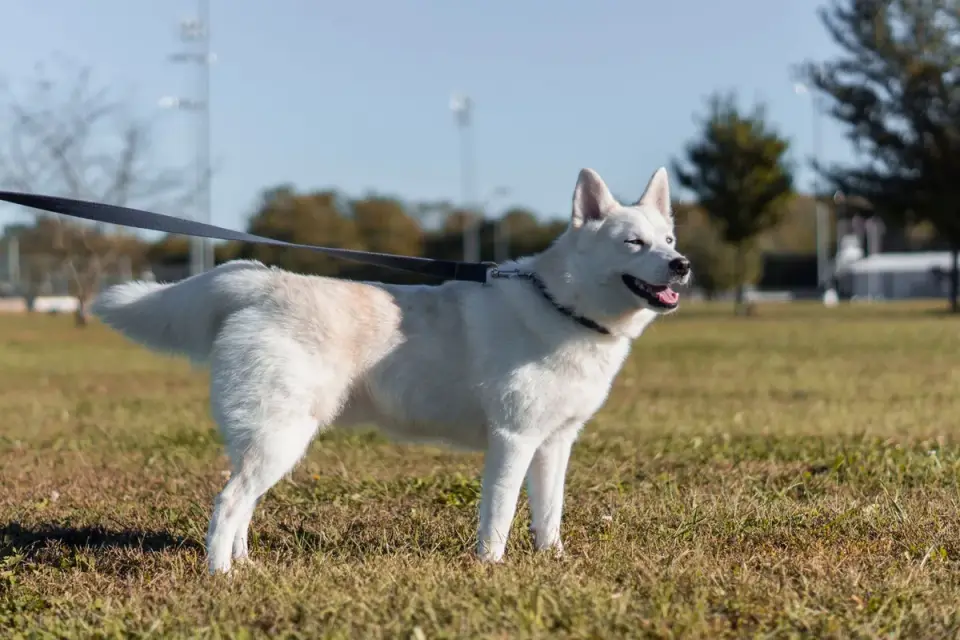
I worked with an owner who tried to fix weekday boredom with marathon weekend fetch. Their 10-month-old Lab received almost no walks Monday through Friday, then ran 60-plus throws at the park on Saturday. Three weeks in, the puppy began lying down after the third throw and lagging on stairs that evening while still whining to chase, which forced a reset. We replaced the binge pattern with two 20-minute weekday sniff walks, three five-minute training blocks, and one short Saturday retrieve session with built-in breaks. In that case the tradeoff was clear: fitness did not improve when recovery and joint loading stayed uneven.
Keep Growth Lean and Weight Honest
Labs gain weight quietly. Ribs disappear under a smooth coat, and extra pounds load hips, elbows, and knees during the very months joints are maturing.
Feed for frame, not appetite
Measure every meal. Use a scale for the first two weeks. Reserve part of the daily ration for training. Limit table scraps and high-calorie chews. Ask your veterinarian to score body condition every visit. Aim to feel ribs easily with light pressure and see a tucked waist from the side.
A landmark lifespan study indexed by the National Library of Medicine found that maintaining lean body condition supported longer median lifespan and delayed age-related changes in Labradors. I use that finding to set expectations: lean is a joint strategy, not vanity.
Learn the month-by-month growth curve in What to Expect in a Labrador Puppy’s First Year.
Set Up Your Home for 60 to 80 Pounds of Momentum
Your house trains movement patterns every day. Labs take stairs fast, launch off couches, and slide on slick floors.
Reduce slip and impact
Place runners on hardwood hallways. Add a non-slip mat at the main doorway. Use a ramp for the car and for high beds. Gate steep stairs for puppies. Keep nails short so toes grip. Put food and water where your dog does not need to sprint around corners.
Consistency matters more than equipment.
Where Joint Support Fits in a Labrador Plan
Hips and elbows deserve early attention in this breed. Ask your veterinarian about screening timelines, appropriate growth rate, and radiographs when lameness, bunny-hopping, stiffness after rest, or reluctance to climb persists.
Use supplements as support, not repair
Nutrition, weight, and movement do most of the work. Some owners add products with glucosamine, chondroitin sulfate, omega-3 fatty acids EPA and DHA, or undenatured type II collagen to help support cartilage structure and normal joint function. Evidence varies by ingredient and formulation, timelines run weeks rather than days, and no chew replaces weight control or changes anatomy.
The Orthopedic Foundation for Animals notes that hip dysplasia involves abnormal joint development influenced by genetics, growth, nutrition, and exercise. That is why I prioritize breeder screening, lean growth, and low-impact conditioning before any bottle.
My Recommendation and the Objection I Take Seriously
I recommend Labs for owners who want a training partner and can give daily exercise, calm handling, and strict weight management for 10 to 14 years. Set a baseline in week one: walk schedule, training slots, feeding amounts, and house rules.
The strongest counterargument is that a well-bred, calm Lab can settle with less work. That happens. Still, I plan for the higher-energy version because rehoming decisions rarely come from the easy puppies.
An edge case shaped that caution. I followed an 8-year-old spayed female who had been athletic all her life. At 9 years old and 68 pounds, she began pausing for four seconds at the bottom of six carpeted steps each morning before climbing, even though her weight, bloodwork, and leash enthusiasm looked steady. Her owner assumed aging alone explained it. We added a downstairs sleeping station, a ramp to the car, shorter morning walks with an evening sniff walk, and traction socks for tile. That small setup change reduced the daily hesitation and preserved her routine without asking her aging shoulders and hips to prove anything on stairs.
Owner Checklist Before You Say Yes
Walk through this list with everyone in the household. Answer honestly before you place a deposit.
Daily life
- Can you give 60 minutes of walks, play, and training most days for years?
- Who trains during busy weeks?
- Where will a mouthy adolescent rest without rehearsing jumping?
Body and budget
- Can you keep a food-driven dog lean despite begging?
- Are you ready for shedding, larger medication and food costs, and orthopedic screening?
- Does your home allow ramps, gates, and traction?
Pick the breed when the routine fits, not when the puppy photo wins.
Frequently asked questions
How much exercise does a Labrador Retriever need each day?
Many healthy adult Labs do best with about an hour of walks, play, and training split across the day. Build endurance gradually, favor low-impact activity, and adjust for age, weight, heat, and joint history with your veterinarian.
Are Labradors good for first-time owners?
They can be when owners commit to training, management, and daily exercise. Expect jumping, mouthing, pulling, and food-stealing through adolescence, and plan on crates, gates, leash skills, and measured feeding from week one.
How do I keep a Labrador at a healthy weight?
Measure meals, use part of the daily ration for training, limit extras, track treats, and ask your veterinarian to check body condition score. You should feel ribs easily and see a waist tuck.
Sources
- Labrador Retriever Dog Breed Information — American Kennel Club
- Effects of diet restriction on life span and age-related changes in dogs — National Library of Medicine
- Hip Dysplasia — Orthopedic Foundation for Animals