On this page
- The Premise Most People Start With — And Why It’s Off
- Hip and Joint Risk: Where the Data Actually Diverges
- The Weight Equation: Labradors and the Hunger Gene
- Coat, Climate, and Grooming Load
- Energy and Exercise: Matching the Dog to Your Week
- Home Setup for Either Breed as They Age
- The Owner’s Checklist: How to Actually Choose
The Premise Most People Start With — And Why It’s Off
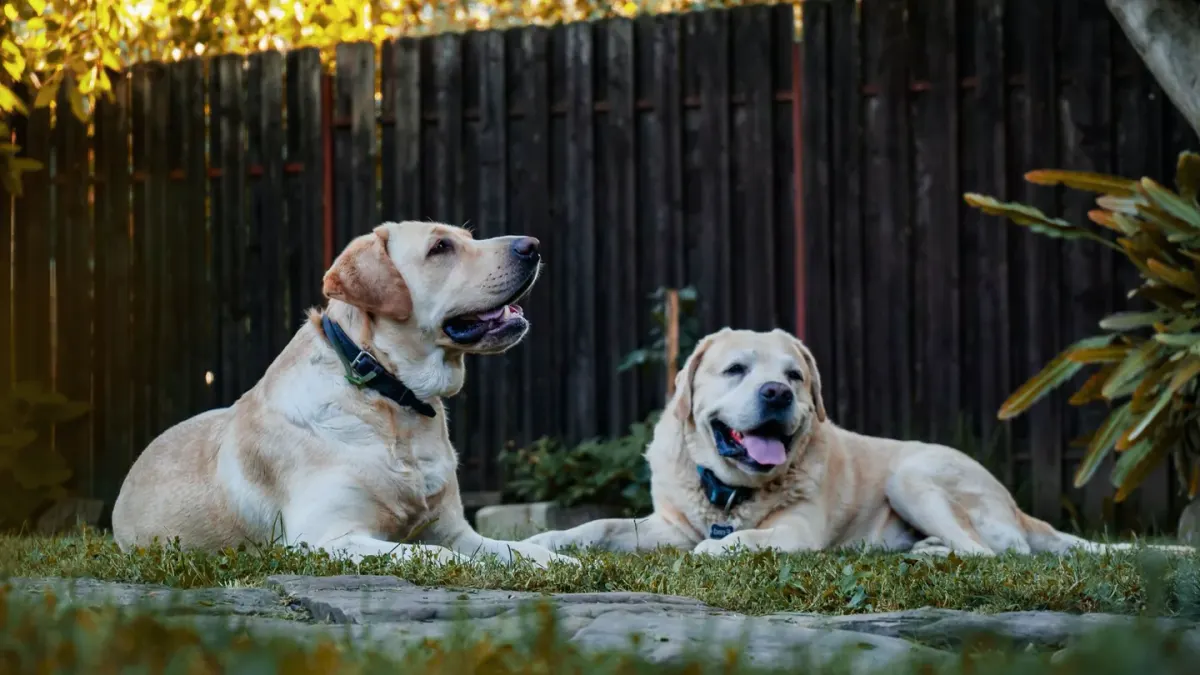
Ask around and you’ll hear that Labradors and Golden Retrievers are basically the same dog in two different coats. Similar size, similar sweetness, similar spot on the “good with kids” lists. I don’t fully buy that framing, and I don’t think it holds up once you look past temperament and into what actually shapes a retriever’s mobility over a decade or more. The two breeds diverge in ways that matter for joints, weight, and day-to-day exercise planning — and those differences deserve more weight in the decision than coat color does.
Imagine two families on the same street, both bringing home an eight-week-old retriever puppy the same spring. One picks a stocky yellow Labrador because a co-worker’s dog was easygoing and low-maintenance. The other picks a feathery Golden because their kids fell for the ears. Fast forward five years: the Lab is thriving on structured walks but has crept a few pounds over ideal weight despite a measured bowl, because he acts hungry an hour after eating. The Golden needs a genuine hour of activity most days to stay settled, and her coat means regular brushing plus extra attention after muddy walks and warm afternoons. Neither owner did anything wrong. They just under-planned for the specific animal inside the retriever category, not the category itself.
Hip and Joint Risk: Where the Data Actually Diverges
This is the part breed-comparison pages tend to gloss over. A long-running cohort analysis of Labrador Retriever hip screenings, published in Retrospective Analysis for Genetic Improvement of Hip Joints of Cohort Labrador Retrievers in the United States: 1970–2007: PMC (National Institutes of Health), tracked hip joint quality across decades of OFA submissions and found real, measurable genetic improvement over time in the breed — but hip dysplasia hasn’t disappeared from either breed’s risk profile. Golden Retrievers, in OFA’s aggregate screening data, show a meaningfully higher hip dysplasia detection rate than Labradors do. That’s a population-level pattern, not a guarantee about any specific puppy, but it’s a reasonable thing to ask a breeder or shelter about directly.
What This Means for a Growing Puppy
A higher background risk doesn’t mean you skip exercise — under-conditioned muscle around a loose joint tends to make things worse, not better. It means you’re more deliberate about how a young, fast-growing dog moves. Short, frequent, low-impact sessions beat one long high-impact outing, and hard stops like forced jumping onto furniture or repetitive fetch on pavement are worth limiting during the growth-plate window. Our guide on what to expect in a Labrador puppy’s first year walks through that timeline in more depth, and the same structure/function logic — protect the joint while it’s still forming — applies just as much to a Golden puppy.
The Weight Equation: Labradors and the Hunger Gene
Here’s where I land firmly on one side of an argument I hear a lot: that Labrador weight gain is mostly an owner-discipline problem. It isn’t, or at least it isn’t only that. Roughly a quarter of Labradors carry a deletion in the POMC gene that blunts the biological “I’m full” signal, described in detail in the peer-reviewed study A Deletion in the Canine POMC Gene Is Associated with Weight and Appetite in Obesity-Prone Labrador Retriever Dogs. Follow-up reporting from the University of Cambridge on that research team’s work confirmed the mutation is essentially unique to Labradors and flat-coated retrievers among the breeds studied. A Lab with this variant can eat an objectively adequate meal and still act starving twenty minutes later. Golden Retrievers can absolutely become overweight too, but they aren’t carrying this specific wiring at anywhere near the same frequency.
Practical Portion Control Steps
- Weigh food on a kitchen scale rather than eyeballing a scoop — cups vary more than owners expect.
- Feed to body condition, checked monthly by feel (ribs easily felt under a thin fat layer), not to how insistently the dog begs.
- Split the daily total into two or three meals instead of one, which tends to reduce begging intensity without changing total calories.
- Reserve a portion of the daily kibble allotment as training treats rather than adding extra food on top.
Coat, Climate, and Grooming Load
A Golden’s double coat sheds heavily and needs brushing several times a week to stay mat-free, plus more attention to heat management on warm days than a Labrador’s shorter coat requires. If you live somewhere with real summer heat, that’s a genuine day-to-day difference, not a cosmetic one — a heat-stressed dog moves less and less comfortably. Our piece on cooling options for a thick-coated breed at home covers practical setups worth having ready before the first hot week, regardless of which retriever ends up on your floor.
Energy and Exercise: Matching the Dog to Your Week
Both breeds come out of working retriever lines, and both were bred to move for hours, but Golden Retrievers tend to read as the higher-drive dog of the two once past puppyhood. The Golden Retriever Club of America is direct about this in its own guidance for prospective owners, noting that the breed needs consistent daily exercise and mental engagement to stay settled and well-behaved. Labradors are far from low-energy, but many owners find their drive slightly easier to satisfy with a shorter, more structured routine.
Picture a household that can reliably offer thirty focused minutes a day, split into a morning walk and an evening sniff-and-explore session, but not much beyond that on weekdays. A Labrador is likelier to settle contentedly into that rhythm. Now picture a household built around an early alarm, a long off-leash hour before work, and a second outing after dinner — that’s closer to what keeps a Golden Retriever from turning restlessness into destructive habits at home. Neither routine is wrong. The mismatch, when it happens, usually isn’t about love or effort; it’s about which dog’s baseline activity need was underestimated going in.
Home Setup for Either Breed as They Age
By midlife, both breeds are large-bodied dogs that benefit from the same joint-friendly home basics: non-slip flooring in main walkways, a ramp instead of stairs to the car or a favorite couch, and a defined low-stress recovery space if surgery or an injury ever sidelines them. Our DIY dog ramp step-by-step build is a reasonable weekend project to have finished before you need it rather than after a bad jump. And if you’re ever setting up a post-injury or post-surgery recovery area, it’s worth reviewing common mistakes when setting up a dog recovery space — the same errors show up in both breeds’ recovery setups again and again.
The Owner’s Checklist: How to Actually Choose
- Ask about hip and elbow screening on both parents if you’re going the breeder route; ask a rescue what history is known.
- Be honest about grooming bandwidth — a Golden’s coat is a recurring time cost, not a one-time consideration.
- Plan portion control from day one if you choose a Labrador, especially past age two when metabolism naturally slows.
- Map your actual weekly schedule against each breed’s baseline activity need before falling for a puppy photo.
- Build the joint-friendly home basics — ramps, traction, a recovery space plan — regardless of which breed you pick, because both will eventually benefit from them.
Neither breed is the objectively better choice. What I push back on is treating the decision as a coin flip between two nearly identical dogs. Look at the actual differences — screening data, appetite biology, coat, and exercise load — and pick the one that matches the life you’re already living, not the one you picture yourself living.
Frequently asked questions
Are Labradors or Golden Retrievers more prone to hip dysplasia?
Golden Retrievers show a notably higher rate of hip dysplasia in OFA screening data than Labradors do, though both breeds are on the higher-risk list for large, fast-growing dogs. Neither history guarantees or rules out a problem in an individual dog — it shifts the odds, not the outcome.
Do Labradors really need less food than they act like they do?
Many Labradors carry a genetic variant in the POMC gene that blunts the normal 'I'm full' signal, so they can act hungry on an appropriate portion. Feeding to the bag's guideline instead of to the dog's begging is a reasonable default for this breed.
Which breed is easier for a first-time owner focused on mobility, not just temperament?
If daily exercise time is limited, a Labrador's shorter coat trims grooming and heat-management chores, but its stronger appetite drive means weight has to be actively managed. A Golden Retriever needs more day-to-day activity and coat care but carries a somewhat higher joint-screening risk on average. Neither edge is decisive — match the trade-off to your actual week.
Can early exercise choices affect either breed's long-term joints?
Yes — both breeds are large and grow fast, and structure/function guidance from vets generally favors controlled, low-impact activity over repetitive high-impact play (like forced jumping or long runs on hard surfaces) during the growth-plate window, regardless of which retriever you have.
Sources
- Retrospective Analysis for Genetic Improvement of Hip Joints of Cohort Labrador Retrievers in the United States: 1970–2007 — PMC (National Institutes of Health)
- A Deletion in the Canine POMC Gene Is Associated with Weight and Appetite in Obesity-Prone Labrador Retriever Dogs — PMC (National Institutes of Health)
- Is a Golden Retriever Right For You? — Golden Retriever Club of America
- Genetic mutation in a quarter of all Labradors hard-wires them for obesity — University of Cambridge