
On this page
What Actually Changed When an Old Dog Starts Flinching?
Start here, before anything else: write down what happened. Note the sound, the time of day, whether he was asleep or awake, and how he reacted — froze, bolted, snapped at the air. Do this for a week before assuming it’s behavioral. In my rehab practice this log is often the single most useful thing an owner brings to the first visit, because a startle pattern tells a different story than a single dramatic moment does.
Most late-onset sound sensitivity traces back to one of three systems: the ears, the joints, or the brain. None of these is a character change. A dog who slept undisturbed through years of routine household noise isn’t losing confidence — something upstream of his behavior has moved.
Could It Be Hearing Loss?
Age-related hearing loss, called presbycusis, is common in senior dogs and typically starts with high-frequency sounds before affecting the range humans notice first. That sequencing matters clinically: a dog can miss a doorbell’s upper register weeks before you’d ever suspect a hearing problem, then react with a startle to a lower, louder sound that finally does get through. According to the AKC, gradual deterioration of inner-ear nerve cells is the leading cause, and a dog with partial hearing loss is easier to startle precisely because sound arrives without warning.
Check this at home: clap once from behind him while he’s resting, a few feet away, without touching him first. A delayed or exaggerated startle — rather than no response at all — often points to partial, asymmetric loss rather than full deafness. Bring the pattern to your vet; a BAER test can confirm what’s happening in the ear itself.
Is Pain Driving the Reaction?
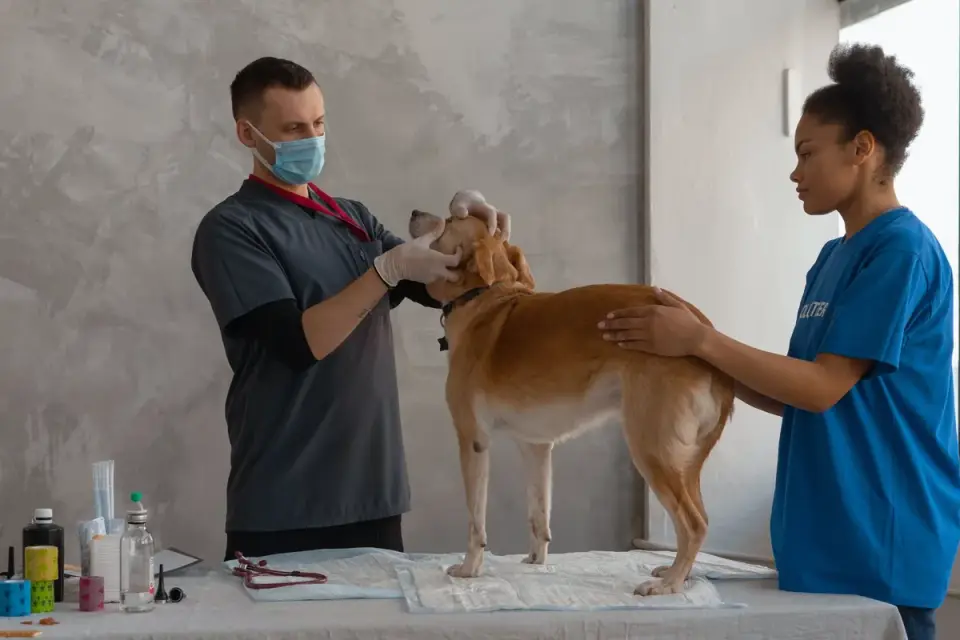
This is the one owners miss most often. A dog with sore hips, an arthritic spine, or a stiff shoulder doesn’t just move differently — he braces differently, and a sudden noise that makes him tense his whole body can jolt an already inflamed joint. Research published through PMC (National Library of Medicine) found that dogs with musculoskeletal pain showed noise sensitivity signs distinct from dogs without pain, which is why noise reactivity in an older dog deserves a pain screen, not just a hearing screen. If your dog’s startle response coincides with slower rises from lying down, reluctance on stairs, or a shortened stride, mention both at the same appointment.
From a rehab standpoint, I think of these dogs as running a nervous system with less padding. Chronic discomfort keeps the whole system primed, so a sound that used to register as background noise now reads as a threat.
Could This Be Cognitive Decline?
Noise sensitivity is also a recognized feature of canine cognitive dysfunction syndrome, alongside new anxiety, disorientation at home, and a disrupted sleep-wake cycle — daytime napping with nighttime restlessness is a common pairing. The American Animal Hospital Association’s senior care guidelines list anxiety and noise sensitivity together as behavioral signs worth screening for in aging dogs, separate from a straightforward hearing or pain problem. If the startling shows up alongside pacing at night, getting stuck behind furniture, or seeming lost in a familiar room, say so plainly at the vet visit — those details change the workup.
What Should I Actually Do This Week?
- Log every startle episode — sound, time, sleep state, reaction — for seven days.
- Book a senior wellness exam that explicitly includes ear, orthopedic, and neurologic screening; don’t let it default to a routine checkup.
- Soften the environment in the meantime. Add non-slip rugs near the spot where startles happen most, since a flinch on a slick floor is where injuries occur.
- Warn him before you approach, especially from behind or while he’s asleep — a light footstep or a spoken word buys him reaction time.
- Keep his routine steady. Predictable meal times, walk times, and household sounds reduce the number of unexpected triggers he has to process.
A daily, low-impact walk and consistent gentle movement won’t reverse hearing loss or arthritis, but keeping joints mobile and muscle tone maintained supports his overall comfort, which in turn helps take pain off the noise-sensitivity equation. Some owners ask where nutritional support fits alongside these steps — that’s a fair question, but it’s a secondary layer, not a substitute for the exam above.
When Should You Stop Waiting and Call the Vet?
Don’t wait out a new startle response in a dog eight or older. Call sooner if the flinching pairs with yelping, reluctance to be touched, disorientation, or any change in appetite or house-training — those combinations point toward pain or cognitive change that benefits from earlier attention. A dog who’s simply lost some high-frequency hearing can often be managed comfortably at home once you know that’s the cause; a dog in undiagnosed pain cannot.
FAQ
Is a new startle response always a medical issue? Not always, but in a dog with a previously calm history it’s common enough — from hearing loss, pain, or cognitive change — that it deserves a veterinary look before you assume it’s simply a phase.
Should I correct the reaction with training? Hold off on correction-based training until pain and hearing have been ruled out. Startling at an unheard or unseen trigger isn’t defiance, and a correction on top of a genuine sensory gap can add fear without addressing the cause.
Next step: if the startling has been going on more than a week or is paired with any change in mobility, sleep, or orientation, schedule the exam now rather than waiting to see if it settles on its own.
Frequently asked questions
Is a new startle response always a medical issue?
Not always, but in a dog with a previously calm history it's common enough — from hearing loss, pain, or cognitive change — that it deserves a veterinary look before you assume it's simply a phase.
Should I correct the reaction with training?
Hold off on correction-based training until pain and hearing have been ruled out. Startling at an unheard or unseen trigger isn't defiance, and a correction on top of a genuine sensory gap can add fear without addressing the cause.
What's the single most useful thing to bring to the vet visit?
A week-long log of triggers, timing, and reactions. It turns a vague 'he's been jumpy lately' into a pattern your vet can actually act on.
Sources
- Hearing Loss in Senior Dogs: Signs, Symptoms, Management — AKC
- Noise Sensitivities in Dogs: An Exploration of Signs in Dogs with and without Musculoskeletal Pain Using Qualitative Content Analysis — PMC (National Library of Medicine)
- Managing Cognitive Dysfunction and Behavioral Anxiety — American Animal Hospital Association