On this page
When your dog won’t calm down at night, the culprit is often pain, anxiety, or a shifting circadian rhythm. That’s the frame I use in the exam room before I reach for a diagnosis: pacing, panting, whining, and the endless bed-circling look like a behavior problem, but they’re frequently a symptom wearing a behavior’s clothes. My job — and yours, as the owner watching it happen — is to figure out which bucket you’re in before assuming it’s just a phase.
What “Won’t Settle” Actually Looks Like
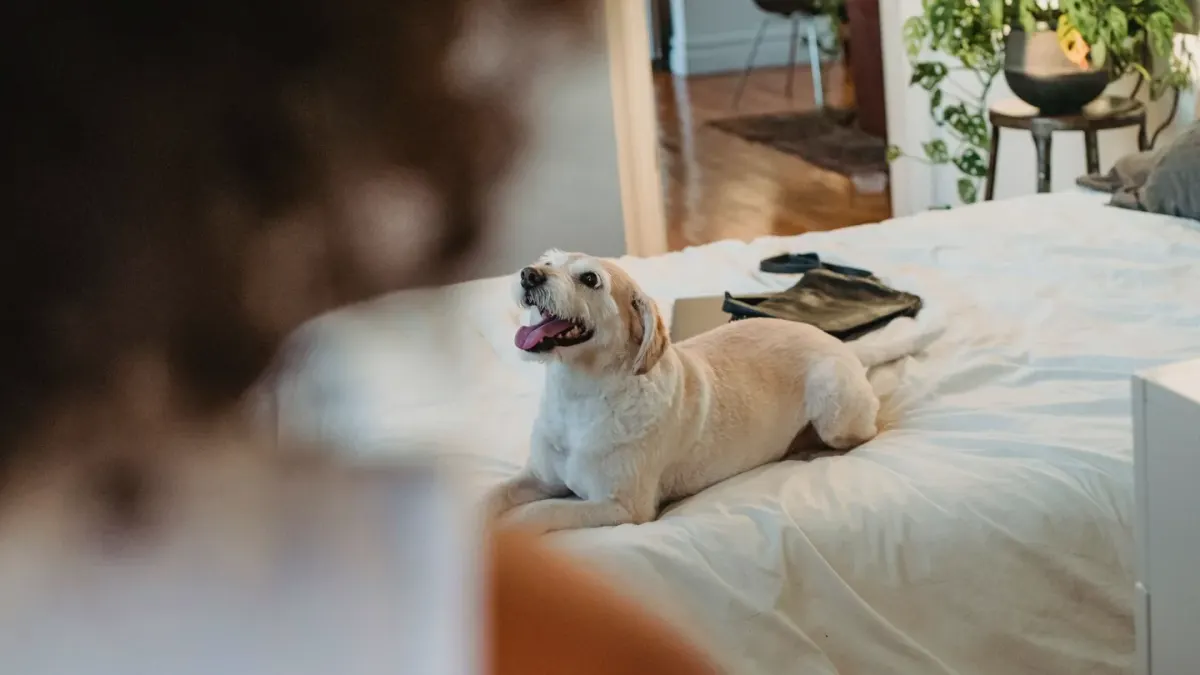
Owners describe it differently depending on the dog. Some pace room to room. Some pant with no obvious heat source. Others lie down, get back up within a minute, and repeat the cycle for an hour. A useful diagnostic clue, per Dogster, is whether your dog settles in a different spot or keeps repositioning no matter where they go — the latter points more toward discomfort or anxiety than a simple preference issue. If you’re not sure what you’re seeing, a thirty-second phone video for your veterinarian is more useful than a verbal description.
Medical Causes That Masquerade as Bad Behavior
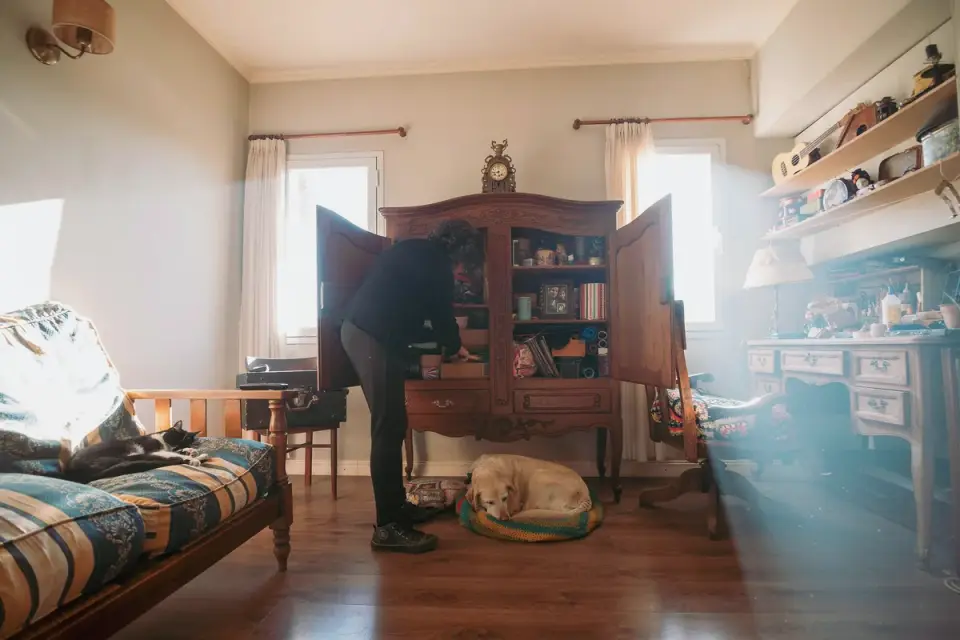
Joint pain is the one I see missed most often. A dog with early arthritis may walk normally on a leash but struggle to find a comfortable lying position once the day’s activity catches up with them — discomfort that often peaks in the evening. Urinary tract infections, thyroid imbalance, and even blood pressure changes can also drive restlessness that looks purely behavioral from across the room.
Then there’s cognitive dysfunction, sometimes called “sundowning,” which is worth naming specifically because it’s so common and so under-recognized. According to Kingsdale Animal Hospital, clinical signs of cognitive dysfunction syndrome appear in roughly half of dogs over age 11, and by age 15 most dogs show at least one sign — with symptoms characteristically worsening in the evening and overnight hours as the aging brain’s sleep-wake cycle loses its normal rhythm. I think of it less as a light switch and more as a dimmer that’s stuck flickering; the goal isn’t to cure the flicker but to steady it.
A short paragraph here, because it matters on its own: rule out pain before you assume it’s “just old age.”
Anxiety and the Environment Around Bedtime
Separation-related anxiety, noise sensitivity, and recent change — a move, a new pet, a shifted work schedule — can all surface specifically at night, when the house goes quiet and your dog has fewer distractions from whatever is bothering them. Temperature, an uncomfortable or too-firm bed, and light leaking in around curtains are the easiest culprits to rule out first, because fixing them costs nothing and takes an evening.
A Step-by-Step Evening Routine That Helps
Start with timing. Schedule the day’s more vigorous exercise a few hours before bed rather than right up against it, since intense activity close to bedtime can work against the wind-down you’re trying to create. From there:
- Keep a consistent bedtime and a quiet, low-stimulation hour beforehand — brushing, calm petting, or a slow sniff-focused walk rather than a rowdy game.
- Offer one last, unhurried bathroom break immediately before lights-out.
- Feed the last meal earlier in the evening rather than right before bed, and note whether your dog seems calmer on that schedule.
- Set up a supportive, appropriately sized bed away from drafts, with an orthopedic option for seniors or dogs with joint pain.
- Add mild white noise or a fan if outside sounds seem to be triggering the pacing.
None of these fixes need to happen all at once, and consistency matters more than intensity — a routine your dog can predict does more good over two weeks than any single dramatic change.
Where Movement, Weight, and Supplements Fit In
For joint-related restlessness, daily low-impact movement and lean body weight remain the two biggest levers you control, because excess weight directly increases the load on an already sensitive joint. Supplements are a supporting piece, not a substitute for either. Antioxidants such as quercetin and resveratrol are studied for potential roles in cellular health, though I want to be precise about what that evidence currently shows: one in vitro study found that quercetin, unformulated Q, NAC, and ascorbic acid, at the concentrations used, did not affect the feeding behavior of the worms tested (see the Pharmaceuticals (MDPI) study), and separate lab research on resveratrol found that embryonic exposure accelerated pupation and adult emergence but shortened adult lifespan in the insect model studied (see Phytomedicine (Elsevier)). Neither finding is about dogs or about sleep specifically — they’re early mechanistic signals, not proof of a nighttime-calming effect, and I’d rather stay anchored to how these compounds are thought to work at the cellular level than promise what they might cure.
When to Call Your Veterinarian
Book an exam if the restlessness is new, sudden, or paired with other changes — increased thirst, house-soiling, disorientation, or signs of pain like reluctance to lie down. Cognitive dysfunction and arthritis both respond better to management started early, and ruling out the medical causes first means any routine or supplement changes you make afterward are actually addressing the right problem.
If you’ve already tried a calmer wind-down routine and your dog still can’t settle, that’s useful information for your vet, not a sign you’ve failed — it just narrows down which of the three buckets you’re dealing with.
Frequently asked questions
Is it normal for an older dog to pace at night?
Occasional pacing can happen, but a new or worsening nightly pattern in a senior dog is common enough to warrant a veterinary exam — arthritis and cognitive dysfunction both tend to show up this way.
Could my dog just be too hot or too cold?
Yes — temperature, a lumpy bed, or a draft can all keep a dog repositioning. Rule this out first, because it's the easiest fix on the list.
Should I feed my dog earlier in the evening?
A meal too close to bedtime can contribute to overnight activity in some dogs; shifting the last feeding earlier is worth trying alongside other changes.
When does nighttime restlessness need a vet visit rather than a routine fix?
If it started suddenly, is paired with panting, drinking more, accidents indoors, or your dog seems disoriented rather than just wakeful, book an exam before troubleshooting at home.
Sources
- Sundowners In Dogs: A Comprehensive Guide — Kingsdale Animal Hospital
- Why Is My Dog Restless at Night? 9 Vet-Reviewed Reasons — Dogster
- Quercetin Formulation Study — DOI:10.3390/ph19040525 — Pharmaceuticals (MDPI)
- Resveratrol Embryonic Exposure Study — DOI:10.1016/j.phymed.2026.158531 — Phytomedicine (Elsevier)