On this page
Giant dogs do not fail conditioning for lack of willingness, they fail it when single long walks overload soft tissue faster than it can adapt. My disputed premise is this: a healthy giant-breed adult builds fitness better on almost-daily short bouts with deliberate rest than on three heroic weekend outings.
A 4-year-old Great Dane weighing 148 pounds came to mind when I framed this plan, a dog that could finish a 12-minute neighborhood loop looking bored yet panted hard and lay flat for two hours after a 45-minute lake-trail walk the prior Sunday. His owners were weighing whether to push weekend distance to tire him out or to add a second short walk on weekdays. Over 14 days they logged resting respiratory rate, post-walk stiffness at 2 and 12 hours, and willingness to climb three porch steps. The weekday pattern won: five 15-minute walks left no next-morning stiffness, while one long outing produced it every time.
Why mass changes the math for joints and heat
Locomotion is repetitive loading. Ground reaction force scales with body weight, so cartilage, tendons, and interdigital soft tissue in a 130- to 180-pound dog absorb substantially more force per step than the same tissues in a 30-pound dog. Articular cartilage has no blood supply and depends on cyclic compression and release to move synovial fluid and nutrients. Moderate, frequent cycles support that pump mechanism. Prolonged, fatigued cycles do the opposite.
Fatigue matters more than owners expect. As postural muscles tire, stride shortens, braking forces shift forward, and the dog leans into the leash. Heat compounds it. Giant breeds have a low surface-area-to-mass ratio, so they shed heat slowly, and panting efficiency drops during sustained trotting. That is why the American Kennel Club emphasizes matching exercise type and duration to breed, age, and health rather than chasing a universal mileage target.
Short does not mean trivial.
The four-week progression I use for a healthy giant adult
Assume veterinary clearance, healthy weight, no lameness, and a baseline of at least 10 to 15 minutes of leash walking without prolonged panting. Walk on harness and 6-foot leash, trot only in brief bursts if offered, and keep a conversational pace where the dog can sniff.
Week 1 — rhythm before distance. Five to six days, 12 to 15 minutes twice daily or 20 minutes once daily if schedule demands. Flat, grippy surfaces: packed dirt, rubber track, short grass. Five-minute sniff warm-up, steady middle, five-minute cool-down. Score recovery: breathing should normalize within 10 minutes at home.
Week 2 — add frequency, then minutes. Keep six outings but extend one walk per day to 20 to 25 minutes. Add two 3-minute incline segments on a gentle ramp or driveway grade, with flat recovery between. If morning stiffness lasts more than 15 minutes, hold this week.
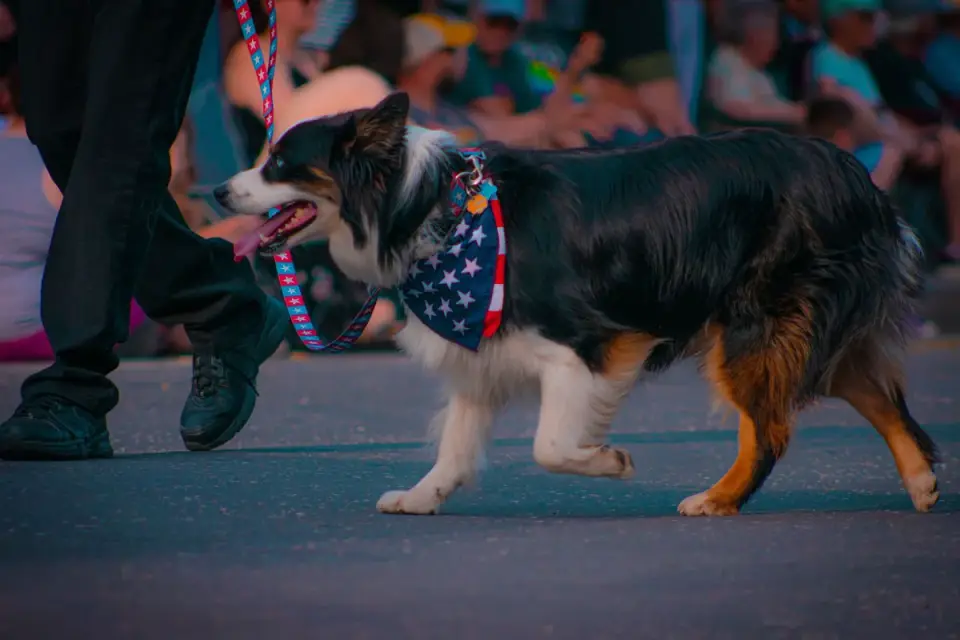
One owner tried the opposite last spring with a 5-year-old 132-pound mastiff-type dog, condensing the whole plan into 10 days by doubling weekend distance to 3 miles because the dog seemed energetic at the turnaround. By the eighth walk in that stretch the pattern broke: the dog lagged on curbs, needed coaxing up four back steps, and sat out the next two scheduled outings. They reset to 15-minute flat loops for six consecutive days, then re-added minutes only when post-walk panting resolved in under 10 minutes. The tradeoff was clear — fitness gains held when rest was protected, and vanished when soreness forced unplanned days off.
Week 3 — build the long walk carefully. Four short days at 20 minutes plus one longer day at 30 to 35 minutes on forgiving ground. Insert one-minute slow intervals every five minutes on the long day. Practice two 30-second sit-to-stands on a rug and a 20-second cookie-stretch to each side after walks, not before.
Week 4 — consolidate. Five days at 25 to 30 minutes plus one 40-minute easy outing with water and shade breaks every 12 to 15 minutes. Total weekly time should rise no more than about 10 to 20% over Week 3. If the dog finishes eager, nosing forward in the last five minutes, you dosed it right.
For achy or older giants, compare tradeoffs in Dog Treadmill vs Outdoor Walking: Which One Actually Serves an Achy Dog Better? and Swimming vs Walking for an Arthritic Dog: Which Actually Helps More?.
Surfaces, pace, and home setup that spare steps
Pavement is not the enemy, but camber, heat, and concussion add up. Alternate hard and soft days. Choose the crown of the road for a level footfall, cross to grass for the second half, and avoid long downhill grades that eccentrically load shoulders and carpi. In warm months walk before 9 a.m., carry water, and test asphalt with your palm for seven seconds.
At home, traction is training. Add a runner over slick hallways, a yoga-mat station for sit-to-stands, and a ramp over two to three porch stairs to cut repetitive impact. Keep nails short and interdigital hair trimmed. Leash skills count as joint protection — a dog that pulls loads the neck and forelimbs with every surge, so reward loose-leash position rather than duration. Owners debating free play should read Off-Leash Play vs On-Leash Walks for Exercise: What Actually Serves a Dog’s Joints.
Where food and joint nutrition fit, weighed honestly
Movement creates the adaptation; diet permits it. Excess adipose tissue increases joint load with every step and sustains low-grade inflammation, so body condition drives results more than any chew. Feed to a lean 4 to 5 on the 9-point scale, weigh meals, and adjust weekly against rib feel and waist.
Ground an integrative claim in the nutritional evidence here: joint-support ingredients such as glucosamine, chondroitin, green-lipped mussel, and omega-3s may help support cartilage nutrition and normal inflammatory responses alongside conditioning, yet they cannot replace pacing, weight control, and surface choice. I weigh what a supplement can realistically do for diet, mobility, and recovery as supportive, not structural repair. Evidence that would change my mind would be a well-powered, long-term trial in giant breeds showing functional gains from a defined dose independent of weight loss and exercise. The current evidence does not show that, which is why I place supplements after those foundations. The American College of Veterinary Surgeons frames osteoarthritis management the same way, with weight optimization and controlled activity as core therapy.
An exception proves the rule. A 6-year-old 165-pound guardian-breed dog living on the third floor of a walk-up could not do twice-daily loops during a heat wave, so the usual advice had to bend. The owner split exercise into three 0.6-mile indoor sessions using air-conditioned hallways, a slow treadmill intro, and ramp practice on a borrowed training ramp instead of 32 daily stair repetitions. Over three weeks total stair climbs fell by more than half, nighttime restlessness eased from four wake-ups to one, and the dog still held Week 2 fitness when outdoor walks resumed.
Your 28-day owner checklist
Track these markers, not just minutes. Stop and call your veterinarian for lameness lasting more than 24 hours, swelling, reluctance to rise, heavy panting at rest, or pale gums.
- Walk 5 to 6 days weekly; progress time by 10 to 20% per week
- Warm up with sniffing, cool down with slow strolling
- Alternate pavement, dirt, and grass; avoid sustained hills until Week 3
- Add twice-weekly sit-to-stands and weight shifts on non-slip footing
- Log breathing recovery, next-morning stiffness, and step or stair willingness
- Maintain lean condition; adjust food before adding distance
- Recheck paws, nails, and harness fit every Sunday
Hold a week whenever recovery lags. Consistency across 28 days builds more durable fitness in a giant body than any single long walk.
Frequently asked questions
How long should each walk be for a giant-breed adult starting a plan?
Start at 12 to 20 minutes on flat, grippy ground 5 to 6 days per week, then add 10 to 20% weekly time if breathing normalizes within 10 minutes and there is no next-morning stiffness.
Are hills or stairs good conditioning for giant breeds?
Use gentle ramp grades in short 3-minute segments after Week 1, and limit repeated stair climbs. Long downhills overload shoulders and wrists, especially when muscles are fatigued.
When should I pause the walking plan and call the vet?
Pause for lameness beyond 24 hours, joint swelling, reluctance to rise, prolonged panting at rest, or worsening stiffness, and seek veterinary assessment before resuming progression.
Sources
- How Much Exercise Does a Dog Need? — American Kennel Club
- Osteoarthritis in Dogs — American College of Veterinary Surgeons