On this page
The premise I want to test tonight is a common one: that popcorn is basically harmless, a fat-free crunch you can toss to a dog at the foot of the couch without a second thought. Owners repeat it because a whole cup of the plain, air-popped stuff really is light and mostly fiber, and because their dog has eaten it a hundred times without incident. I don’t think the premise is wrong so much as incomplete. It’s true of one very specific bowl of popcorn and false of nearly every other bowl that actually shows up on a Friday night.
Picture the ordinary version of this: a bag goes into the microwave, butter pools at the bottom, salt gets shaken on twice because the first pass never feels like enough, and a dog sits at the edge of the couch cushion working the room with a look that has clearly succeeded before. A few kernels never pop and end up scattered across the carpet along with the good ones. The dog eats what lands near the coffee table, unpopped kernels included, because dogs don’t sort. Nobody in that room is doing anything reckless. They’re doing what most households do, and that’s exactly why the popcorn conversation needs more precision than “is corn bad for dogs.”
What the Evidence Actually Shows About Plain Popcorn
On the narrow question — is plain, fully popped, unsalted popcorn dangerous — the answer from American Kennel Club and other veterinary-reviewed sources is genuinely reassuring. In small amounts, it’s a low-calorie snack most healthy dogs tolerate without issue, and the fiber it carries isn’t a problem in the quantities a dog would realistically eat off a couch cushion. That’s a defensible, evidence-bounded yes. Where I part ways with the casual version of that premise is in treating it as the whole answer, because almost nobody feeds popcorn that plain, and almost nobody sorts out every unpopped kernel first.
Where the Real Risk Concentrates: Kernels, Butter, and Salt
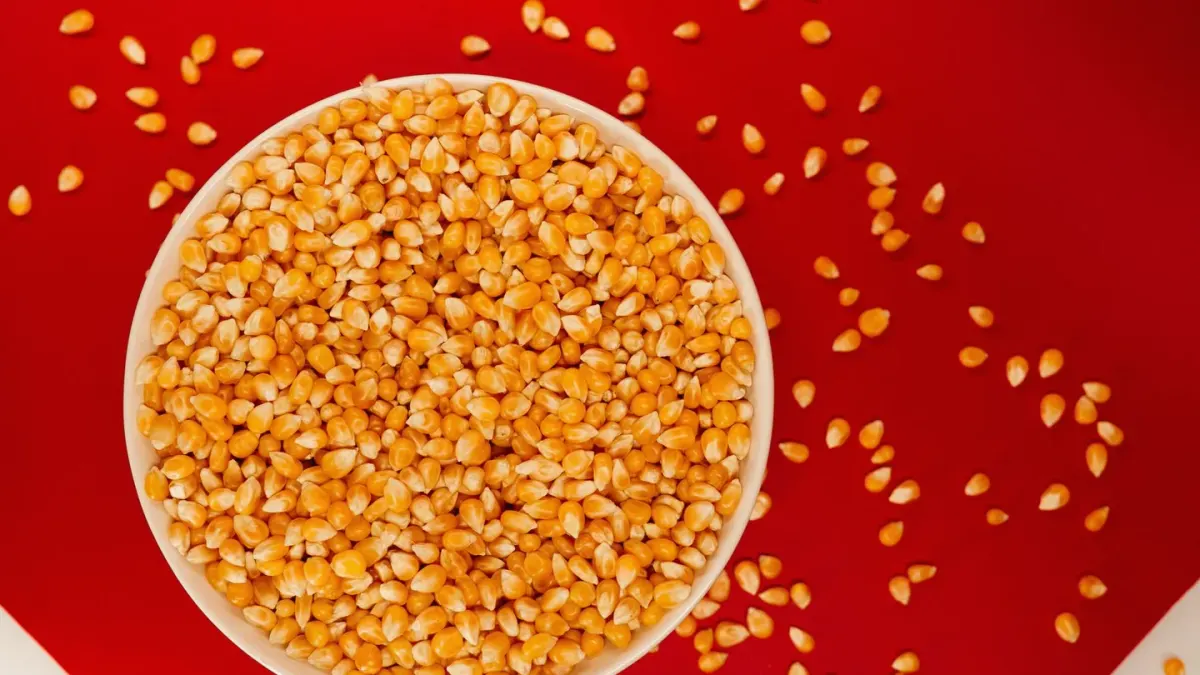
Unpopped kernels are the detail that gets glossed over. They’re hard enough to fracture a tooth, they wedge into gumlines, and in a small dog they can become a genuine choking or intestinal obstruction risk rather than a minor annoyance, a pattern PetMD and other clinical sources describe consistently. Butter and salt are the second problem, and this is where I’d rather be direct than gentle: for a dog already prone to pancreatitis, or carrying extra weight, a buttered and salted bowl is a legitimate risk factor, not a minor indulgence. If a dog with pancreatic disease needs enzyme replacement and a carefully managed, moderate-fat diet to stay stable, a greasy bowl of popcorn is working directly against that plan — JAVMA describes exactly this kind of nutritional management as core to treating exocrine pancreatic insufficiency, low-residue diets with moderate fat content, alongside enzyme therapy.

When I Reach for Imaging Instead of Guessing
This is where my own bias shows, and I’ll name it rather than soften it. If a dog crunches down on kernels and then starts pawing at the mouth, drooling, or turning away from food, I’d rather get an X-ray or a dental exam early than assume it will resolve on its own. The counterargument is reasonable — most kernel incidents are minor, and reflexive imaging for every mouthful of popcorn would be excessive. I don’t disagree with that in the general case. But a fractured tooth or a kernel wedged near the gumline doesn’t announce itself loudly, and a short delay can turn a five-minute fix into a much longer one. I’d rather confirm nothing is wrong than discover something a week later.
Now picture the version of this that goes sideways. A dog gets into a bowl of buttered, well-salted popcorn left within reach overnight, not a handful but most of a large bowl. By morning she’s hunched, refusing breakfast, vomiting intermittently, and her belly is tender under a gentle hand. That’s not a dog who needs to “wait it out.” That’s a dog who needs bloodwork and, depending on the picture, imaging to rule out pancreatitis before it escalates. The gap between that scene and a few stray plain kernels off the floor is enormous, and it’s the gap this whole discussion lives in.
Weaving Popcorn Into the Bigger Picture: Weight, Movement, and Gut Recovery
A mobility-focused view of popcorn isn’t really about the popcorn. It’s about what extra, low-value snacking does to a dog’s weight over months, and what excess weight does to joints already working harder than they used to. If your dog is on a structured movement routine, similar to what we cover for thick-coated breeds managing heat or senior dogs who seem stiffer in cold weather, unplanned calories from the couch undercut that work quietly. If a popcorn incident does cause GI upset, recovery isn’t always linear — Frontiers in Veterinary Science notes that diversity metrics did not distinguish responders from non-responders when dogs were supported through gut disturbances, a reminder that gut recovery varies dog to dog even with the right supportive care. For dogs prone to loose stool after dietary indiscretion, the same gentle-fiber logic used for firming up loose stool naturally or introducing sweet potato applies here too: plain, simple, and modest portions beat rich, seasoned ones.
Owner Checklist for Movie Night
Keep it simple. Air-pop it plain, skip the butter and salt entirely, and sort out every unpopped kernel before the bowl leaves the kitchen. Offer a small handful, not a shared bowl your dog can graze from unsupervised. Watch for mouth-pawing, drooling, or food refusal afterward, and call your veterinarian if you see them. If your dog has a history of pancreatitis or carries extra weight, skip popcorn altogether and reach for a treat that fits the plan you’re already running. That’s the whole premise, tested and narrowed down to what actually holds up.
Frequently asked questions
Can dogs eat popcorn every day?
I wouldn't make it a daily habit. Plain popcorn is low in calories but low-value nutritionally, and every extra snack competes with your dog's actual diet and any joint-support routine you're running.
What should I do if my dog swallows an unpopped kernel?
Watch for pawing at the mouth, drooling, gagging, or refusing food, and call your veterinarian if you see any of them. A kernel that fractures a tooth or lodges near the gumline needs hands-on evaluation, not home monitoring.
Is movie theater popcorn ever okay for dogs?
I'd skip it. The butter, oil, and salt load is exactly the combination that raises pancreatitis risk, especially in dogs who are overweight, older, or have had GI flare-ups before.
Sources
- Can Dogs Eat Popcorn? — American Kennel Club
- Can Dogs Eat Popcorn? — PetMD
- Exocrine Pancreatic Insufficiency Management Review — JAVMA
- Probiotic Response and Gut Microbiome Diversity in Dogs — Frontiers in Veterinary Science