On this page
Degenerative myelopathy, one of the most feared causes of rear-end collapse, almost never touches dogs under five and unfolds over months, not minutes, according to Cornell University College of Veterinary Medicine. That single fact does more sorting work than most of the anxious googling that follows a wobbly rear leg. Owners tend to reach for the same word, “weak,” for two entirely different problems: a spinal cord losing signal and a joint losing cartilage. The mechanism decides the response, and the response has a deadline in one case and not the other.
Imagine a nine-year-old Labrador who was fine on the evening walk and can barely stand by morning, back toes curling under her as she tries to push up. Her owner assumes overexertion. But the picture — sudden onset, one bad night, hind legs together, some crying when she’s lifted — is the profile of a spinal cord under pressure, not a tired muscle. Waiting three days to “see if it improves” is the single most common way a treatable disc problem becomes a permanent one. This is the premise worth stating plainly before anything else: support and therapy are not the same intervention, and no home routine or supplement schedule substitutes for diagnosing what is actually compressing that spinal cord.
Run This Checklist Before You Do Anything Else
- Onset speed — minutes to hours, or weeks to months?
- Pain — crying out, hunching, reluctance to jump, guarding the back?
- Symmetry — both legs failing together, or one leg dragging more?
- Toenails — scuffed, worn down, or catching on the floor?
- Continence — any accidents, dribbling, or straining?
- Weight-bearing — still pushing off the ground intermittently, or full collapse?
What the Checklist Is Actually Sorting For
Every item above is separating two buckets: neurologic and orthopedic. Sudden, painful, asymmetric weakness with scuffed nails and any hint of a bladder accident belongs in the neurologic bucket — a disc extruding into the spinal canal is the classic driver, and Intervertebral Disc Disease is explicit that outcomes correlate with how much motor function and pain sensation remain by the time treatment starts. Slow, symmetric weakness with no pain, criss-crossing hind legs, and muscle wasting over months looks more like degenerative myelopathy or a joint problem that has been quietly worsening for a year.
Orthopedic collapse — hip dysplasia, a torn cruciate ligament, advanced arthritis — tends to announce itself differently: worse after rest, better once warmed up, often one leg favored over the other, and usually with some visible discomfort on manipulation. None of this replaces an exam or imaging. It does tell you which phone call to make first and how urgently to make it.
The Home Setup That Buys You Time
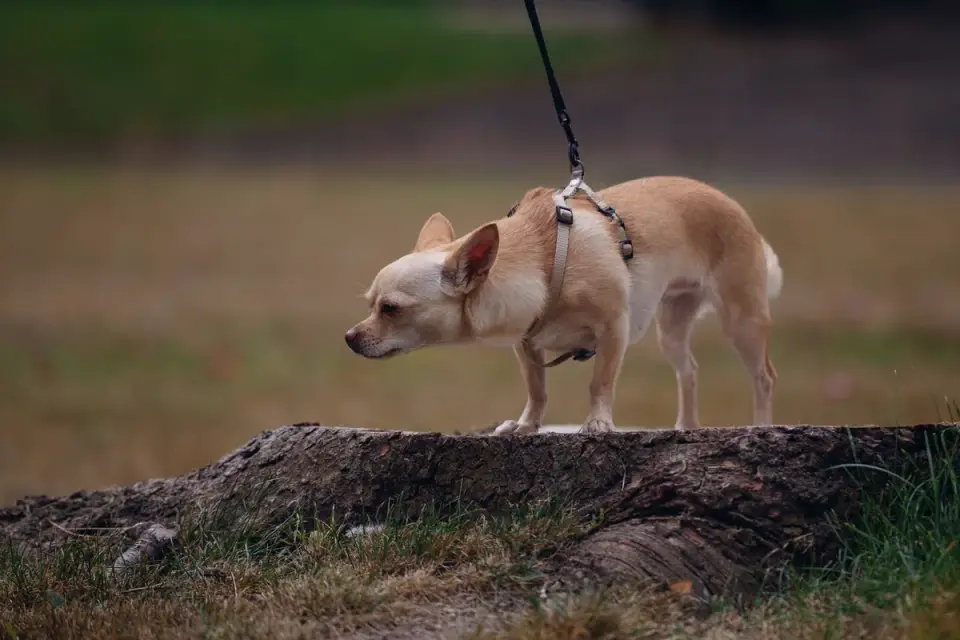
Consider a ten-year-old mixed-breed dog whose rear end slides out from under him on the kitchen tile most mornings, then looks steadier by the time the coffee’s done because he’s back on carpet. That is not the disease getting better and worse on a schedule — it’s traction disappearing and returning. Rugs, yoga-mat runners down hallways, and a ramp instead of stairs to the yard change the mechanics of a weak leg’s job without changing what’s wrong underneath. Short, frequent leash walks on grass beat one long walk on pavement, and keeping a dog lean reduces the load a compromised hip or spine has to carry — arguably the single highest-leverage, lowest-cost intervention available, alongside what your vet finds on exam. None of this is a treatment plan; it’s the scaffolding a treatment plan sits inside. For dogs whose stiffness seems to track the weather, Does Cold Weather Make a Senior Dog Seem Stiffer and Slower Than Usual? covers why that pattern shows up and what actually helps once the temperature drops.
Where Supplements Sit — and Where They Don’t
I stay skeptical of any nutraceutical marketed as a fix for collapse, because that is therapy language attached to a support-tier ingredient. The distinction matters clinically: a therapy addresses the disease process itself — surgery for a herniated disc, physical rehabilitation for atrophied muscle. A support ingredient nudges a biological pathway in a helpful direction without reversing the underlying pathology. Glucosamine and chondroitin sulfate sit squarely in the support category. A randomized, positive-controlled trial reported in PubMed found statistically significant improvements in pain and weight-bearing scores in dogs with osteoarthritis by day 70, though the response was slower to appear than with a prescription anti-inflammatory — a fair summary of what joint-support ingredients tend to deliver: real but modest, and slow. Omega-3 fatty acids have a longer track record for the inflammatory backdrop behind joint discomfort; owners weighing a fish-oil routine for the long haul should check Is Fish Oil Safe for Dogs Long Term? What to Check Before You Commit before starting one. And because cardiac muscle weakness can occasionally masquerade as generalized hind-end wobbliness in certain breeds, it’s worth ruling out nutritional gaps like the ones described in Signs of Taurine Deficiency in Dogs.
The Two-Minute Checklist to Run Tonight
Watch the next time your dog rises from lying down. Note the onset speed, whether both back legs move together, whether nails scuff, and whether there’s any sound of discomfort. Write down what you see with a timestamp. That single observation, brought to the vet visit, does more to point toward the right diagnosis than any supplement label will. Start the home fixes — traction, weight, shorter frequent walks — in parallel, not instead.
Frequently asked questions
Is it an emergency if my dog's back legs suddenly give out?
Sudden collapse, especially with crying out, dragging toes, or loss of bladder control, warrants same-day veterinary or emergency care. Spinal cord compression from disc disease is time-sensitive, and outcomes track closely with how quickly pressure is relieved.
Can supplements fix a dog's back legs giving out?
No single supplement reverses degenerative myelopathy, a slipped disc, or advanced osteoarthritis. Joint-support ingredients are structure/function tools that may ease day-to-day comfort alongside a diagnosis and a movement plan, not a therapy in their own right.
Why does my older dog's rear end only give out on hard floors?
Slick surfaces remove the traction a weak or arthritic dog relies on to compensate. That is a home-setup problem, and it is one of the few pieces of this puzzle an owner can fix outright, today, with rugs or traction mats.
Sources
- Degenerative Myelopathy — Cornell University College of Veterinary Medicine
- Intervertebral Disc Disease — Cornell University College of Veterinary Medicine
- Randomised double-blind, positive-controlled trial to assess the efficacy of glucosamine/chondroitin sulfate for the treatment of dogs with osteoarthritis — PubMed