
On this page
Watching your old dog hesitate at the back step is hard. You want him to still enjoy the yard, to sniff and potty on his own, but you can see the worry in how he shifts his weight and looks back at you for help. A level garden path may help support that independence by giving him steady, predictable footing where he needs it most.
My premise after years of comfort-focused care is simple: make the shortest useful route completely flat and non-slip before you change anything else. Not longer walks, not new supplements first, just one safe loop he can use every day without slipping or climbing. It sounds too small to matter, and that is often where a sceptical friend will push back — will a few feet of flat pavers really change quality of life? For many arthritic dogs, it can, because repeated small slips and awkward steps add up to soreness and reluctance to move at all.
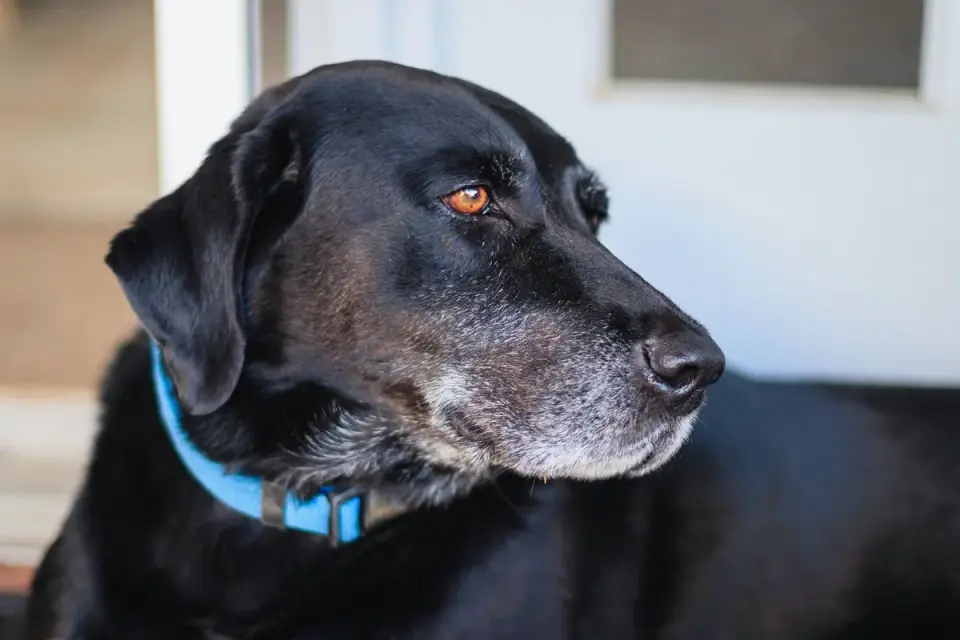
A 13-year-old Labrador mix I followed as a composite case shows what I mean. He weighed 78 pounds and had slowed on the three brick steps to his yard, pausing for nearly a minute before attempting them and sometimes urinating on the patio instead. His family mapped his daily pattern for 10 days and found he was avoiding the yard on 7 of those mornings. They replaced the steps with a single 24-foot ground-level route of interlocking rubber pavers from the door to a grassy potty corner. Within two weeks he was walking out on his own again most mornings, with pauses that shortened from about 50 seconds to under 15 seconds.
Where should the path go?
Start by watching, not building. For two or three days, note where your dog already tries to go, where he pauses, and where his feet slide. Most senior dogs want the same short triangle: door to potty spot to a favorite sniffing place.
Choose that route, even if it is not the prettiest line in the garden. A straight or gently curved path along the most level part of the yard is kinder than a winding design that forces turns. Tight turns ask stiff hips and shoulders to pivot, which is often where dogs stumble.
Keep the whole path at one grade if you can. That means no lips at the doorway, no raised edging to step over, and no sudden drop from patio to soil. A threshold ramp or beveled paver at the door can smooth a two-inch rise that feels like a wall to a small or painful dog. If you are also checking indoor safety, this guide to signs your home isn’t safe for an aging dog walks through the same trip-and-slip thinking inside the house.
What does truly level and non-slip feel like under old feet?
Level does not mean perfectly flat like a kitchen floor. It means no cross-slope that tips your dog sideways, no rocking stones, and no soft spots that grab a weak leg. Water should sheet off gently without pooling.
Surface matters more than material brand. Look for close joints, a lightly textured finish, and enough give to be forgiving without feeling wobbly. Interlocking rubber pavers, textured concrete pavers set tight on compacted base, and well-fitted outdoor carpet tiles over a firm base are all commonly used. What I would avoid is loose pea gravel, large river rock, slick sealed stone, and bare mud that turns to slick clay after rain.
Width is comfort, too. A path that fits your dog plus you walking beside him — usually about 36 inches for a medium to large dog — lets you offer a hand under a harness without stepping off into soft soil. The Cornell University College of Veterinary Medicine notes that firm, non-slip footing is an important part of supporting dogs with arthritis, alongside weight control and appropriate activity.
How do you build it without creating new problems?
You can do this in a weekend with basic tools, and you do not need to dig up the whole yard.
Map and measure the shortest door-to-potty line and mark it with string. Remove turf and soft topsoil to about three inches, then fill and compact a base of crushed stone dust or paver base so it sits firm underfoot. Set your surface pieces tight together and check with a long level as you go. The goal is less than about one inch of rise or fall over six feet.
Set edging flush with the surface, not above it. Raised plastic or metal edging catches toenails and trips tired feet. A flat steel or pressure-treated timber edge set level with the pavers holds the line without becoming a hurdle.
Mind drainage at the doorway. Slope the base very slightly away from the house and leave a small gap filled with coarse sand at the joint so water does not sit where your dog first steps out. After a rain, walk it in socks. If your feet slide, his nails will too.
The second story I often think about involved a failed approach with good intentions. A family with a 12-year-old Beagle, about 22 pounds, laid 40 feet of loose cedar mulch because it felt soft and natural. For three rainy nights in a row she slipped trying to squat, then began refusing to leave the porch. They raked it out and replaced a 12-foot center strip with tight rubber pavers over the same base, keeping mulch only on the wide borders for sniffing. She resumed using the path on the second evening, and the owner counted four independent potty trips over the next two days after almost none the week before.
For dogs that still need help with a step or a car, a portable ramp follows the same low-angle thinking as a garden path. This look at foldable ramps for traveling with a senior dog explains what actually helps when the ground is not level.
What if your yard will not cooperate?
Not every yard has a flat stretch, and that is where the usual advice has to bend. A long slope cannot always be made level, and a full regrade is more than most families need.
In that case, build level in sections. Create one or two short flat landings where your dog can pause, sniff, and rest, connected by very gentle ramps rather than steps. A ramp with a rise of about one inch for every six to eight inches of run feels manageable to many seniors, especially with side rails or low garden edging to guide them. Add shade and a water bowl at the landing so resting there feels normal, not like failure.
A composite case from a hillside home stays with me. The dog was a 14-year-old mixed breed, only 34 pounds, living with a yard that dropped nearly four feet over 30 feet. Her person stopped trying to flatten the whole hill and instead built a 10-foot level pad outside the door plus a wide, low ramp to a second 8-foot pad around an old maple. They added outdoor runners, trimmed low branches at nose height, and moved her bedtime potty routine to 9 p.m. when the path was dry and well lit. Nighttime whining at the door fell from five nights a week to one night in the next fortnight, and she began choosing the upper pad for morning sun on her own.
Small dogs and large dogs read the same path differently. Low ground clearance, short strides, and a chill from damp surfaces affect little seniors faster, while heavy dogs punish any soft base. If you share your home with both sizes, this comparison of small vs large senior dogs and how home needs differ can help you set widths and rest spots.
Movement, weight, and home setup work together. Short, frequent strolls on your new path, a healthy body condition that lightens each step, and supportive footing indoors may help support mobility more than any single change. Supplements that aim to support joint structure, such as glucosamine, chondroitin, or omega-3s, are sometimes discussed as part of that broader plan, and VCA Hospitals describes how nutrition, exercise modification, and joint support are often combined for arthritic dogs. They are not a substitute for footing your dog can trust, and it is worth asking your own veterinarian what fits your dog’s health picture.
A simple owner checklist before you call it done
Walk the path the way your dog will use it. Go slowly, at his pace, in the morning when he is stiffest.
The surface stays firm when you press and turn your foot. Joints are tight enough that a toenail cannot catch. Edges sit flush with no lip. Water drains without puddles at the door or potty area. There is light for evening trips and a clear, level place to squat. There is room for you to walk beside him with a harness. And there is a dry, warm place to rest right inside the door, because comfort continues after he comes in.
You will still have slow days. That is part of aging, not a sign you built the wrong thing. What a level path gives you is fewer avoidable struggles, so the good energy he has can go toward sniffing, sun, and being with you.
Frequently asked questions
How wide should a garden path be for a senior dog?
About 36 inches works for many medium and large dogs because it lets you walk beside them for support. Narrow side-yard passes can work if the surface is firm and there is room to turn at each end.
What surface is best for an old dog that slips?
Choose a firm, tightly fitted, lightly textured surface set on a compacted base. Avoid loose gravel, slick sealed stone, and mud that stays wet. Test it in damp socks — if you slide, your dog likely will too.
Do I still need a ramp if the path is level?
Often yes at the doorway. Even a two-inch threshold can block a painful dog. A beveled paver or low threshold ramp that brings the path flush with the door keeps the whole route step-free.
Sources
- Arthritis in Dogs — VCA Hospitals