On this page
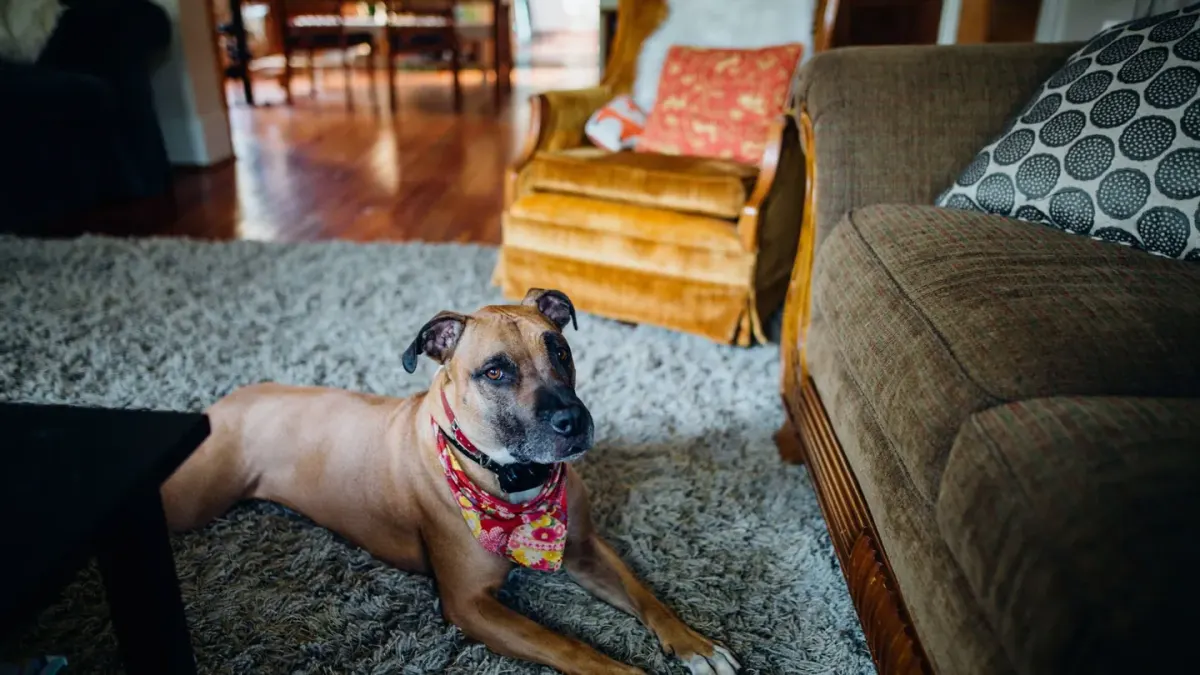
Some of the clearest signs your house isn’t senior dog friendly show up in the corners a healthy dog never noticed: the hallway with the good light, the rug that always bunches by the back door, the three steps down to the yard he used to take without thinking. Families usually come to me worried about one specific moment, a slip on the kitchen tile or a hesitation at the top of the stairs, and that worry is fair. What I try to do first is widen the lens, because the house is rarely failing in just one spot.
A useful starting point is data most owners never see. Research published in Scientific Reports has found appendicular osteoarthritis in a large share of dogs seen by primary-care vets, with prevalence rising steadily with age. That means a dog can be developing real joint changes well before he looks stiff to the people who love him most. A home built for a younger, sturdier body stops matching the dog living in it long before that gap becomes obvious.
Start With How Your Dog Actually Moves Through the House
Before changing anything, watch your dog cross a room the way he does every day, not the confident lap he does for you at the door. Does he angle away from the hardwood near the kitchen. Does he pause before the three stairs to the yard, weight shifted back, testing the edge with a front paw. Does he take the long way around a rug rather than crossing it. These small detours are often the earliest home-safety signal, arriving well before an outright slip, and they tell you where to focus rather than leaving you guessing.
Older dogs are also losing vision and hearing at different rates, and that changes how a room reads to them. A dog who used to charge down a dim hallway without a thought may now stall at the exact spot where the light drops off, not because the floor changed but because he can no longer see the edge of it clearly. We cover this pattern, and why some seniors startle at ordinary household sounds, in Why an Old Dog Startles at Sounds He Used to Ignore.
Flooring Is Often the First Thing to Fix
Hardwood, tile, and laminate are the surfaces I hear about most, and for good reason: a dog with sore hips or a weak hind end needs friction to push off and to stop, and slick floors take that away twice a day, every day. A grippy runner from the bed to the water bowl to the main door usually covers the paths a dog actually uses. Rubber-backed rugs beat throw rugs that slide, and a low-pile mat under the food and water station keeps that spot from becoming a hazard on its own.
Water and food placement deserve a second look too, since bending a stiff neck down to a bowl set on hard tile is its own small daily strain. A raised or non-slip feeding setup can ease that. The reasoning behind mat and tray choices for any dog’s feeding station, including height and grip, is covered in Mats and Trays for a Messy Eater’s Feeding Station, and much of it applies just as well to a senior dog’s station.
Steps, Thresholds, and the Places a Body Has to Work Harder
Stairs, the lip at an exterior door, and the drop from a tailgate into the yard are the three thresholds that ask the most of an aging joint. For a dog with diagnosed arthritis, hip dysplasia, or a recent injury, a ramp tends to be gentler than stairs, since it trades a jarring push-off for a steady, controlled incline, a distinction both AKC and PetMD walk through in their own guidance. A wide, non-slip ramp at the car and at the one or two steps a dog uses most often removes a meaningful amount of daily strain, and it’s worth introducing before a dog refuses the stairs outright rather than after.
Beds and couches carry the same logic. A dog who has jumped onto the sofa for a decade doesn’t automatically know a low step-stool is there to help, so a short training period with treats and patience usually pays off.
Lighting, Noise, and a Nervous System Working Overtime
A senior dog’s world gets a little dimmer and a little quieter every year, and a house that hasn’t adjusted for that can feel unpredictable rather than familiar. Night-lights along the path to the water bowl or the door, keeping furniture in its usual spot, and avoiding sudden rearrangements all help a dog with fading vision navigate on memory and dim shapes rather than guesswork.
Sound works the same way. A dog whose hearing is patchy may miss the early cues that used to warn him someone was approaching, so he startles harder when contact finally registers, a pattern worth understanding on its own terms rather than as a behavior problem to correct.
Where Movement and Weight Fit Into the Whole Picture
None of this replaces short, frequent movement. Several easy walks spread through the day, rather than one long one, keep joints moving without overloading them, and lean body condition takes real pressure off every joint listed in the osteoarthritis research above. Structure and function support, like joint-focused supplements alongside a vet-guided plan, may help support comfort for some dogs, though it tends to work best paired with the home changes here rather than instead of them.
None of these changes have to happen at once. I’d rather see a family fix the one hallway their dog avoids this week and the car ramp next month than try to overhaul the whole house in a weekend and give up halfway through.
In short, the goal isn’t a perfect house or a quick fix. It’s a home that keeps meeting the dog where he actually is, comfort first, for as long as that takes.
Frequently asked questions
What's the very first change to make in a house with an aging dog?
Start with traction. A grippy runner between the dog's bed, the water bowl, and the main exit door usually does more for confidence than any other single change, because it covers the paths a dog crosses dozens of times a day.
Do ramps really help, or are stairs just as good?
For a dog with diagnosed arthritis, hip dysplasia, or a recent injury, a ramp is generally the gentler option because it replaces a jarring push-off with a steady incline, according to AKC and PetMD guidance on stairs and ramps for dogs.
My dog seems fine on the floors we already have. Should I still worry?
Dogs are quietly good at compensating, and a dog that looks fine on familiar floors may still be avoiding a specific hallway or corner. Watching for those small avoidance patterns tells you more than watching for outright slipping.
How do I know if it's the house or the dog that needs attention?
It's usually both, and that's fine. Home changes buy comfort right away, but a vet visit can catch what's actually driving the stiffness, the confusion, or the hesitation at the top of the stairs.