
Coming in from rain with a wet, muddy dog can fray everyone’s nerves, and the dog often feels it most in cold paws and tired legs. The setup that may help support comfort best is a small, contained pause space by the door where everything happens in the same order every time.
A calm mudroom checklist for muddy paws
- One gated entry and a non-slip mat or rug runner for footing
- Towels within arm’s reach, plus a warm drying towel
- Low tub, basin, or paw washer with lukewarm water only
- Gentle paw check: pads, nails, and between toes
- Coat towel-dry, then brush once dry if needed
- Hook and bin for leash, towel hamper, and washable bedding
- Safe floor cleaner stored out of reach
That pause protects more than floors. Wet tile and sudden stops are hard on older joints, and cold, damp skin left for hours may feel uncomfortable. Guidance from the ASPCA reminds owners to keep grooming routines gentle and regular, which fits here — brief, warm, and predictable.
A 4-year-old, 68-pound Labrador mix came through one March week coated to the belly after five evening walks in melting snow. His family laid a 6-foot runner from the back door to a low basin and taught a sit-on-the-mat wait for treats. By the fourth night he walked to the mat on his own and his paw licking between walks eased, which made the whole entry feel less rushed for everyone.
How do you keep footing steady on the way in?
Dogs slip where we hurry them. Place a washable, low-pile runner from door to station, and avoid raised tubs that ask an older or sore dog to jump. A ground-level basin keeps weight even and lets you work without lifting.
Cold-weather guidance from the American Veterinary Medical Association notes that winter wet and chill can threaten comfort and safety, so dry paws and belly soon after coming inside and check for cracked pads or ice buildup. Keep nails trimmed and fur between pads neat so mud has less to cling to, and wipe with lukewarm water rather than hot water.
For homes already thinking about contained rest, the same gating logic in Crate vs Playpen vs Gated Room for a Dog on Rest applies here — a small, familiar boundary lowers pacing and protects joints.
A 9-year-old beagle with stiff hips showed the tradeoff plainly over a 10-day rainy stretch. Her owner first carried her the 12 feet from door to laundry tub to save time, and the lifting left the dog tense and panting. When they switched to a floor mat and a shallow basin at her level, with a three-minute towel dry on a padded bed, she settled faster and stood more willingly the next morning.
What belongs in the wash and dry step?
Less is often kinder. Lukewarm water, a soft cloth or silicone paw cup, and a plain, dog-safe rinse only when soap is truly needed. Wash one paw at a time, supporting the leg rather than pulling it sideways, and rinse well so residue does not dry between toes.
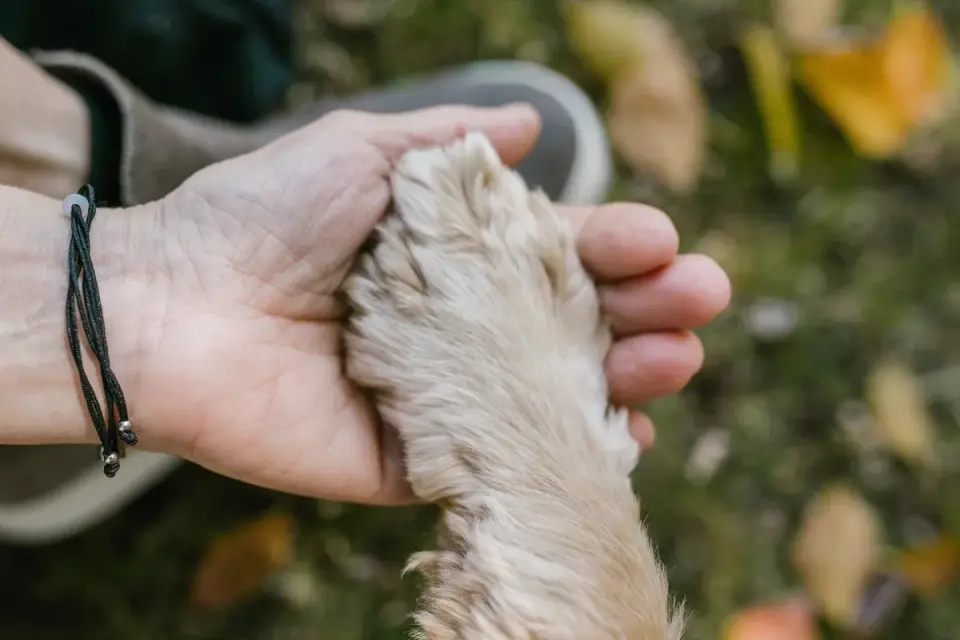
Pat dry instead of rubbing, then offer a warm towel from the dryer or a warming rack. Dogs with thick coats may hold dampness near the belly and feet, so allow air time before brushing. Ideas for airflow without chilling from Cooling Options for a Thick-Coated Breed at Home translate well in reverse — avoid drafts, keep the room temperate, and let the coat finish drying before a walk on cold floors.
Dryer sheets, heavily scented sprays, and harsh floor cleaners have no place at nose level. The U.S. Environmental Protection Agency describes its Safer Choice label as a way to identify cleaners made with safer ingredients, which can help families choose a floor wash for a space dogs lick and lie in. Mop with plain water first, then use the labeled product as directed and let floors dry fully.
Where do towels, leashes, and mess go?
Mudrooms fail when clean and dirty share the same pile. Keep two bins: dry towels and mitts at shoulder height, and a lidded hamper below for wet ones. Hang the leash, harness, and a small pouch of treats on one hook so the routine cues itself.
A family with a senior terrier and a new puppy bent the usual advice during a two-week thaw. The older dog needed a full 15 minutes on a heated bed after a 0.4-mile loop while the puppy still tracked mud in circles, so they split the entry with a folding gate — quiet dry side for rest, washable side for play. Both dogs learned their spot within six days, and the owner stopped rewashing the whole floor each night.
That split is worth borrowing. One side stays warm and still for drying and paw checks. The other holds the basin, hamper, and mop. If space is tight, the same habit from Common Mistakes When Setting Up a Dog Recovery Space helps — keep traffic, noise, and clutter out of the resting corner.
Does a mudroom need a drain or a full dog shower to work. For many homes it does not, and a tall shower can ask too much of arthritic shoulders. A low basin may help support steady footing and less handling stress, while a built-in shower wins for very large or very muddy dogs once lifting is no longer needed. The shower stops winning when a dog hesitates at the step, rushes, or pants through handling — then the simpler floor setup is the kinder choice.
What may help most is repetition. Same door, same mat, same warm towel. When the stop feels safe, most dogs offer the pause themselves, and the family gets back the quiet evening that mud season takes away.
Frequently asked questions
How warm should the water be for muddy paws?
Use lukewarm water, never hot. Rinse briefly, check between toes, then pat fully dry and keep the dog out of drafts until dry.
Do I need to bathe my dog after every muddy walk?
Often a paw and belly rinse plus towel drying is enough. Save full baths for heavy soiling to avoid drying the skin with frequent soap.
What flooring is best for a dog mudroom?
Washable, non-slip flooring with a low-pile runner. Avoid slick tile alone, let floors dry fully, and keep cleaners rinsed and stored away from dogs.
Sources
- Dog Grooming Tips — ASPCA
- Cold Weather Animal Safety — American Veterinary Medical Association
- Learn About the Safer Choice Label — U.S. Environmental Protection Agency