On this page
Last July a family called about their thirteen-year-old Labrador who had stopped using his orthopedic bed and was panting on the kitchen tile by late afternoon. They worried the hard floor would hurt his hips, and they worried the heat was making his breathing harder. On video he was choosing the coolest surface he could find, shifting every twenty minutes, then sighing and settling again. That choice made sense. Dogs seek conductive cooling when air feels heavy, and older dogs often trade cushion for coolness in summer. Our work was to give him both, a spot that stayed cool and still supported stiff joints.
The premise I hold is simple. Comfort comes first, and the coolest corner only helps if the dog will actually rest there for hours. A raised cot in a breezy hallway may look ideal, yet many senior dogs will not climb onto it. A thick memory-foam bed in a sunny den may feel loving, yet few dogs will stay on it through August. Evidence on heat-related illness supports this comfort-first view, because panting, restlessness, and seeking shade or tile are early behavioral cooling efforts before body temperature climbs. The American Veterinary Medical Association notes that shade, water, and avoiding hot environments are central to warm-weather safety, which means the resting spot has to deliver all three without asking the dog to work for them.
Start where the house already stays cool
Walk the house at the warmest part of the day and notice where air moves and light does not land. North-facing rooms, tiled entryways, basements, and hallways near a return vent often run several degrees cooler than a sun-facing living room. Place your hand low to the floor, where the dog breathes and rests. That lower zone tells the truth about comfort.
Choose a low-traffic corner with two exits so the dog does not feel trapped, with room to stretch fully on the side. Most dogs cool more efficiently stretched out than curled, because more belly and groin skin meets moving air. Keep the spot away from dryers, west-facing windows, and enclosed crates with the cover on. If you use a crate for management, leave the door open and the cover off in summer, or review how confinement changes airflow in Crate vs Playpen vs Gated Room for a Dog on Rest.
A shaded tile floor cools well but can feel hard on elbows and hips.
Build the bed for coolness and joints together
The strongest counterargument to my comfort-first approach is that joint support matters more than temperature, so owners should keep the thick orthopedic bed year-round and simply add a fan. There is reason to take that seriously. Thin, arthritic dogs may ache on hard floors, and broken sleep can reduce daytime mobility as much as heat does. Yet in practice, heat often decides where the dog sleeps, and an unused perfect bed supports nothing.
I still land on coolness as the first filter, with joint support layered inside it. Use a breathable cot, a flat cotton pad over tile, or a cooling mat designed for pets, then add a thin folded blanket only where elbows land. Washable cotton covers breathe better than fleece or faux fur. Elevate slightly if the dog steps on willingly, since a few inches of airflow underneath can carry heat away without the chill of concrete.
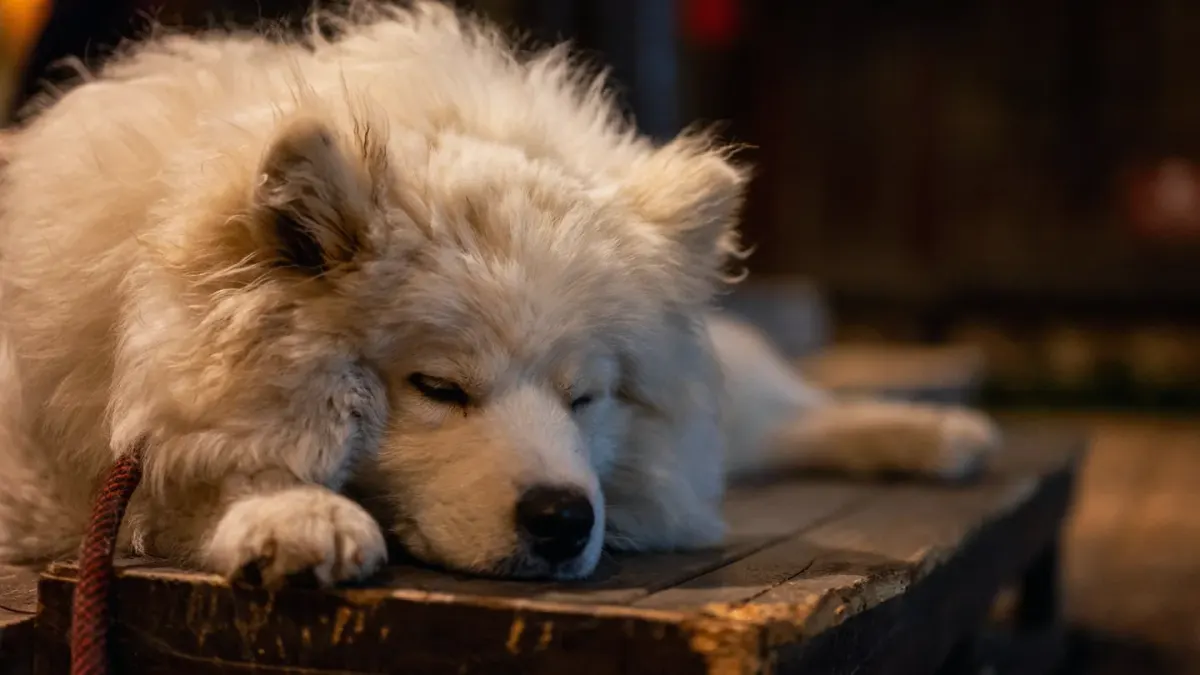
One family tried to solve this by buying a deep, high-sided donut bed in June for their nine-year-old Chow mix weighing 62 pounds. He circled it for three nights, then moved to the bathroom tile around 2 a.m. each night and woke stiff, reluctant to rise for the morning walk. They worried they had wasted money and that the tile was harming him. We kept the cool bathroom location, swapped the donut for a low, breathable cot with a thin cotton cover, and added a rubber-backed mat beside it for footing. Within five nights he stayed on the cot until sunrise and rose with less hesitation.
That tradeoff is common. What looks supportive to us can trap body heat around a thick-coated dog.
Add airflow, shade, and water within a few steps
Once the location and bed are settled, shape the small climate around them. Air movement matters because dogs lose heat largely through panting and through less-insulated skin, and still air slows both. A quiet floor fan set to oscillate across the bed, not directly into the face, is often better tolerated than a loud tower fan on high. Keep cords behind furniture and leave the dog room to move out of the draft.
Block radiant heat with blackout curtains or a light sheet over a nearby crate or pen. If the dog rests near a glass door, add a shade that leaves the lower foot of glass open for watching the yard without lying in full sun. Offer water within six to ten feet of the bed so an achy dog does not have to choose between hydration and staying settled. A heavy, low bowl prevents spills that would dampen bedding, and a second bottle or bowl helps in multi-level homes. The ideas overlap with breed-specific cooling routines in Cooling Options for a Thick-Coated Breed at Home.
Check bedding temperature with the back of your hand after an hour of use.
Shape the day so the spot actually gets used
A cool spot only helps if the dog’s routine leads there. Time walks for early morning and late evening, feed the larger meal when the house is cooler, and invite rest after activity with a calm chew or gentle grooming on the bed. Keep midday outings short and watch for heavy panting, drooling, restlessness, or seeking shade, which signal the need to stop and cool down. The Cornell University College of Veterinary Medicine describes how heatstroke can develop when dogs cannot dissipate heat, especially in older, brachycephalic, or overweight dogs, which is why recovery rest belongs in cool air rather than a warm car or garage.
For seniors, plan the path to the bed as carefully as the bed itself. Non-slip runners over slick floors, a nightlight for cloudy vision, and a gate instead of a closed door can make the difference between use and avoidance. If you are setting up confinement for healing, many of the same footing and placement errors show up in Common Mistakes When Setting Up a Dog Recovery Space.
The usual advice has to bend for anxious or house-training puppies who cannot have free access to a cool hallway all day. One owner of a fourteen-week-old terrier kept her in a sunny living room pen because it was the only chew-proof area, and by day three the puppy was napping only in twenty-minute bursts and whining by 4 p.m. We kept the pen for safety but moved it across two rooms to a shaded kitchen corner, about fifteen feet from the original window, added a washable cotton mat over half the floor, froze a stuffed Kong for midday, and set a small fan to move air above pen height. She began taking a ninety-minute midday nap again without losing the containment the family needed.
Know when heat needs more than a better bed
Most summer restlessness resolves with location, airflow, and routine. Seek veterinary care promptly for collapse, vomiting, diarrhea, brick-red or pale gums, rapid breathing that does not ease with rest in cool air, or a dog that cannot rise comfortably. VCA Animal Hospitals advises moving an overheated dog to shade, offering small amounts of cool water, and contacting a veterinarian right away rather than trying prolonged home cooling alone.
Keep a simple log for a week. Note where the dog chooses to lie, how long rest lasts, and whether evening mobility looks easier. That record guides small adjustments better than memory, and it gives your veterinary team a clear picture of quality of life through the hot months.
Frequently asked questions
Where is the best place for a dog resting spot in summer
Choose the coolest, shaded, low-traffic corner you can find, usually a north-facing room, tiled entry, or basement area with gentle airflow. Keep water close, allow room to stretch, and avoid sunny windows, laundry heat, and covered crates.
Are cooling mats safe for senior dogs with arthritis
Many seniors use them well when the mat is flat, low, and stable with a thin cotton cover and nearby non-slip footing. Watch for avoidance, chewing, or stiffness on rising, and keep the regular bed available so the dog can choose.
How can I tell if my dog is too hot while resting indoors
Watch for persistent panting at rest, restlessness, moving from bed to tile, drooling, or reluctance to settle. Move the dog to cooler air, offer small amounts of water, and call your veterinarian if breathing does not ease or other signs of heat illness appear.
Sources
- Warm Weather Pet Safety — American Veterinary Medical Association