On this page
Mara noticed it halfway around their usual loop, when her 12-year-old Labrador, once pull-ahead eager, started drifting behind her knee and sniffing longer at nothing in particular. At 0.4 miles — about half their old route — his trot flattened to an amble, his head dropped, and he chose the grass edge over the sidewalk. She shortened the turn for home, and he trotted again for the last block, tail up. That small rebound fooled her until the next morning, when he hesitated for three seconds at the two porch steps before going down.
My disputed premise is this: most owners watch for a dramatic stop, but senior dogs rarely quit outright — they negotiate. They slow, self-select softer ground, pant longer, and pay for it 12 to 24 hours later. If you only judge the walk while you’re on it, you’ll miss the real limit.
That view comes from sports medicine and rehab, where tissue tolerance matters more than motivation. An older dog may help support whole-patient health through steady movement, food therapy, and thoughtful supplement science, yet no chew or powder changes the physics of tired cartilage, weaker hind-end drive, and slower thermoregulation. Exercise still helps maintain muscle that protects joints, but recovery capacity narrows with age. So I weigh what nutrition can realistically do for diet, mobility, and recovery alongside movement — and I put movement dosing first.
The during-walk tells I trust most
Forget waiting for lying down or limping. Earlier shifts are more reliable:
- Pace decay: trots less, walks more, needs encouragement on gentle grades that used to be easy
- Path choices: seeks grass, shade, or shortcuts; lags on turns or crowds behind you
- Body language: head low, tail lower than baseline, ears back, less checking-in and sniffing with purpose
- Gait change: short hind steps, wide turns, scuffed nails, sitting to rest on a walk that never needed breaks
- Breathing and heat: panting that stays heavy 10 minutes after stopping, drooling, seeking water and shade
A single sign means slow down. Two together mean turn for home.
Panting deserves special care in seniors. Older, heavier, and brachycephalic dogs overheat faster and clear heat slower. Guidance from VCA Hospitals on senior dog care emphasizes shorter, cooler outings and close monitoring for fatigue, and that matches what I see clinically.
He learned this the hard way with a very different dog — a 68-pound, 9-year-old mixed-breed built like a linebacker who lived for fetch. The owner had cut throws from a dozen to six across three evening sessions, thinking fewer reps solved it, but kept the same sprint-and-skid stops on dry lawn. The dog never stopped during play. The tell came later: stiff rising after two naps, reluctant to jump into the SUV that night, then sore for two mornings after the third session. The tradeoff was classic — conditioning looked preserved because enthusiasm stayed high, while eccentric braking load on shoulders, elbows, and lumbosacral muscles quietly exceeded recovery. We swapped four all-out throws for eight rolling tosses on grass with a sit-wait between each, and the morning stiffness eased before fitness ever changed.
The 24-hour report card matters more
The walk lies a little; the next day tells the truth.
Watch rising from bed, the first 20 steps in the morning, stairs, jumping in and out of the car, and willingness to go again at the usual time. Stiffness lasting more than 20 to 30 minutes after getting up, a skipped second walk, or needing help where none was needed suggests yesterday was too much — even if the walk itself looked fine. This is also where normal aging stiffness and early arthritis blur, and a careful comparison helps; see Arthritis vs. Normal Aging Stiffness in Dogs: How to Tell the Difference before you label it.
The Merck Veterinary Manual notes that conditioning should build gradually with rest for adaptation, which is exactly why I treat post-exercise soreness as dosing feedback rather than failure.
Shorten the next outing by one-third to one-half.
How I dose walks for creaky, willing dogs
Think frequency over distance. Most stiff seniors do better with two or three short walks than one long march.
- Start from what recovers cleanly, not what they can survive. If 20 minutes causes next-day stiffness but 12 minutes does not, 12 is your dose.
- Add no more than about 10% per week, and only if mornings stay clean for three days in a row.
- Keep pace conversational. You should be able to talk in full sentences; your dog should still sniff and mark.
- Favor flat, grippy footing. Deep sand, slick floors, and long downhills fatigue hind ends fastest.
- Build in sniff breaks every 5 to 7 minutes. Nose work tires the brain while muscles unload.
- End with energy left. A senior should finish able to walk the last block politely, not drag home.
Off-leash bursts change this math because sprinting, turning, and wrestling load joints differently than steady walking, as explained in Off-Leash Play vs On-Leash Walks for Exercise: What Actually Serves a Dog’s Joints. For achy dogs I keep off-leash time small, flat, and interruptible.
When the usual advice has to bend
Not every senior fits the walk-shorter rule. A 14-year-old terrier mix I followed, all of 18 pounds and newly housemate to a puppy, refused shorter routes — she paced, whined, and napped worse on 10-minute-loop days. The owner worried she was pushing through pain, but video showed something else: brisk for eight minutes, then abrupt sitting and lip-licking at minute nine near traffic noise, not lameness. We bent the plan rather than forcing less. They kept a 22-minute total but split it into two 11-minute loops with a 40-minute couch rest between, drove to a quiet cul-de-sac, and added a five-minute snuffle-mat cool-down instead of a third loop. Night pacing dropped from four wake-ups to one within a week, and she still got the outing ritual she craved.
The lesson generalizes: anxiety, cognitive decline, heat, and bad footing can mimic or mask fatigue. Change the setting before you blame the dog.
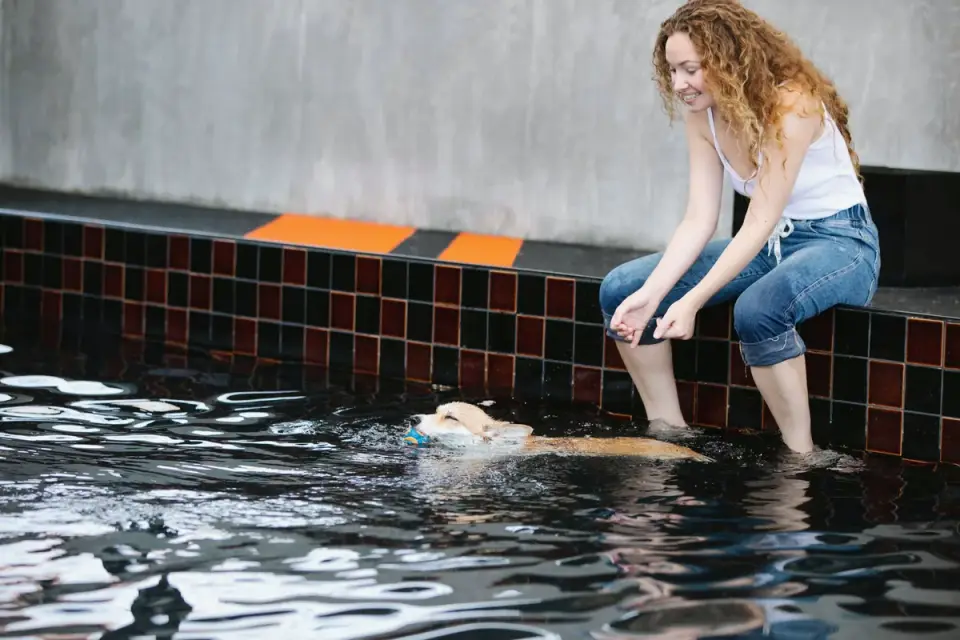
If heat or joint soreness makes even short walks costly, trading some steps for buoyancy often helps; Swimming vs Walking for an Arthritic Dog: Which Actually Helps More? walks through that tradeoff. A treadmill can also smooth dosing in bad weather, with caveats covered in Dog Treadmill vs Outdoor Walking: Which One Actually Serves an Achy Dog Better?.
Where food, weight, and joint nutrition fit
I ground an integrative claim in the nutritional evidence here: steady protein to defend muscle, calories tuned to lean body condition, and omega-3s and joint-support ingredients that may help support normal joint structure and flexibility as part of a whole plan. A supplement can realistically support diet quality and day-to-day mobility comfort alongside movement, but it doesn’t raise the exercise ceiling or erase next-day soreness from overdoing it. Weigh what a supplement can realistically do for diet, mobility, and recovery, then dose exercise as if the supplement weren’t there.
Stop now, call your vet soon
Stop the outing and cool, calm, and carry if you see collapse, pale or blue gums, vomiting or diarrhea on exertion, sudden non-weight-bearing lameness, hind-end buckling, respiratory distress, or confusion. Call your veterinarian promptly for repeated next-day lameness, yelping when rising, new reluctance on stairs for more than two to three days, nail dragging or knuckling, or exercise intolerance that worsens over two weeks despite shorter walks.
Your owner checklist for the next 14 days
- Log distance, minutes, surface, and temperature for each walk.
- Score next-morning rising 1 to 5 and note minutes until moving freely.
- Keep the dose that scores 4 or better three days running.
- Split one long walk into two short ones on the same total time.
- Add traction rugs at launch and landing spots and a ramp where jumping happens.
- Weigh monthly; ribs should be felt easily under a light fat cover.
- Reassess weekly and trim 30 to 50% after any stiff morning.
Your dog will tell you when enough was enough — usually softly, and usually tomorrow morning.
Frequently asked questions
How far should a senior dog walk?
Use recovery, not age charts. Start with the distance that leaves mornings normal, often 10 to 20 minutes on flat ground, then add about 10% per week only if rising and stairs stay easy.
Is it normal for an older dog to be stiff the day after a long walk?
Mild, brief morning stiffness can happen, but stiffness lasting more than 20 to 30 minutes, skipping walks, or needing help on stairs means the outing was too much — shorten the next one by one-third to one-half.
Should I still walk a senior dog that wants to keep going?
Yes, but end with energy left. Enthusiasm outruns tissue tolerance in seniors; split the outing into shorter bouts with sniff breaks and stop when pace, curiosity, or gait first fades.
Sources
- Senior Dog Care — VCA Hospitals