On this page
Walk farther is not always walk stronger. I would rather see a dog do six deliberate minutes through ankle- to shin-high grass than thirty loose minutes on pavement.
Last spring I worked through this with a 7-year-old, 62-pound pit-type mix who was losing push from the hind end. She could still do her evening loop, but she scuffed the inside toenails on both rear feet and needed 20 minutes to loosen up after naps. Her owner worried she needed longer walks. We kept the same 25-minute route and added only two 40-yard passes through unmowed meadow grass on a soccer-field edge, at a slow working-walk pace with a short leash. After 14 days the owner reported she rose in under a minute on 5 of 7 mornings, and rear scuffing was audible on only one pass instead of both.
Tall grass works because it forces higher joint flexion and longer stance time. The dog lifts the elbows, stifles, and hocks higher to clear the stems and stabilizes through the trunk on uneven footing. That is controlled resistance without impact.
That matters more than mileage.
Why I trade flat minutes for grassy ones
Level pavement builds endurance. Tall, soft footing builds usable hind-end power for curbs, stairs, and standing from a down. Keep the head up, ribs springy, and pace slow enough that you hear four even beats.
Start with height that brushes the wrist in front and the hock behind. For most medium dogs that is 4 to 8 inches of mown meadow, park fringe, or trail edge. Belly-high field grass is not day-one material. You want effort, not crouching and plowing.
For context on trading surfaces without overloading joints, compare Swimming vs Walking for an Arthritic Dog: Which Actually Helps More? and Dog Treadmill vs Outdoor Walking: Which One Actually Serves an Achy Dog Better?.
Walk it right in 15 minutes
Check the strip first. Walk it yourself. No burs, foxtails, holes, broken glass, droppings, or pesticide signs. Morning dew is slick; midday dry grass gives better grip.
Do it in this order on a flat, familiar walk:
- Warm 5 minutes on a hard path at an easy amble.
- Turn into tall grass for 30 to 60 seconds. Short leash, dog at your side, nose forward. Slow is strong.
- Exit to the path for 2 minutes. Watch breathing and gait.
- Repeat 2 to 3 times total. Stop while the dog still looks springy.
- Cool 5 minutes on the path. No sprint home.
Keep sessions to every other day at first. Add one pass per week, not more minutes per pass. If the dog drags, weaves, sits down, or pants with a curled tongue, you are done for the day.
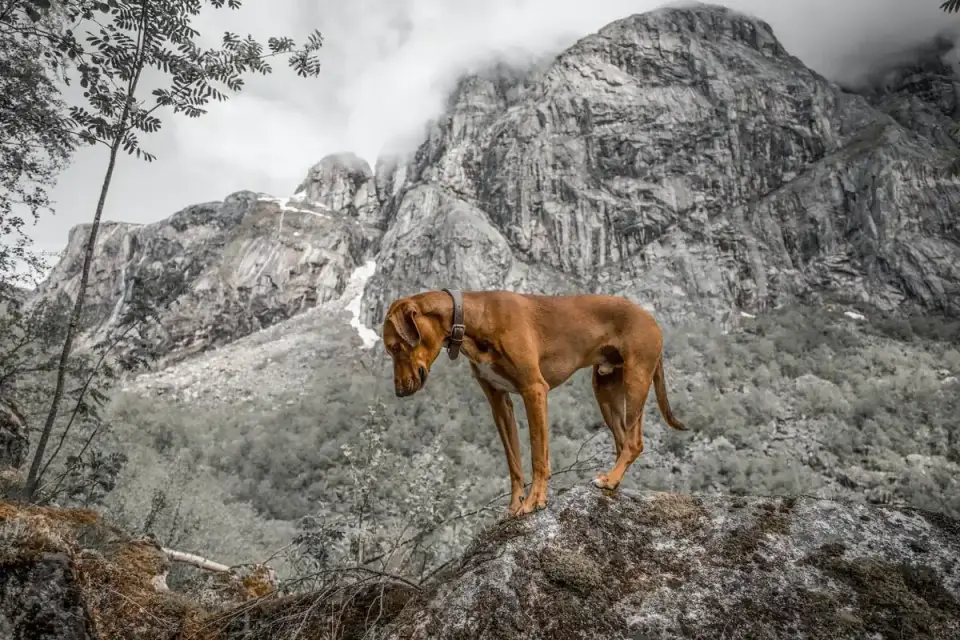
A second owner I coached tried the opposite. He had a lanky 3-year-old herding mix, 48 pounds, who lived for fetch, and he figured chest-high weeds behind his apartment would tire the dog faster. For 4 straight evenings he pushed 18-minute straight-line slogs through dense, wet stems with no warm-up and no path breaks. By night 4 the dog bunny-hopped the last block home and refused stairs for two mornings, then needed 6 rest days before he moved normally. The tradeoff was clear: resistance without pacing and footing checks builds soreness, not strength. We restarted with 30-second meadow strips separated by path walking, and the dog finished bright instead of flattened.
That failed approach is common. Owners chase fatigue. Rehab chases clean repetitions.
Where food and joint nutrition fit
Movement is the stimulus. Diet carries the recovery. I weigh what a supplement can realistically do for diet, mobility, and recovery this way: adequate protein, healthy weight, and consistent low-impact loading do most of the work, while joint nutrition may help support normal structure alongside that program rather than replace it. Read labels for ingredient literacy, feed for condition, and let the walk prove the plan. You can browse background evidence through the U.S. National Library of Medicine database and review general owner guidance on activity and lameness from Merck & Co..
If weight is part of the problem, pair this routine with steady calorie control and shorter, more frequent outings. See Off-Leash Play vs On-Leash Walks for Exercise: What Actually Serves a Dog’s Joints.
When tall grass is the wrong tool
Tall cover bends the rule for some dogs. Skip it and stay on short, even footing if your dog is acutely lame, knuckling, falling, post-surgical without clearance, or already exhausted from heat.
I think of a 12-year-old small terrier mix I followed, only 14 pounds, with advanced hind-end weakness and frequent crossing over. Grass to her chest acted like a wall. She tripped 3 times in 50 feet and lay down panting. We bent the usual advice completely. Instead of grass we used 5 minutes on clipped lawn plus three 10-foot curb ramps and indoor rug-to-hardwood transitions twice daily. Within 3 weeks she could stand for 45 seconds to eat without sitting, which mattered more to her owner than any distance goal. For fragile, neurologic, or very small dogs, traction and short weight shifts beat resistance.
When in doubt, ask your veterinarian to watch a 60-second video of the grass pass before you progress.
Your owner checklist for the next 2 weeks
Pick one safe strip and walk it at the same time of day. Log passes, surface, and how the dog rises the next morning. Progress only if the rise is same or better.
Stop the session for limping, toe dragging that worsens, repeated sitting, heavy panting that does not settle in 3 minutes on the path, or next-day stiffness lasting over 2 hours. Those are load signs, not laziness.
Keep nails trimmed, weight lean, and rest days real. Strength shows up as easier stairs, cleaner sit-to-stands, and less scuffing — not longer miles.
Frequently asked questions
How tall should the grass be to start?
Start where grass brushes the wrist and hock, about 4 to 8 inches for most medium dogs on flat, dry, even ground. Keep passes to 30 to 60 seconds with path breaks between.
How often should we do grass passes?
Every other day, 2 to 3 short passes inside a normal 15 to 25 minute walk. Add one pass per week only if next-morning rising and gait stay normal.
When should I skip tall grass?
Skip it for acute lameness, knuckling or falling, post-surgical restriction, chest-high or wet tangled cover, or heat exhaustion. Use short lawn or hard-path walking instead and check with your veterinarian.
Sources
- PubMed — U.S. National Library of Medicine
- The Merck Veterinary Manual — Merck & Co.