On this page
I get some version of the same phone call every few weeks: an older dog, usually a Lab or a Shepherd mix, has started skating across the kitchen tile like it’s ice. The owner has already tried a rug. Sometimes they’ve already bought something off a “best traction product” list without knowing which problem it actually solves. So let’s back up and test the premise a lot of these guides quietly assume — that toe grips, paw wax, and nail grinding are interchangeable fixes for the same thing. They aren’t.
What’s actually failing when a dog slides
A dog’s traction on a hard floor comes from three things working together: the paw pad’s grip, the nail’s length and angle relative to the floor, and the surface itself. Toe grips, paw wax, and nail grinding each intervene at a different point in that chain, which is why “just try one” advice tends to disappoint owners.
Long or overgrown nails are the piece owners notice least and misjudge most. It’s tempting to assume long nails simply need shortening for better grip, but a 2026 gait study in Frontiers in Veterinary Science found that trimming nails in clinically sound dogs did not change measured gait parameters before and after the trim. The authors suggested overgrown nails may be more a consequence of an inefficient or altered gait — less natural ground contact wearing them down — than a direct cause of slipping. That doesn’t mean nail length is irrelevant to comfort. It means the causal arrow may run the other direction more often than owners assume.
Toe grips: rubber rings, not a nail treatment
Toe grips are small rubber rings that fit over the nail tip, adding a soft contact point between the nail and the floor. They’re aimed specifically at dogs whose nails touch the ground first on smooth surfaces — often seniors, dogs with hip or knee weakness, or breeds with straighter rear angulation. The one published study I’m aware of, in PMC, looked at kinetic gait parameters in normal dogs before and after toe grip application and found only minimal changes to how the dogs moved — reassuring in that the grips didn’t distort a healthy gait, though it wasn’t designed to prove they prevent falls in dogs who are already struggling. Be honest about that gap: we have decent evidence toe grips don’t mess up gait mechanics, and much thinner evidence quantifying how much they reduce slipping day to day.
Paw wax: pad conditioning, not floor grip
Paw wax is a different tool for a different job. It’s a barrier balm — beeswax, carnauba, or candelilla wax blended with oils — meant to protect and condition the pad itself against salt, hot pavement, or dry cracking. Some owners assume a tackier pad will grip a hardwood floor better, and a thin, occasional layer on an already-healthy pad usually isn’t a problem. But applied too often or too heavily, wax can soften the pad past the point where it holds friction, which works against you indoors. If your actual complaint is a dog sliding across the kitchen, paw wax is treating the wrong variable most of the time; it earns its place for pad protection outdoors, not as an indoor traction fix.
Nail grinding: precision over clippers, same underlying question
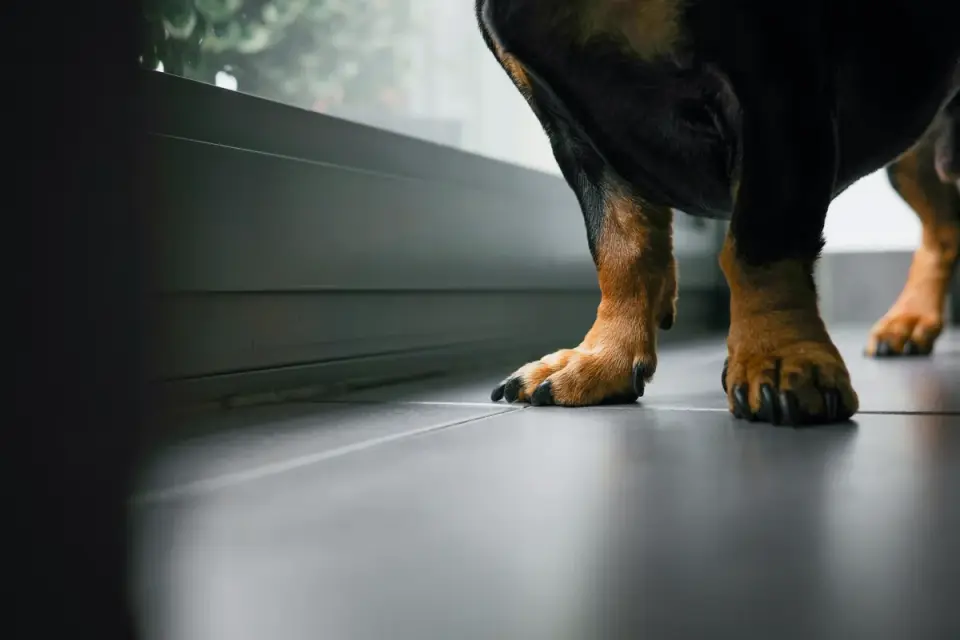
Nail grinding (a rotary tool instead of clippers) is really a nail-length-and-shape strategy, not a separate traction category. It lets you take nails back gradually and round the tip, which some owners find reduces the “click-click-click” of nail-on-tile contact. Given the Frontiers finding above, I’d frame grinding as a comfort and hygiene habit worth keeping current — overgrown nails can eventually affect stance and paw conformation over months — rather than a guaranteed slip fix on its own.
A dog I worked with, and where the pieces actually fit
One dog who sticks with me was a nine-year-old Golden, about 68 pounds, whose owner noticed her hesitating at the top of the basement stairs and refusing to cross the kitchen without a running start onto the adjacent carpet. It had been going on for maybe six weeks by the time we talked it through. Her nails were long enough to click audibly on the tile, but when we looked closer, her rear pasterns were also dropping slightly at rest — early hip discomfort, not just an untrimmed nail problem. We started with a grinder every ten days to bring the nails back gradually rather than one aggressive cut, added toe grips on her rear paws specifically for the kitchen and stairwell, and left the paw wax out of it entirely since her pads weren’t cracked or dry. Within about three weeks her owner reported she was crossing the kitchen at a normal pace again. That’s one dog’s outcome, not a study, but it illustrates how the three tools stack rather than compete.
Building a floor-traction plan instead of picking one product
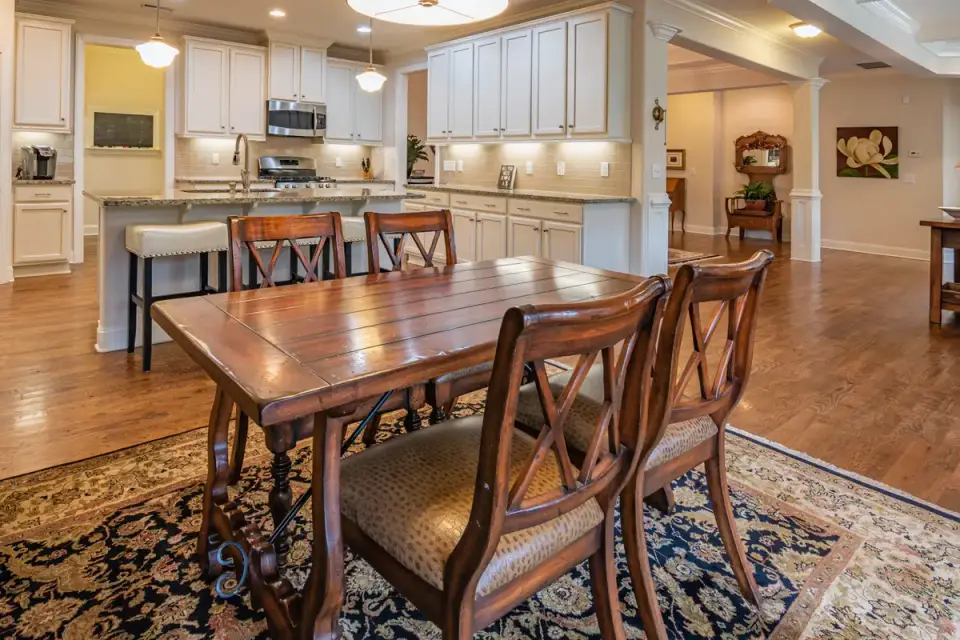
Start by watching where your dog actually loses footing. If it’s a specific room, work from the floor up: our guide to floor traction setup after knee surgery walks through rugs, runners, and mats that hold still under a dog’s weight, and it applies just as well to arthritic seniors as post-op dogs. If the whole recovery or aging space needs a rethink, common mistakes when setting up a dog recovery space covers the layout issues that undercut even good traction products.
For dogs who hesitate at furniture or the car more than on flat floors, a ramp addresses a different mechanical demand than any paw or nail intervention — see our DIY dog ramp beginner’s build if the issue is height, not surface. And if travel or visiting family means new, unfamiliar flooring, foldable ramps for traveling with a senior dog is worth a look before the trip, not after a slip.
Here’s the short version of my actual triage in the exam room. Nails clicking on tile and visibly touching ground at rest: grind or trim on a real schedule, roughly every two to three weeks for most adult dogs. Slipping concentrated on a couple of rooms despite reasonable nail length: toe grips or, more often, rugs and runners are the higher-leverage fix. Dry, cracked, or salt-exposed pads: paw wax, used sparingly, for protection — not as your traction strategy.
A second scene worth sitting with
I had a client last winter with a twelve-year-old Cattle Dog mix, maybe 40 pounds, who’d developed a habit of army-crawling the last four feet to his water bowl on the kitchen linoleum rather than walking it normally. The owner had already bought paw wax based on an online list and was frustrated it hadn’t helped. When we watched him move, his nails were fine — trimmed within the last two weeks — but his rear end was clearly weak going into a turn, the kind of instability that shows up more on smooth floors because there’s nothing to catch a stumble. We put down a runner along his usual path and added toe grips on the rear paws only, and skipped paw wax altogether since his pads were healthy. His gait on that stretch of floor changed within days, not weeks, which told me the wax had simply never been the right tool for what he was dealing with.
The owner checklist
- Watch before you buy: is it nail length, pad condition, or a specific slick room causing the slide?
- Trim or grind nails on a real schedule rather than reactively; the Frontiers in Veterinary Science study suggests length alone may not be the whole story, but keeping it current still matters for comfort.
- Reach for toe grips when a dog’s own nail-to-floor contact seems to be the slipping point, especially in seniors or dogs with rear-end weakness — the PMC gait data suggests they don’t distort normal movement.
- Use paw wax for pad protection against salt, heat, or cracking — not as your indoor traction fix, and not heavily or daily.
- Fix the floor itself with rugs, runners, or mats before assuming the dog’s body is the whole problem.
- Revisit the plan if slipping is sudden, one-sided, or paired with stiffness; that’s a conversation for your vet, not a shopping list.
Frequently asked questions
Do toe grips actually stop a dog from slipping?
Published gait research shows toe grips cause only minimal changes to normal gait mechanics, which suggests they're safe to use, but there isn't strong published data yet quantifying how much they reduce falls in dogs who are already struggling on smooth floors.
Can paw wax replace toe grips or a rug for indoor traction?
Not reliably. Paw wax is a pad-conditioning barrier, and heavy or frequent use can actually soften pads and reduce grip. It's better suited to protecting pads outdoors than fixing indoor slipping.
Does trimming or grinding a dog's nails improve traction on its own?
A 2026 study found that trimming nails in healthy dogs didn't change measured gait parameters, so nail length alone may not fully explain slipping. Keeping nails at a reasonable length is still good practice for comfort and long-term paw conformation.
How often should I grind or trim my dog's nails?
Most adult dogs do well on a two-to-three-week schedule, adjusted for how quickly the nails grow and how much natural wear they get from walking on hard surfaces.