On this page
Stiffness after exercise is information, not a diagnosis. In my practice, the dogs that struggle to rise after a long hike or hard play session are usually telling us about load, recovery capacity, and joint tissue tolerance — and food therapy plus supplement science can only help when movement and body condition are already addressed.
The disputed premise I hear is that post-exercise stiffness means a dog needs rest first and a joint chew second. I would reverse that order. Most healthy adult dogs that are slow to rise need better-distributed movement, a leaner frame, and a more forgiving home setup before any ingredient can realistically matter for diet, mobility, and recovery.
A 7-year-old, 68-pound Labrador mix came in after weekend trail hikes. He could hike four miles enthusiastically, then needed two attempts to stand after napping that evening, and was slow on stairs the next morning. By day 10 of a written log, the pattern was obvious: stiffness peaked 6 to 12 hours after eccentric load — downhill sections, hard stops for a ball, slick floors at home — not during the hike itself. That lag pointed us toward recovery and load management rather than fitness alone, and it shaped every change we made next.
Start with a 2-week stiffness map, not a new product
Physiology first. Articular cartilage has no direct blood supply and depends on cyclic loading to move synovial fluid across its surface. Moderate walking pumps that fluid. Prolonged high-impact bursts, followed by a long nap on a cold floor, do the opposite: joint tissues cool, synovial viscosity rises, and periarticular muscles tighten. Rising then hurts, even when the joint itself is structurally stable.
For two weeks, record exercise type and minutes, surface, rest breaks, time from exercise to stiffness, which legs look slow, how many steps until the gait normalizes, appetite, and any vocalizing, swelling, or non-weight-bearing lameness. Video the rise from lying down once or twice. Seek prompt veterinary care for sudden inability to bear weight, marked swelling, crying out, collapse, fever, or stiffness that worsens over three weeks in despite lighter activity.
That log prevents the most common error: treating every slow rise the same way.
Adjust load, surface, and the rise itself
Dogs tolerate total work better than peak spikes. Keep daily base walks consistent, then add harder outings gradually with warm-up and cool-down. I favor 5 to 10 minutes of leashed walking before off-leash bursts, plus 5 minutes of easy walking afterward rather than a car ride straight to a nap. For context on balancing free play with controlled miles, compare Off-Leash Play vs On-Leash Walks for Exercise: What Actually Serves a Dog’s Joints and Dog Park vs Structured Exercise for Your Dog: Which Actually Builds Fitness?.
Home setup matters as much as mileage. Add traction runners, a supportive bed away from drafts, and a ramp for cars and high stairs so the dog does not have to explode upward from a deep sit.
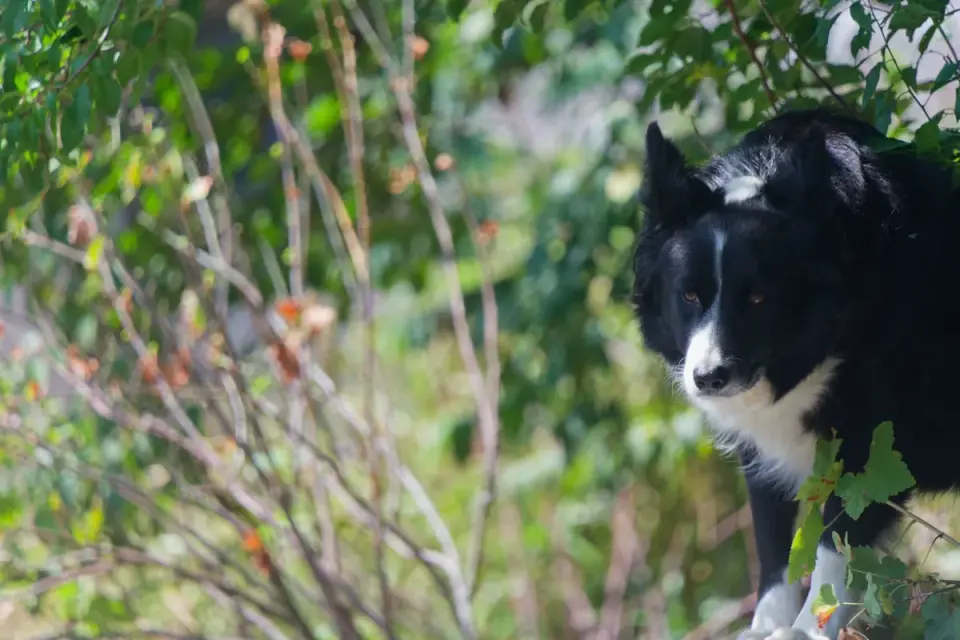
A 5-year-old, 42-pound Border Collie mix taught me the tradeoff. Her owner cut fetch entirely after two stiff evenings, and by three weeks in the dog was restless, gaining weight, and still stiff after weekend make-up sessions. Complete rest had deconditioned her. We reintroduced structure instead: two 20-minute leashed walks daily, short uphill walking for concentric strength without hard braking, and only two brief, flat fetch sets per week with full warm-up. Her evening rises improved, which reinforced the point that recovery improves with appropriate movement, not absence of movement. When water access was available, we also borrowed principles from Swimming vs Walking for an Arthritic Dog: Which Actually Helps More? to keep conditioning low-impact.
Weight is the other lever. From a nutrition standpoint, excess adipose tissue increases mechanical load with every rise and contributes inflammatory signaling that can affect comfort. A slow, veterinarian-supervised return to lean condition through measured feeding often improves rising more than any single ingredient.
Consistency beats intensity for stiff dogs.
Where joint nutrients fit — and where they do not
This is where I take a firm position: use supplements to support normal joint structure and recovery alongside movement, not to override overload. That means chondroitin, glucosamine, and green-lipped mussel may help support whole-patient mobility as part of a diet and rehab plan, but none rebuilds cartilage or replaces weight control.
Grounding that in nutritional evidence, chondroitin has been described in peer-reviewed work as an ingredient that “supports healthy synovial fluid homeostasis” in a study published in Frontiers in Veterinary Science. Glucosamine has been reported to “prevent experimentally induced cartilage degradation in vitro” in work summarized in the Journal of Veterinary Medical Science. A preclinical marine-lipid paper found that “BMO, GMO, and KO all alleviated paw swelling in rats and reduced serum levels of rheumatoid factor (RF), anti-cyclic citrullinated peptide (anti-CCP) antibody, and pro-inflammatory cytokines such as TNF-α and IL-17” in Nutrients.
The strongest counterargument is fair: those findings are mechanistic, in vitro, or rodent-model data, not proof that a chew will make a specific dog rise faster. I still include these ingredients for selected active dogs because they are among the better-characterized joint-support nutrients, have a reasonable safety profile when fed per label under veterinary guidance, and align with the physiology we are trying to support — synovial nutrition, normal cartilage metabolism, and a healthy inflammatory response to exercise. I do not expect visible change in days; I reassess movement logs after 4 to 6 weeks, and I stop what is not helping.
An edge case changed how I counsel owners. An 11-year-old, 54-pound mixed breed was only stiff after evening walks on cold concrete, never after morning walks on grass. By day 10 on joint-support nutrition alone, nothing had changed. What changed the rise was environmental: a warmer bed, traction mats on the hallway turn, and shifting longer walks to midday. The lesson was that location and temperature can mimic a supplement failure, and the fix belongs in husbandry rather than the food bowl. For dogs that ache in winter or on hard surfaces, ideas from Dog Treadmill vs Outdoor Walking: Which One Actually Serves an Achy Dog Better? can help maintain even, forgiving footing.
An owner checklist before your vet visit
Bring your two-week log, videos of rising, diet and treat details, current supplements with labels, and notes on weight trend. Ask whether imaging, pain assessment, physical therapy, or a structured conditioning plan is indicated, and what red flags should trigger recheck. Do not start multiple new products at once; you will not know what helped.
Stiffness after exercise deserves attention, but it responds best to a system: steady low-impact movement, lean body condition, traction and rest surfaces that make rising easier, and — where appropriate — evidence-informed nutrients to help support normal joint function through recovery.
Frequently asked questions
How long should post-exercise stiffness last in a dog?
Mild slowness for a few steps after rest can follow hard outings, but it should resolve quickly with gentle walking and not worsen week to week. Persistent next-day stiffness, limping, swelling, or crying out warrants veterinary evaluation.
Should I rest a dog that is stiff getting up?
Avoid prolonged complete rest unless your veterinarian advises it. Shorter, more frequent leashed walks, warm-up and cool-down, traction, and weight control usually support recovery better than stopping all movement.
Do joint supplements help stiffness after exercise?
Glucosamine, chondroitin, and green-lipped mussel are studied nutrients that may help support normal joint structure and recovery, but evidence is supportive rather than definitive. Use them alongside movement, weight, and home changes, and reassess with your veterinarian after 4 to 6 weeks.
Sources
- Chondroitin supports synovial homeostasis trial — Frontiers in Veterinary Science
- Glucosamine cartilage degradation review — Journal of Veterinary Medical Science
- Marine oils and mussel inflammation rat model — Nutrients