On this page
Pack the routine first and the scenery second, because most cabin problems I see are routine problems in a new place. Bring the exact food, medications, bedding, leash setup, and cleanup supplies your dog already uses, plus traction and warmth for slick floors and cold nights. That baseline keeps movement comfortable, behavior readable, and stomachs settled.
My premise is simple: a cabin rewards predictability, not extra gear. Dogs move less confidently on pine floors, steep steps, and loose decks, and stiff or senior dogs feel that change fastest. Keep feeding times, walk times, and sleep spots close to home and you protect joints, appetite, and rest in one move.
I counseled a family last fall before a two-night lake cabin with their 9-year-old Labrador Retriever, 68 pounds, with early hind-end stiffness and a habit of rushing stairs. At home he slept on a low orthopedic bed, ate twice daily on schedule, and took a short evening loop without trouble. For the cabin we mapped the decision concretely: same kibble pre-portioned plus one extra meal, daily medications in a pill case, his own bed, a 15-foot long line for the unfenced yard, a rear-support towel for the three deck steps, and a white-noise app for owls and furnace clicks. By morning two his owner reported he chose the bed over the cold floor and climbed without scrambling, which told us footing and routine were doing the work.
What cabins actually change for footing and rest
Cabins trade carpet for wood, rugs for runners that slide, and short hallways for stairs, lofts, and gaps under railings. Set up one ground-floor rest zone on day one.
Lay a washable mat under the bed. Block loft stairs and high decks with a baby gate or closed door. Place food and water away from foot traffic so a stiff dog does not have to brace while eating. Keep nails trimmed and carry a paw towel by the door for mud, ice melt, and pine sap.
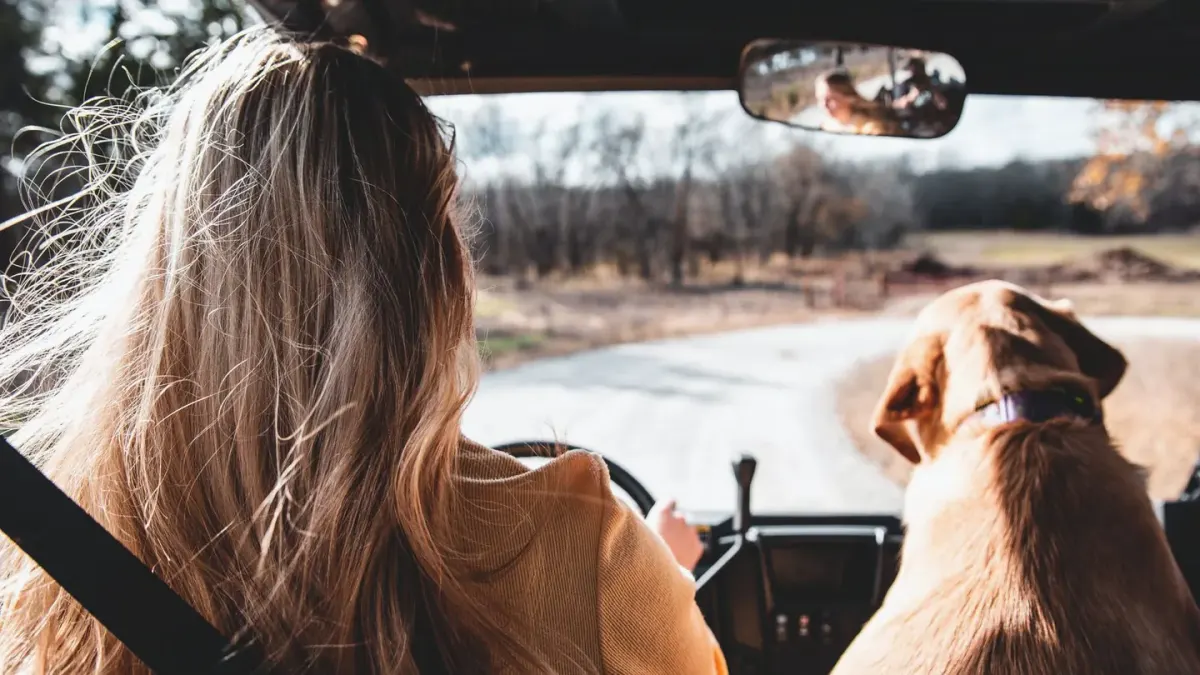
Travel restraint matters on the way there too. The American Veterinary Medical Association advises securing dogs with a crash-tested harness, crate, or carrier and traveling with ID and health records, which is why I pack restraint before toys. If you are still choosing between setups, read Dog Car Seat Belt vs Crate vs Barrier: Which Restraint Is Safest?
Keep nights warm and boring.
Food, water, meds, and stomach insurance
Pack exact food for three days plus one extra day, pre-measured in bags. Bring the usual treats, a chew for quiet evenings, and any joint or calming supplements your veterinarian already recommended, with realistic timelines — structure and comfort support builds over weeks, not one weekend.
Bring medications in original labeled bottles, plus a written list with doses and your clinic number. Carry poop bags, paper towels, enzyme cleaner, and laundry bags for bedding. Bring water from home or bottled water for the first 24 hours if your dog has a sensitive gut, then transition gradually.
For safety around wildlife and ticks, the Centers for Disease Control and Prevention recommends checking pets for ticks after outdoor activity and preventing wildlife contact, so I pack tweezers, a tick remover, and a headlamp for evening checks.
The tradeoff I warn about is overpacking play and underpacking control. I worked with an owner who brought toys, a chuck-it, and a new extendable leash for a 4-year-old mixed-breed dog, 42 pounds, high energy and pull-prone, for a Friday-to-Sunday A-frame stay. No long line, no gate, no familiar bed. By day 2 the dog had sprinted after deer scent, slipped on the deck, yanked hard on the thin cord, and then paced all night on a loft mattress. We changed tactics by phone: borrow a flat 15-foot line, clip to a harness not a collar, shorten walks, feed on schedule, and build a floor bed in the quiet bedroom. The pulling eased because control replaced distance, not because the dog finally tired out.
Leashes, light, and cold-weather layers
Bring a 6-foot flat leash, a harness with front and back clips, and a long line for sniff walks. Pack a collar with ID tags plus a slip lead as backup. Add a headlamp, flashlight, reflective collar cover, and extra batteries.
Cabins cool fast at night. Pack a fleece or insulated coat for short-coated, lean, senior, or small dogs, plus booties or paw balm if trails are rocky or icy. Size changes the plan more than owners expect, and Traveling With a Small Dog vs a Large Dog: What Actually Changes walks through lift, warmth, and restraint differences well.
The counterargument I take seriously is that dogs need freedom on vacation. I agree — but I define freedom as safe sniffing on a long line, not off-leash roaming in unfamiliar woods.
One edge case changes the list: the quiet senior who will not ask for help. A couple brought a 12-year-old terrier mix, 18 pounds, to a drafty cabin in November and assumed her shivering was excitement. By day 2 she was skipping the morning steps, eating slowly, and curling tight instead of stretching. They added the missing pieces — raised cot off the cold floor, blanket layer, coat for potty breaks, warm water to soften food, and a low night-light to reduce slipping — and by the drive home three days in she was walking the full loop again without pausing at the second step. Small, older dogs lose heat fast and hide stiffness, so pack warmth like it is medication.
Owner checklist before you load the car
Measure food plus one day extra. Confirm meds, supplements, and first-aid basics: gauze, antiseptic wipes, tweezers, tick remover, saline eye wash, and any prescribed sedatives only as directed.
Pack bedding, mat, gate or pen, leashes, harness, long line, towels, cleaner, bags, bowls, water, coat, light, and chew. Save vet records, vaccine proof, cabin rules, and emergency clinic address offline. Walk, feed, and potty on home schedule the first evening.
Expectation first: you may help support comfortable movement and calmer behavior with routine, traction, and rest, but no single supplement or hike fixes stiffness in a weekend.
Sources
- Pet Travel — American Veterinary Medical Association
- About Healthy Pets — Centers for Disease Control and Prevention