
The family was worried about leaving their dog out of the celebration, and the dog was worried about all the noise near his bed. That tension is where I begin with almost every holiday weekend, because comfort has to come before inclusion. My disputed premise is simple. A good visitor weekend should change less for your dog, not more, and enrichment works best when it protects rest rather than adding excitement.
I met that worry most clearly with a family hosting four grandchildren for two days with their nine-year-old, 68-pound Labrador who had stiff hips and a habit of pacing when the doorbell rang. They wanted him to participate in everything so he would not feel left out. By Saturday afternoon his tail was low, he was panting though the house was cool, and he had stopped taking treats he usually loved. What changed the weekend was not a new game. It was giving him permission to rest in a quiet back bedroom with his bed, a chew, and a closed door for two hours while the house stayed loud without him.
Busy houses tire dogs faster than owners expect, especially older or mobility-limited dogs. Novel voices, shifted feeding times, children moving at knee height, and guests who want to pet or toss a ball all raise mental load. For a dog already managing joint stiffness or anxiety, that load can show as restlessness, clinginess, lip licking, avoidance, or a reluctance to lie down. Enrichment in this setting is not about tiring him out. It may help support a sense of safety and normal rhythm by giving the brain small, predictable jobs and the body easy places to settle.
The American Veterinary Society of Animal Behavior reminds owners that feeling safe underlies learning and calm behavior, which is why I anchor a visitor weekend around a safe retreat first. Choose one low-traffic room or corner as your dog’s home base for the whole weekend. Put the bed there, water, a worn shirt that smells like you, and a white-noise machine or soft fan. Tell every guest the same rule. That space is private, and a dog resting there is not to be followed or coaxed out.
Once retreat is set, build a low-impact rhythm around your normal times. Keep morning and evening walks short and familiar rather than adding a long group walk. In between, offer two or three brief sniffing or licking sessions that keep all four paws on the ground. Scatter a handful of kibble in grass for a slow search, freeze a thin layer of wet food in a bowl for licking, or roll treats in a towel for gentle nosing. The Ohio State University College of Veterinary Medicine describes this kind of food puzzle and sensory work as part of daily enrichment for indoor pets, and I find it suits stiff dogs because it asks for nose work without jumping, stairs, or slippery floors.
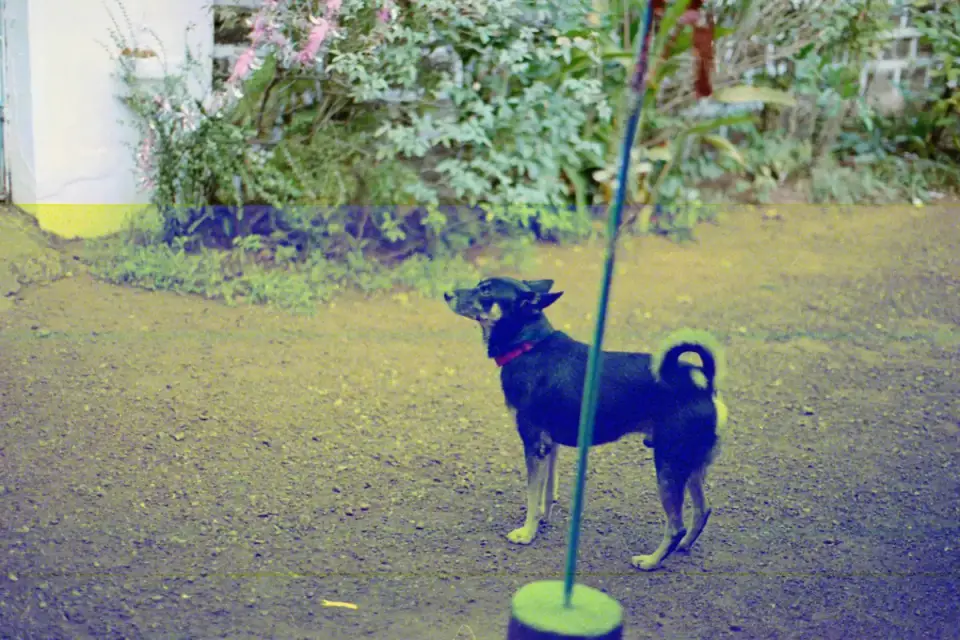
The tradeoff I see most often is the well-meaning marathon fetch session meant to settle a dog before guests arrive. Last spring an owner of a six-year-old, 44-pound border collie mix tried exactly that on a Saturday morning before a cookout, throwing a ball for forty minutes so he would be calm by noon. By day two he was limping slightly on a front leg, refused his evening puzzle, and barked more at every doorway sound instead of less. Fatigue did not bring rest. It lowered his tolerance for novelty and left him sore when the house was loudest. Short sniff walks and brief chew time would have protected his comfort far better than exhaustion.
For ideas that carry into a normal week, I often point families toward calm indoor options like those in How to Keep a Dog Entertained While You’re at Work and the comparison in Chew Toys vs Puzzle Toys for Boredom. During a visitor weekend, favor the chew side of that pair for most seniors. A long-lasting chew in the retreat room supports settling, while a wobbly puzzle that rolls under furniture can frustrate a worried dog and draw children into chasing after him.
The edge case that changes my plan is the social butterfly senior who genuinely seeks guests and then fades. I think of a twelve-year-old, 22-pound spaniel mix who greeted every visitor at Thanksgiving, leaned into laps for an hour, and then by evening stood in the hallway panting and unable to choose a resting place. Her family read the first hour as proof she needed no plan. What she needed was planned intermissions even when she looked happy. For these dogs I schedule visitor time in small windows, about twenty minutes of greeting followed by an hour of quiet in home base, whether or not they ask for it. Joy still counts as exertion.
That is the strongest counterargument to my preserve-routine premise. Some owners worry that structure removes fun and that a dog should be allowed to self-regulate around people he loves. I understand that worry, and for a young, sound, highly social dog it has merit. I still land on protection first for aging, stiff, or anxious dogs because they often show fatigue late, after arousal hormones drop. A predictable plan may help support quality of life across the whole weekend rather than a bright Saturday followed by a sore Sunday.
A short, quiet practice matters more than a perfect one.
My premise: protect rest before you add fun
Start Friday night by setting the retreat and walking your dog through it calmly on leash, treating for entering and lying down. Keep food, medication, and bedtime within thirty minutes of normal. Predictability is enrichment when everything else smells new.
A low-impact rhythm for Saturday and Sunday
Aim for morning sniff, midday lick or chew, and evening settle. Keep each session five to ten minutes, then rest. Invite one calm guest at a time to toss treats on the bed rather than crowding for petting. If your dog walks away, let that choice stand.
For evening restlessness that often spikes with guests, the same settle-first logic in Why Your Dog Won’t Settle in the Evening applies. Dim lights, lower voices near home base, and a familiar chew can help the nervous system downshift.
An owner checklist for Monday morning comfort
Leave the retreat up through Monday. Watch for lingering signs of overload such as reduced appetite, stiffness on rising, extra sleeping, or avoidance of the room where guests gathered. Return to normal walks and feeding times, and call your veterinarian if limping, panting at rest, or behavior change lasts beyond a day. Supplements, if you use them, fit here only alongside weight control, soft footing, and movement, never as a substitute for rest.
Sources
- AVSAB Position Statement on Humane Dog Training — American Veterinary Society of Animal Behavior
- Indoor Pet Enrichment — Ohio State University College of Veterinary Medicine