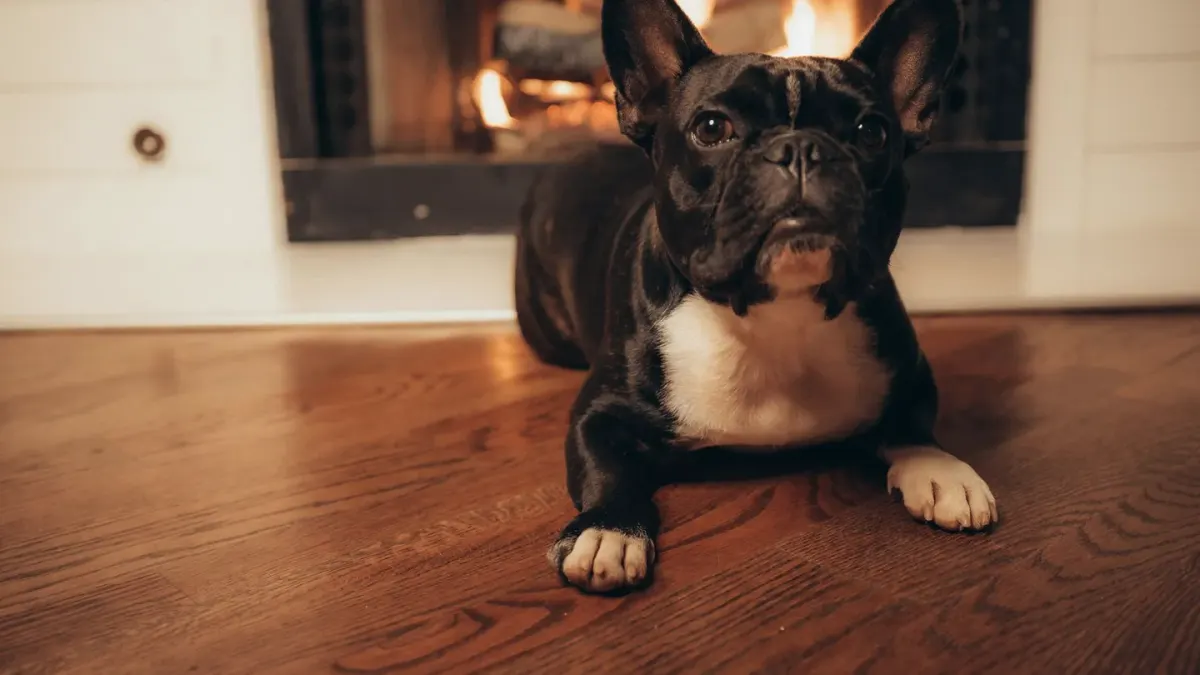
The first night home is usually the hardest, and I would argue most owners overthink bedding while underthinking location. A client with a seven-year-old, 68-pound Labrador after cruciate surgery had bought an orthopedic bed, a new crate, and three toys, then set everything up in a busy family room with slick tile and a low couch he kept trying to climb. By day three he was panting, restless, and licking at his incision, not because the surgery had failed but because the space kept asking him to move. What changed his recovery was not more equipment. It was moving his pen to a quiet corner bedroom with a door that closed, washable footing, and everything within arm’s reach.
My premise from day-to-day practice is simple: confinement only works when the rest area makes resting the easy choice. Dogs recovering from anesthesia and tissue trauma feel disoriented, sore, and anxious, and pain-related stress can delay a return to normal behavior. The Merck Veterinary Manual notes that controlled activity and a quiet environment support normal healing after procedures, which matches what I see when dogs finally exhale once the household noise drops away. Prevention here is not fancy. It is a small, boring space that supports the body and may help maintain calm routines while tissues heal.
Pick the smallest quiet room that still fits you
Forget giving your dog the whole living room to feel generous. Choose a spare bedroom, office, or laundry area on the main floor where you can sit with your dog for checks and medications. The room should close off from stairs, other pets, and front-door traffic. Set the crate or pen against a wall, leave two to three feet around it for you to work, and keep water, medications, a leash, waste bags, and your surgeon’s discharge sheet on one small table.
I learned this tradeoff with a four-year-old, 42-pound Border Collie after an abdominal procedure who was placed in a large gated kitchen so she could see everyone. She spent three weeks in pacing between the tile and the baby gate, whining whenever someone left, and by day 10 she had rubbed her elbows raw from getting up and down. We shrank her world to a pen inside a bedroom, added a white-noise machine, and asked the family to visit in shifts instead of calling her out. Her restlessness eased because the boundary was clearer, not because she was sedated more heavily. A smaller footprint often feels unkind to us and kinder to them.
Make the floor boring, grippy, and easy to clean
Slippery floors undo good surgery faster than almost anything else in home care. Lay low-pile, washable runners or interlocking foam tiles from the bed to the water bowl and to the door you will use for potty trips, with no bare slick gaps. Avoid thick pillows that trap heat or let joints sink unevenly. A firm, flat bed with a washable cover, plus one spare cover for nighttime accidents, is enough.
That footing question deserves more attention than bedding brands. For dogs after leg surgery, our room-by-room traction guide in Floor Traction Setup After Knee Surgery: A Room-by-Room Guide walks through where runners tend to slide and bunch. I am honest where the preventive evidence is thin: no mat has been shown to heal tissue faster, but it may help maintain steadier footing, and steadier footing means fewer panicked scrambles that stress an incision.
Keep light low and steady.
Contain the body without isolating the dog
Most dogs do best in a crate or sturdy pen sized so they can stand, turn, and lie flat on their side without climbing or jumping. For help choosing between options, see Crate vs Playpen vs Gated Room for a Dog on Rest. Place the bed flat on the floor of the pen, water in a spill-proof bowl clipped to the side, and a worn T-shirt that smells like you rather than a pile of stimulating toys. Food puzzles can wait until your veterinarian clears more activity.
The edge case owners miss is the social dog who panics when alone but also cannot have freedom. A nine-year-old, 18-pound Dachshund after back surgery screamed in a closed crate by hour two, and the owner worried strict rest was impossible. We kept the same pen footprint but moved it beside the owner’s bed for the first five nights, added scheduled two-minute check-ins, and covered three sides to reduce visual triggers. Confinement stayed intact while isolation dropped. If your dog escalates to thrashing, drooling, or refusing to lie down, call your clinic rather than loosening boundaries on your own, since anxiety and pain can look alike and both deserve a plan change.
The American Veterinary Medical Association reminds owners that post-procedure monitoring, including appetite, comfort, and incision checks, is part of routine home care, and your rest-area setup should make those twice-daily checks simple. Keep the cone or suit on as directed, log potty trips and medication times on paper, and keep the leash on the pen so every outdoor trip is short, slow, and on leash. Many early setbacks I see trace back to the patterns described in Common Mistakes When Setting Up a Dog Recovery Space, especially heat, clutter, and unsupervised couch access.
Your checklist before the first night is short: door that closes, grippy washable floor path, right-sized pen, firm flat bed with a spare cover, water, medications, leash, and your discharge instructions in one spot. If you can sit comfortably beside the pen for ten minutes without tripping over anything, the space is ready.
Sources
- Management of Postoperative Pain in Dogs — Merck Veterinary Manual
- Pet Care and Postoperative Monitoring Resources — American Veterinary Medical Association