
Most owners try to fix greetings. I set up the retreat first and let the greeting wait, because a dog that can leave the action learns faster than a dog trapped in it. That premise shapes everything below: build distance, choice, and predictability before you ask for calm around strangers.
Last fall I talked through a plan for a four-year-old, 68-pound mixed breed who barked, lunged, and then paced for an hour after every delivery at the door. The owners had tried treat greetings in the entryway for three weeks, with more barking, not less. We moved his bed to a back bedroom, added a white-noise machine and a frozen chew, and practiced sending him there before the knock. By day 10 he was running to that room when he heard footsteps on the porch, and his recovery time dropped from an hour of panting to about fifteen minutes of chewing.
Why distance works better than discipline at the door
Fear at the doorway is about too much pressure at too close a range. The American Veterinary Society of Animal Behavior supports using distance, positive reinforcement, and avoidance of confrontation for fear-based behavior, which matches what I see in day-to-day practice. Give the nervous system less to react to and you get less barking, less jumping, less mouthing at sleeves.
This supports normal stress recovery and may help maintain relaxed home behavior over time, though the evidence for any single setup is thin. I am honest about that limit. What is consistent is that prevention — fewer rehearsals of lunging and fewer floods of adrenaline — keeps later training possible.
Build the retreat in this order
Start with location. Pick a room away from the entry, with a door you can close and no window facing the walkway. A spare bedroom or office beats the living room. Lay a washable rug or mat for traction, add water, and keep lighting low and steady.
Cut sightlines next. Close blinds, use a tall baby gate plus a sheet if sound still pulls the dog forward, and place the bed so the dog faces away from the hallway. For ideas on barriers, compare options in Baby Gate vs Playpen for a New Puppy: Which Is Better? and scale up for an adult dog’s strength and jump height.
We tried the living-room corner first for a six-year-old, 24-pound terrier mix who guarded the couch when guests sat down, and it failed exactly how I warn against. The gate rattled, the kids left it open, and she rehearsed barking from under the coffee table for two weekends. The tradeoff was space for the family versus quiet for the dog, and the dog lost. Moving her to a gated laundry room with a cot, a long-lasting chew, and a fan for background hum changed the pattern within three weeks in a way the open plan never did, because management finally held without constant nagging.
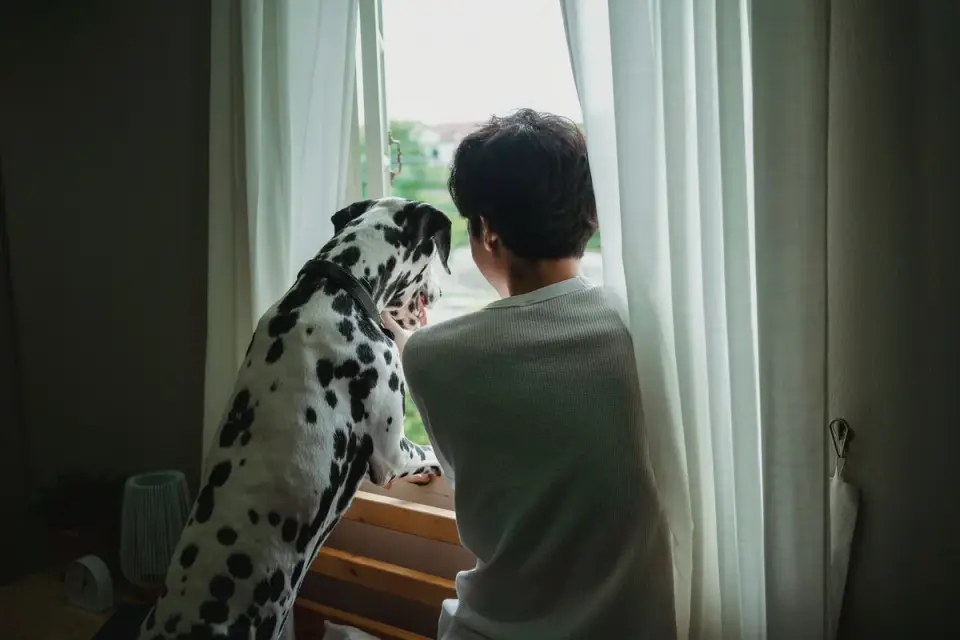
Dampen sound. Run a fan or white-noise machine, keep voices in the retreat room low, and feed a stuffed Kong or lick mat only when visitors arrive so the room predicts good things. The ASPCA outlines similar management for fear-related behaviors — reduce triggers, offer safe retreat, and pair the scary event with calm routine rather than forced interaction.
Teach the movement before you need it. Say “to your spot,” toss a treat to the bed, close the gate for ten seconds, then release. Repeat five to eight times a day for three to four days. Keep sessions under two minutes. Do not lure a barking dog off the window mid-visit and expect learning; practice when the house is quiet.
On visit day, set the room 20 minutes early. Potty the dog, place the chew, turn on sound, then cue the retreat before the doorbell. Keep greetings short and boring. Let the dog stay put until guests are seated, then offer a brief, leashed check-in only if body language is loose. Many dogs do better skipping that part entirely.
An edge case I see in small apartments: a nine-year-old, 12-pound senior with stiff hips who could not settle on a raised cot behind a tall gate, and who hated being closed in. Forcing the bedroom made whining worse by day 3. We switched to a low-sided pen around a non-slip mat in a closet nook, left the pen door open but blocked the hallway with a short gate the owners could step over, and added a nightlight and a worn T-shirt. She stayed because movement was easier and she could still hear her owner without seeing strangers, which shows how joint comfort and confinement tolerance can outweigh the perfect floor plan.
Owner checklist before the next knock
Check the latch, the chew supply, and your own script. Tell guests: ignore the dog, no reaching, no eye contact, keep bags and shoes out of the retreat hallway. If arousal spikes, close the door fully rather than coaching through the gate. Review flooring and rest options from Crate vs Playpen vs Gated Room for a Dog on Rest and avoid the setup traps in Common Mistakes When Setting Up a Dog Recovery Space.
What if your dog still barks from the back room? Then the room is too close, too bright, or too late. Move farther, darken more, start earlier.
Frequently asked questions
Should my dog greet visitors to “get used to them”?
For truly fearful dogs, no. Let the dog skip greetings until the retreat routine is solid and body language stays loose. Fewer forced hellos supports calmer behavior over time.
Is it okay to close the door all the way?
Yes, if the dog settles better with full separation. Provide water, a comfortable resting surface, airflow, and a long-lasting chew, and check in quietly midway through longer visits.
Sources
- Position Statements on Humane Dog Training — American Veterinary Society of Animal Behavior
- Common Dog Behavior Issues — ASPCA