On this page
- What to line up before the two dogs ever meet
- Start with a checkup, not a car ride home
- Meet somewhere that belongs to neither of them
- Read the older dog’s face, not just his tail
- Bring the introduction home in stages, not all at once
- Watch for signs the older dog is struggling more than the puppy
- Give it real time before you judge how it’s going
Most of the families I talk to are worried about the wrong dog. They picture the puppy getting hurt, when the animal actually carrying the emotional weight of this transition is usually the one who has had the house to himself for years. An older dog’s routine, his favorite spot on the couch, the quiet hours when nothing is climbing on him — all of that is about to change, and he does not get a say in the timing. Starting from that place, rather than from how adorable the puppy is, is what makes the difference between an introduction that settles in two weeks and one that drags on for months.
What to line up before the two dogs ever meet
- Confirm both dogs are healthy, current on vaccines, and free of parasites
- Choose a neutral, low-traffic outdoor spot for the first meeting
- Bring two handlers and two leashes — never one person managing both dogs
- Set up separate food, water, and rest areas at home in advance
- Have a baby gate, crate, or leash ready for the first indoor sessions
- Plan for short meetings, several times a day, instead of one long one
Each of those items earns its place on the list for a specific reason, and the next few sections walk through why.
Start with a checkup, not a car ride home
Before any nose-to-nose contact, both dogs should be seen by a veterinarian and cleared of anything contagious. This matters even more with a senior resident dog, whose immune system may not bounce back from a parasite or virus as easily as a young dog’s does. It also gives you a chance to flag any arthritis or mobility limits that might change how much jostling your older dog can comfortably tolerate from an eighty-pound-energy puppy in a ten-pound body.
Meet somewhere that belongs to neither of them
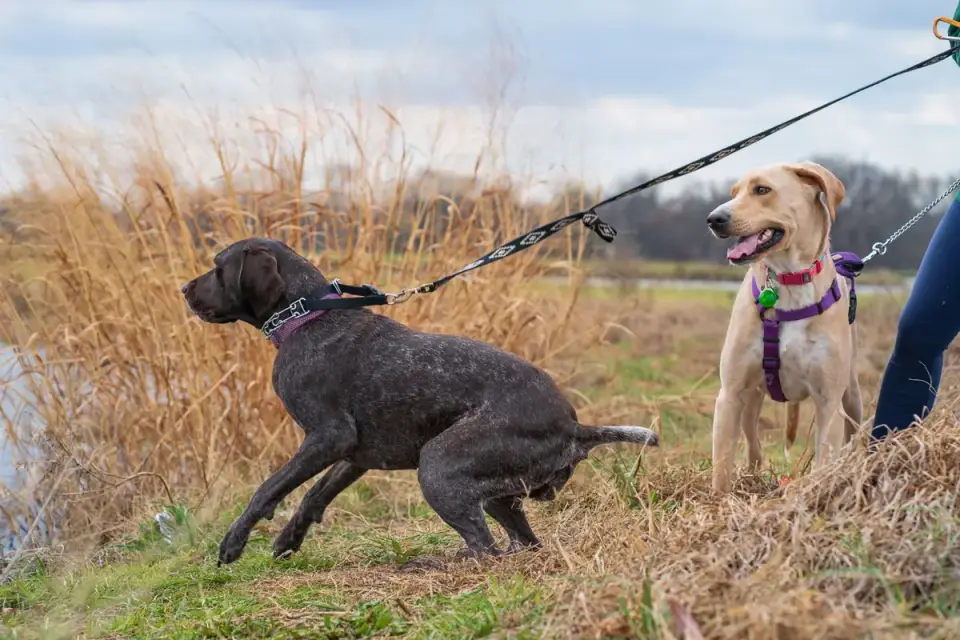
A front yard, a quiet park corner, or a friend’s fenced-in space works better than your own living room. On home turf, a resident dog has more reason to feel territorial about a strange animal suddenly appearing near his water bowl. Neutral ground removes that layer of stress and lets both dogs simply be curious about each other. Keep both leashed, keep the leashes loose rather than tight, and let them approach and sniff at their own pace — a few seconds of sniffing, then a break, then another approach if both seem relaxed.
According to the American Kennel Club, neutral territory reduces the chance of territorial behavior and lets both dogs assess each other without the added pressure of guarding resources or space. That single choice of location does more heavy lifting than almost anything else on this list.
Read the older dog’s face, not just his tail
A wagging tail does not always mean relaxed, and a puppy’s exuberance can make it hard to tell whether the older dog is enjoying himself or simply enduring it. Watch for a soft mouth, loose body weight, and a willingness to look away from the puppy without stiffening. Yawning, lip licking, a tucked tail, or a sudden freeze are all requests for space, not aggression, and they deserve a response — usually a leash cue to step back and a break before trying again.
The ASPCApro guide to canine body language notes that yawning and lip licking can be early stress signals, especially paired with a tight mouth or an averted gaze, and that a stiff, frozen posture is a stronger warning that a dog is overwhelmed. Learning to catch these cues before they escalate is the single most useful skill in this whole process. It takes practice, and nobody gets it perfect on the first try.
Bring the introduction home in stages, not all at once
Once the outdoor meetings feel calm, walk them home together rather than driving separately and reuniting at the door. Inside, keep the puppy on a leash or behind a gate for the first several days so the older dog always has an easy way to disengage. Give each dog a separate bed, bowl, and a few minutes of one-on-one time with you every day — an older dog who still gets individual attention has far less reason to resent the new arrival. If you are also managing a puppy’s very first nights at home, the same crate setup routine that helps a puppy settle can double as a safe retreat space during these early introductions.
A single short paragraph is worth saying on its own: expect setbacks. A good week followed by a grumpy day does not mean the introduction has failed.
Watch for signs the older dog is struggling more than the puppy
Some resident dogs are simply less flexible than others, and age plays a real role in that. A dog who has grown more easily startled or who reacts to sudden movement and noise the way described in our piece on why an old dog startles at sounds he used to ignore may need a slower, quieter introduction pace than a younger, more resilient dog would. Comfort and predictability matter more for him right now than speed. If you are still learning what the first year with the puppy himself will look like, our guide on what to expect in a Labrador puppy’s first year covers the growth and energy curve that the older dog will be adjusting to as well.
Give it real time before you judge how it’s going
Most pairs find their rhythm within two to four weeks of steady, structured introductions, though some older dogs — particularly those with some joint discomfort or a naturally solitary temperament — take longer to warm up, and that is not a sign anything is wrong. According to the AVSAB, safe, well-managed exposure to other animals during a puppy’s early months matters for long-term behavior, so continuing calm, supervised time together — rather than avoiding it out of caution — genuinely serves both dogs once the early stress has settled. Families who keep the sessions short, keep the older dog’s retreat space intact, and stay patient through the first uneven weeks tend to look back on this transition as far smoother than they expected going in.
Frequently asked questions
How long does it usually take for an older dog to accept a new puppy?
Many households see real relaxing within two to four weeks, but some senior dogs need a couple of months before they fully let their guard down, especially if they have some arthritis discomfort or are simply set in their ways. Slow tolerance is normal and is not a sign the pairing is failing.
Should I let the puppy have free run of the house right away?
No. Most behavior professionals recommend using gates, crates, or a leash indoors for the first stretch so the older dog can retreat whenever he needs to. Full free-roam access works better once both dogs are consistently loose and comfortable around each other.
What if my older dog growls at the puppy?
A growl is communication, not a crisis — it is the older dog asking for space, and puppies who ignore that signal are the ones who tend to get snapped at. Give the older dog room, redirect the puppy, and if growling continues past the first couple of weeks, ask your veterinarian or a certified trainer to observe a session in person.
Sources
- Puppy Socialization Position Statement — AVSAB
- Introducing New Puppies To Homes With Senior Dogs — American Kennel Club
- 7 Tips for Reading Canine Body Language — ASPCApro