
On this page
Advanced enrichment ideas for smart dogs often start the same way. A four-year-old 48-pound cattle dog mix learns every treat ball in the house by day 10, then starts inventing his own games with doorframes, laundry, and drywall. His owner is not looking for a harder toy to buy. She is looking for a way to keep a quick mind occupied when the body needs to move carefully and the evenings need to stay calm.
My disputed premise is simple. After basics, smarter does not mean harder. It means more layered.
Basic food toys teach a dog that effort produces food. That mechanism matters for confidence and for normal seeking behavior, but once the pattern is learned the nervous system habituates. The dog solves faster, arousal rises faster, and frustration can rise with it. Leveling up should change how the dog uses nose, body, and choice, not simply add smaller holes or tighter lids.
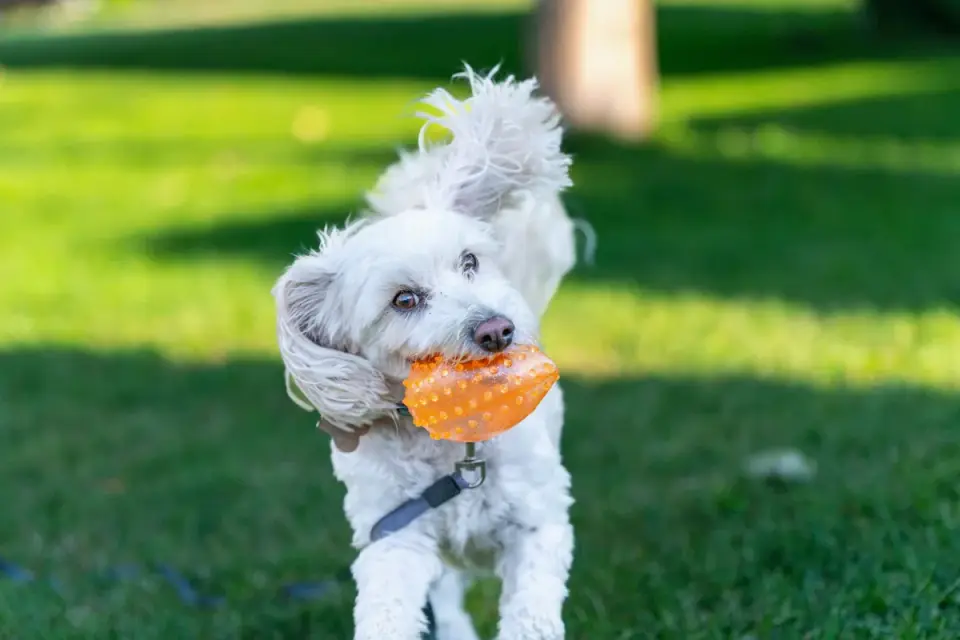
Harder puzzles are not always better enrichment
I reach for both the imaging study and the acupuncture needle in this discussion because behavior lives in circuitry and in the whole animal. A puzzle that demands prolonged standing, neck flexion, or frantic pawing may help support focus for one dog and may leave a stiff or anxious dog sore and wired.
The AVSAB position statements remind owners that enrichment should support normal species behavior with attention to fear, stress, and learning. That is the mechanism I stay anchored to. I ask what system I am training. Olfaction. Proprioception. Impulse control. Settling after effort.
For dogs who already know Chew Toys vs Puzzle Toys for Boredom, the next step is sequencing rather than stacking difficulty. A short scent search, then a brief movement task, then a chew or lick mat for downregulation, may help support calmer evenings more than another hour of puzzle bashing.
What advanced enrichment actually changes
Think in layers owners can adjust at home.
Scent complexity comes first. Hide three to five low-value treats in one room, then add one higher-value hide in a cardboard box or rolled towel. Let the dog choose the order. Choice itself is enriching and it keeps the neck and back in a more natural sniffing posture.
Then add movement with control. Two minutes of slow figure-eights around chairs, step-overs with a broomstick on books, or weight shifts on a bath mat may help support body awareness without impact. Keep sessions short and on traction.
Then teach the off switch. A snuffle mat followed by a long-lasting chew in a defined place teaches the nervous system how arousal resolves. That sequence is especially useful for households navigating Why Your Dog Won’t Settle in the Evening.
A three-year-old 34-pound Border Collie I followed as a composite case shows the tradeoff clearly. Her owner bought a complex sliding puzzle after she mastered a treat ball, expecting longer focus. Three weeks in the dog solved it in under four minutes, then barked and paced for twenty minutes after each session. The puzzle was not too easy in the wrong way. It raised arousal without giving the body a job or the brain a cool-down. When we replaced the second puzzle round with a five-hide scent search plus a ten-minute chew on place, evening pacing shortened and she chose her bed without being asked.
Frustration is information. Pawing, vocalizing, leaving the task, or guarding the toy means the challenge exceeded coping in that moment. Make it easier, split the steps, or end with success.
When smart dogs need less toy and more job
The strongest counterargument I hear is fair. Some very driven dogs seem to need constant novelty or they dismantle the house. My answer is still layered work, but with clearer jobs and clearer rest.
Rotating tasks across days helps prevent habituation. One day can emphasize nose work. Another can emphasize slow movement and balance. A third can emphasize social learning such as name-the-toy retrieval or cooperative household tasks like carrying laundry to a basket. The Merck Veterinary Manual overview of normal dog social behavior is a useful reminder that foraging, play, and social interaction are all part of the normal repertoire, not substitutes for one another.
An eleven-year-old 72-pound Labrador Retriever with morning stiffness shows the edge case owners miss. He loved food puzzles at age six, but now lies down to eat and sighs when asked to stand for long. For two weeks his owner worried he was bored because he ignored a new puzzle feeder. On examination-style observation he was not unmotivated. He was uncomfortable standing on slick floors. Moving the same enrichment onto a rug, raising one snuffle box to elbow height, and shortening searches to six hides restored participation within five days. The lesson was not lower standards. It was better ergonomics.
Owners managing long alone days can borrow the same logic from How to Keep a Dog Entertained While You’re at Work and Food-Dispensing Toys vs. Treat Balls: Which One Actually Fits Your Dog?. Match the tool to energy curve, flooring, and recovery needs, not to intelligence alone.
It helps to stay anchored to how a modality is thought to work, not what it might cure.
An owner checklist for the next two weeks
Use this as a practical home routine.
Pick one scent game, one movement snack, and one settle activity per day. Keep total active enrichment to 15 to 25 minutes, split into two or three bouts. Watch gait, breathing, and willingness to restart. Soreness the next morning means you did too much, not that the dog needs tougher work.
Protect joints and teeth. Use rugs or grass, avoid repetitive jumping, and choose chew size and hardness for the individual mouth. Supervise all novel objects, especially boxes, towels, and rope toys that can be shredded and swallowed.
Track what actually helps. Note time to settle, nighttime restlessness, destruction, and next-day stiffness. Keep what shortens the wind-down. Drop what creates pacing or guarding.
Looking forward, the smartest enrichment plan is the one your dog can repeat tomorrow without paying for it tonight.
Sources
- Position Statements — AVSAB
- Social Behavior of Dogs — Merck Veterinary Manual