
On this page
To puppy proof the kitchen, secure cabinets, trash, cords, and food storage before your new puppy ever steps inside. A kitchen looks harmless to us because we know which drawer holds the knives and which counter has never once held chocolate. A puppy doesn’t know any of that. She only knows that the room smells better than any other room in the house, and that everything within nose-reach is worth investigating with her mouth.
Why This Room Carries So Much Risk
The kitchen concentrates three things puppies are drawn to and three things that can hurt them: food odors at floor level, small objects that fit in a mouth, and cords and containers she has never learned to leave alone. Compare that to a bedroom or a living room, where the worst-case scenario is usually a chewed shoe. In the kitchen, the worst case can be a trip to the emergency vet. That difference in stakes is why this room deserves its own plan rather than a general once-over.
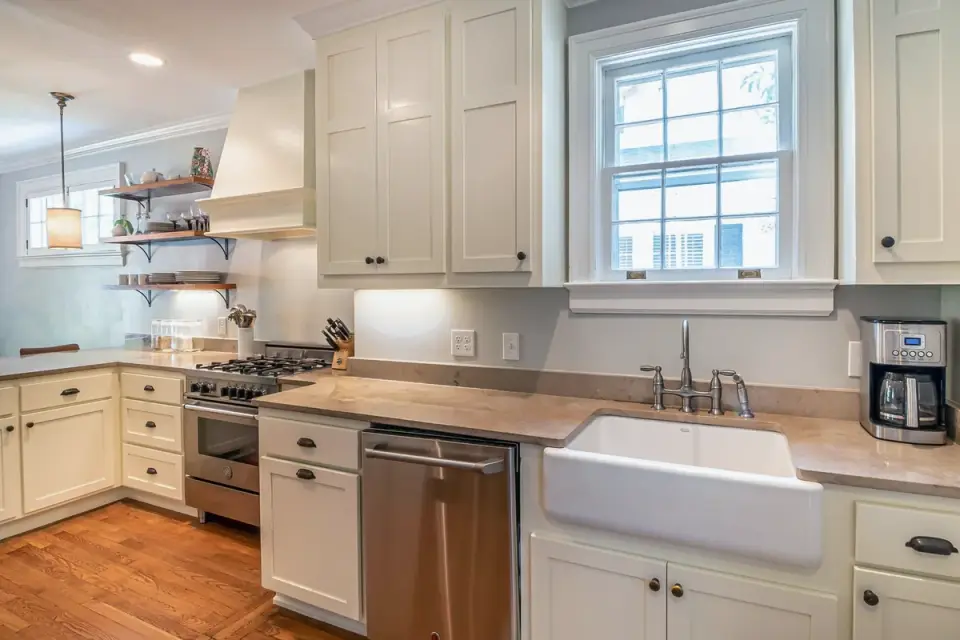
Cabinets and Counters: Two Different Containment Strategies
There are really two approaches to keeping a puppy away from cabinets and counters, and most kitchens end up using both. The first is physical containment: childproof latches on lower cabinets, especially ones holding cleaning products, and a trash can that either locks or lives behind a closed door. The second is training and management, teaching a reliable “off” or “leave it” cue and never feeding from the table so counter-surfing isn’t reinforced. Latches work even when you’re distracted; training works even when the latch fails. Neither one alone covers every scenario, which is why relying on just one tends to be where things go wrong.
If your puppy already treats the kitchen floor as a scavenger hunt, a dedicated feeding setup can help contain the mess and keep dropped food from becoming a habit-forming reward. Our guide to mats and trays for a messy eater’s feeding station covers sizing and placement in more detail.
The Foods That Cause the Most Damage
According to the ASPCA, the foods most often responsible for pet poisoning calls include chocolate, xylitol, grapes, raisins, onions, garlic, alcohol, and macadamia nuts, and several of those live in a typical kitchen in forms owners don’t always recognize, like sugar-free gum, certain peanut butters, and protein bars. Xylitol deserves particular caution. The Pet Poison Helpline notes that hypoglycemia is usually the first sign of xylitol poisoning and can appear within an hour of ingestion, with vomiting, weakness, and unsteadiness on the feet as early warning signs. Store these items on high shelves, not just closed ones, since a determined puppy can nose open a cabinet door that isn’t latched.
One short rule cuts through most of this confusion.
If you wouldn’t hand it to a toddler unsupervised, don’t leave it where your puppy can reach it either.
Cords, Small Parts, and the Overlooked Hazards
Electrical cords for appliances like the coffee maker or slow cooker are easy to forget because they aren’t food and they aren’t cleaning products, but a chewed cord is a genuine electrical and burn hazard. The American Kennel Club recommends unplugging cords when not in use, routing them out of reach, or running them through cord concealers. The same logic applies to rubber bands, twist ties, bottle caps, and anything small enough to swallow whole. None of these require an expensive fix, just a habit of scanning the counter and floor before you leave the room.
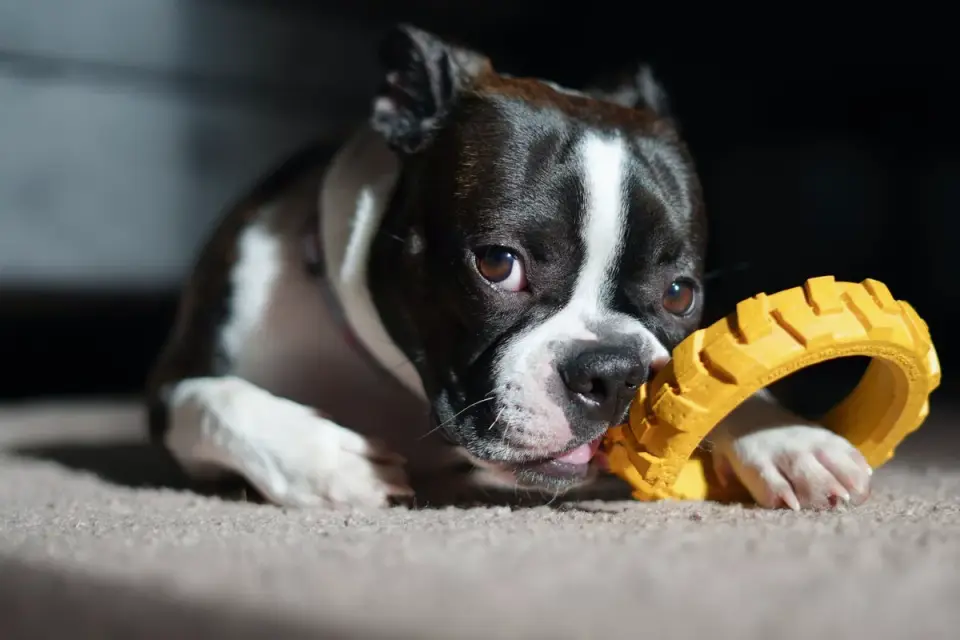
Building a Routine You Can Actually Keep
Puppy-proofing isn’t a weekend project you finish once. It’s closer to a routine you repeat every time you cook, every time you take out the trash, every time you unpack groceries, until it stops feeling like extra work. That routine matters even more if you brought this puppy home recently and you’re still learning her habits; our overview of what to expect in a Labrador puppy’s first year walks through how quickly curiosity and mobility change during those first twelve months, which is exactly why the kitchen setup that worked at eight weeks may need revisiting at five months.
It’s worth remembering, too, that a safe home isn’t something you build once and then forget about. The same instinct that has you double-checking cabinet latches now is one you’ll lean on again as your dog ages and her needs change in quieter ways, the kind we cover in pieces like why an old dog startles at sounds he used to ignore. Choosing steady, sustainable habits over a single quick fix tends to serve a dog better across her whole life, not just through puppyhood.
A puppy-proofed kitchen isn’t about eliminating every risk forever. It’s about lowering the odds of an emergency during the months when curiosity outruns judgment, so you can both relax into the routine of sharing a home.
Frequently asked questions
What is the single most dangerous kitchen item for a puppy?
Xylitol-sweetened products tend to cause the fastest, most severe reactions because even a small amount can drop blood sugar within an hour, so they deserve top priority when you're deciding what to lock away first.
Do puppies grow out of counter-surfing and trash-digging on their own?
Some outgrow the impulse as their attention span lengthens, but many don't, so it's more reliable to manage the environment through puppyhood than to wait on maturity alone.
Sources
- People Foods to Avoid Feeding Your Pets — ASPCA
- Symptoms of Xylitol Poisoning in Dogs — Pet Poison Helpline
- Puppy-Proofing Tips for Your Home And Yard — American Kennel Club