On this page
Last January a client with a 9-year-old 68-pound Labrador Retriever told me the same week had unraveled twice — first the morning walk shrank to a shivering block, then the dog spent the evening pacing, licking the couch, and whining at the door. She assumed he needed more miles and felt guilty for cutting them short. By day 5 of subfreezing wind, his stiff hind end was worse, not better, and her plan was to bundle up and push through anyway. That decision point, whether to protect joints or chase tiredness, is where most cold-weather plans go wrong.
My disputed premise is this: a missed walk is not lost conditioning. For most adult and senior dogs, indoor enrichment that targets nose, mouth, and brain may help support calm behavior and normal joint function better than forcing exercise in painful cold. Movement still matters, but miles are a crude proxy.
The missed walk is not lost work
Outdoor walking combines aerobic load, joint range of motion, sniffing, and novelty. Cold strips away the last two while raising the cost of the first two. The American Veterinary Medical Association reminds owners that frostbite, hypothermia, and arthritic stiffness rise quickly in winter conditions, especially for seniors, puppies, and short-coated breeds.
That matters for nutrition and recovery too. Food therapy and supplement science cannot replace movement, and I weigh them narrowly: joint-support nutrients and balanced calories may help support normal cartilage metabolism and healthy body condition during layoff weeks, which in turn supports mobility. They do not build fitness while a dog rests.
Cold also changes evening behavior. Dogs that miss daytime sniffing often cannot settle, a pattern I describe more fully in Why Your Dog Won’t Settle in the Evening.
Short sniffing bouts tire the brain without pounding joints.
What a freeze asks of an older body
Think chronologically. Morning is for joint warm-up, midday for brain work, evening for chewing and settling. Cold mornings leave synovial fluid viscous and muscles tight. A long, cold walk loads a stiff body before it is ready. A warm house lets you reverse that order.
Start with two minutes of gentle indoor movement before any food game: slow leash laps around the living room, weight shifts for cookies, three to five sit-to-stands on a rug if the dog offers them without pain. Then feed breakfast through scent, not the bowl. Scatter kibble in a towel, use a muffin tin with tennis balls over the cups, or hide piles behind chair legs. For ideas on matching tools to temperament, see Chew Toys vs Puzzle Toys for Boredom.
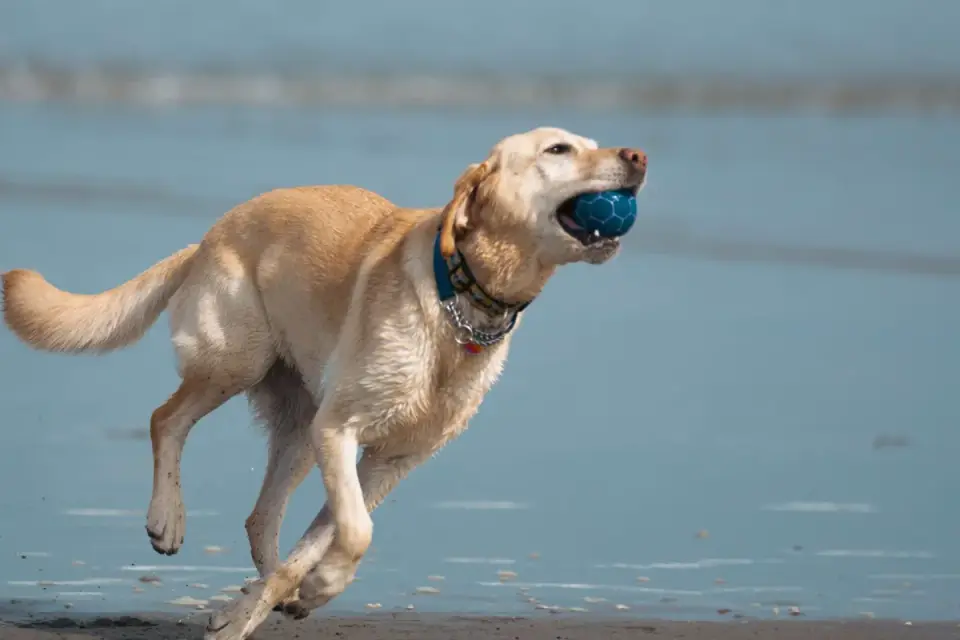
The owner of a 3-year-old 41-pound border collie mix tried the opposite last February. She stacked three puzzle feeders back-to-back for 45 minutes, hoping mental fatigue would replace a run, then added an hour of hallway fetch because the dog still spun by the door. By day 10 the dog was solving puzzles faster, panting less, and barking more — fitter at games, still under-exercised for arousal, and now sore in the front shoulders from hard stops on wood floors. More puzzles had trained persistence without teaching an off switch. We had to cut fetch, add chewing, and put rest on a schedule before behavior improved.
That failure is common. Enrichment without pacing creates athletes, not calm dogs.
A midday sequence that holds through a cold snap
I keep indoor days to a repeatable loop, scaled to the dog in front of me. Total active time is 25 to 40 minutes, broken up.
First, train in five-minute reps. Nose touches, mat work, middle position, or a new trick with ten to fifteen small treats. Rest matters as much as reps. Second, give the mouth a job. A long-lasting chew or frozen stuffed rubber toy after training extends calm focus and reduces scavenging. Guidance on choosing between dispensing styles is in Food-Dispensing Toys vs. Treat Balls: Which One Actually Fits Your Dog?.
Third, protect weight. Indoor weeks often mean fewer calories burned but the same scoop. From a nutrition standpoint, I would rather see owners measure food, use part of the daily ration for games, and monitor ribs and waist than add a joint chew and ignore calories. The National Animal Supplement Council notes that supplements are intended to support normal structure and function alongside diet and husbandry, not to correct overfeeding or inactivity.
For breed-specific cold tolerance and shelter cues, Best Dog Breeds for Cold Weather (And What Actually Keeps Any Dog Safe) is a useful check before you decide any dog should just tough it out.
When staying inside changes the plan
The edge case I watch for is the stoic senior who looks better indoors. A 12-year-old 54-pound husky mix in our practice sailed through a two-week freeze on indoor games, and the owner reported smoother rising by week two because the dog was warm, lean, and moving gently every few hours. That improvement hid early hind-end weakness that only appeared on stairs once walks resumed. Comfort had masked deconditioning.
Use that lesson. If a dog over 8 years old, under 20 pounds with thin coat, or with known arthritis refuses outdoor trips, keep indoor movement frequent and low. Five minutes of slow walking, sniffing, and standing balance three times daily preserves function better than one long weekend outing. Watch for slipping, reluctance to rise, nighttime restlessness, or increased panting indoors — signs to call your veterinarian rather than add more games.
An owner checklist for the next freeze
Close the day the way you opened it: warm body, busy nose, tired mouth.
- Warm up before feeding: 2 to 3 minutes of indoor walking and gentle sits.
- Feed 30 to 50 percent of breakfast through scatter, snuffle, or puzzle rotation.
- Train two short sessions before noon, five minutes each, ending on success.
- Offer one chew or frozen toy in the afternoon on a washable mat.
- Weigh weekly during winter layoffs and adjust treats so ribs stay easily felt.
- Keep one short outdoor toilet loop for daylight and air, dressed for the dog’s coat and age, and skip it when wind chill threatens skin or footing.
What would change if you measured today in calm hours, not miles?
Sources
- Cold-Weather Animal Safety — American Veterinary Medical Association
- Responsible Supplement Use Guidelines — National Animal Supplement Council