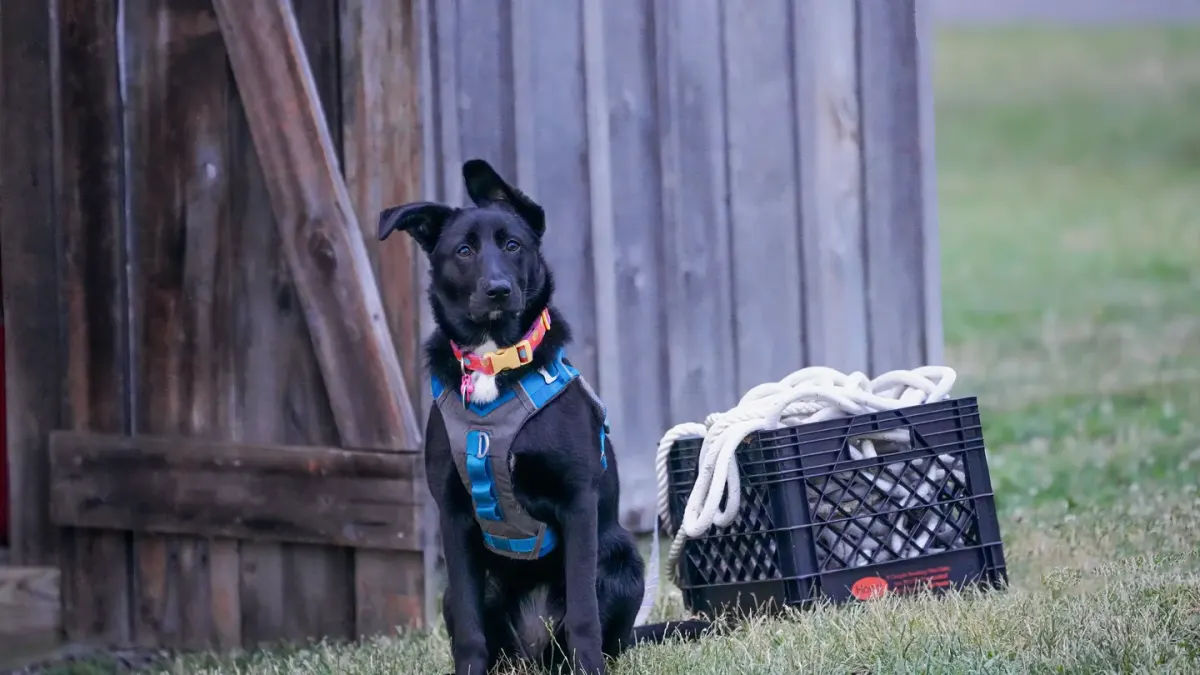
Saturday morning, fresh coffee in hand, you open the back door and find it again — three new craters along the fence line, mulch flung across the grass, and a very proud 2-year-old terrier mix with dirty paws. You filled the holes last weekend. He redug them by Tuesday. That cycle is why I start every digging visit with expectation first: digging is normal dog behavior, and our job is not to punish it out but to give it a better place to happen.
My disputed premise is simple: most lawn digging improves faster when you treat it as an exercise and setup problem first, not an anxiety problem first. Test that idea with me against the evidence, then use the checklist at the end to build a yard that holds up.
Is your dog digging from instinct, energy, or escape?
Breed history matters. Terriers were selected to dig after quarry, northern breeds to scrape out cool resting spots, and sporting dogs to investigate scent in soil. A dog that digs in the same sunny corner at midday is often making a cool bed. A dog that digs along the fence after squirrels is hunting. A dog that digs scattered holes for ten minutes after dinner and then quits is often just under-exercised and bored.
That first terrier mix I described weighed 34 pounds and was getting two short leash walks and long hours alone in the yard. Three weeks in to a new routine — a morning sniff walk, ten minutes of training, and a legal dig box — the owner reported the fence-line holes stopped expanding. The number matters because it marks a pattern change, not a cure. The digging need did not vanish. It moved.
If digging clusters around departures, pacing, vocalizing, or destruction at doors, consider anxiety alongside boredom. My guide to boredom versus separation anxiety walks through that split, and the chewing patterns in boredom or anxiety chewing often overlap with yard digging.
Why does punishment usually make lawn digging worse?
Yelling after the fact does not teach a dog to leave soil alone. It teaches that yards are unpredictable. Dogs punished for digging often dig when unsupervised, choose harder-to-see spots, or add stress signals like panting, lip licking, and fence running.
This is where I see the failed tradeoff most clearly. One household with a 4-year-old, 62-pound husky mix tried filling holes with rocks, then a scat mat, then long time-outs in the laundry room after each episode. By day 10 the lawn looked slightly better and the dog looked worse — more pacing at the back door, less interest in play, and new digging behind the shed where no one watched. The owners had suppressed the location without changing the motivation. When we replaced punishment with midday shade, water, a frozen food toy before yard time, and a sand pit near the coolest corner, the hidden digging faded because the function was met.
Management prevents rehearsal while training catches up. That is the whole job for two weeks.

What actually stops digging without breaking trust?
Start with the body baseline. Weight, heat, and joint comfort change yard behavior more than owners expect. Heavy-coated and high-energy dogs overheat quickly and dig to cool their bellies. Senior dogs may dig less but paw and circle more on hard ground. Keep sessions low-impact, offer water and shade, and keep nails and paw pads comfortable for the surface you want them to use.
Then build the replacement routine:
- Meet movement needs before free yard time. A sniff-heavy walk, fetch in short bursts, or flirt-pole play with rest breaks lowers the pressure to excavate.
- Give digging a legal outlet. Bury toys in a framed sand or loose-soil box and reward digging there. Make the wrong spots boring with temporary fencing or furniture, not fear.
- Rotate mental work. Scatter feeding, snuffle mats, and two-minute training reps for sit, recall, and settle may help support calmer yard habits.
- Supervise in short windows. Go out together for the first two weeks, redirect to the dig box early, and bring the dog in before arousal spikes.
Calming ingredients come up often here, so keep expectations preventive and narrow. MDPI Biomedicines notes in a broad herbal review: “For the remaining species, evidence is derived mainly from preclinical studies or traditional use.” Cureus reports: “A systematic review analyzed multiple RCTs and concluded that ashwagandha has a moderate positive impact on stress reduction and cognitive performance.” And Molecular Psychiatry describes L-theanine evidence with this narrow exception: “except for one study on psychotic anxiety (SMD = 0.54; 400 mg/day for 8 weeks)”. Those lines do not prove a supplement stops digging, and digging is not a diagnosis that any chew fixes. They explain why some owners explore relaxation support alongside training, movement, and setup changes.
The edge case that changes my plan is the escape digger. A 5-year-old, 48-pound hound mix only dug during trash-truck hours, directly under the gate, with barking that started the second the truck turned the corner. That is not boredom. That pattern points to barrier frustration and sound arousal, the same reactivity I outline in barrier frustration versus aggression. For that dog, a dig box alone failed until we added distance, visual blocks, and a trained indoor station during the trigger window. Once the truck passed, yard time was calm again.
Your next step is practical: pick one dig zone to protect, build one dig zone to allow, and track holes for fourteen days before you change anything else.
For related context, read Why Does My Dog Growl When I Pet Him? A Guide to Reading the Warning.
For related context, read Barrier Frustration vs Aggression: What’s the Difference?.
Frequently asked questions
Will my dog outgrow digging holes in the lawn?
Some adolescent digging fades as energy settles, but instinct-driven digging rarely disappears without an outlet. A legal dig spot plus daily movement prevents most relapse.
Should I punish my dog for digging?
No. After-the-fact punishment tends to move digging out of sight and raise stress. Redirect to an allowed spot, manage access, and reward the choice you want.
When is digging a vet visit?
Book a visit if digging starts suddenly in an adult dog, pairs with itching, lameness, GI change, or panic at departures, or if escape digging risks injury or getting loose.
Sources
- Chamomile evidence review — MDPI Biomedicines
- Ashwagandha systematic review — Cureus
- L-Theanine review — Molecular Psychiatry